Your Time has Finished
Which UCAT Exam
are you sitting?
Loading...

Medic Mind Mock 3
Your Score: + Band
Average Score of All Users:
You performed better than of students
Section Breakdown
| Your Score | Average of all Users | Percentile | |
|---|---|---|---|
| Verbal Reasoning | |||
| Decision Making | |||
| Quantative Reasoning | |||
| Abstract Reasoning | |||
| Situational Judgement |
Verbal Reasoning
Your score:
Average score:
You performed better than of students
Decision Making
Your score:
Average score:
You performed better than of students
Quantative Reasoning
Your score:
Average score:
You performed better than of students
Abstract Reasoning
Your score:
Average score:
You performed better than of students
Situational Judgement
Your score:
Average score:
You performed better than of students
Verbal Reasoning Practice Subtest Instructions
In this section of the exam, you will be presented with 11 passages to read, each associated with 4 questions.
Some questions assess critical reasoning skills, requiring candidates to make inferences and draw conclusions from information. You will need to read the passage of text carefully. You will then be presented with a question or incomplete statement and four response options. You are required to pick the best or most suitable response.
For other questions your task is to read each passage of text carefully and then decide whether the statement provided follows logically.
There are three answer options you can choose from:
True: On the basis of the information in the passage, the statement is true.
False: On the basis of the information in the passage, the statement is false.
Can’t Tell: You cannot tell from the information in the passage whether the statement is true or false.
Candidates will only be able to select one response.
It is in your best interest to answer all questions as there is no penalty for guessing. All unanswered questions will be scored as incorrect.
Click the Next (N) button to proceed.
The Aztec calendar is the calendar system that was used by the Aztecs as well as other Pre-Columbian peoples of central Mexico. It is one of the Mesoamerican calendars, sharing the basic structure of calendars from throughout ancient Mesoamerica.
The calendar consisted of a 365-day calendar cycle and a 260-day ritual cycle. These two cycles together formed a 52-year “century,” sometimes called the “calendar round”. The calendar cycle is considered to be the agricultural calendar, since it is based on the sun, and the ritual cycle is considered to be the sacred calendar.
The calendric year may have begun at some point in the distant past with the first appearance of the Pleiades asterism in the east immediately before the dawn light. In contrast, early Spanish chroniclers recorded it being celebrated in proximity with the Spring equinox.
The almanac year comprised of 260 days, each of which was assigned a date by intermeshing one of 20 day-signs, represented graphically with a glyph, and a number from 1 to 13, represented by dots so that no two days in the cycle could be confused. The almanac year was thus made up of 20 13-day weeks.
Explanation
The correct answer is C. From the text, we can see that it says ‘other Pre-Columbian peoples’, implying that the Aztecs were Pre-Columbian.
There is no mention of any of the statements in Options A,B, and D in the passage.
The Aztec calendar is the calendar system that was used by the Aztecs as well as other Pre-Columbian peoples of central Mexico. It is one of the Mesoamerican calendars, sharing the basic structure of calendars from throughout ancient Mesoamerica.
The calendar consisted of a 365-day calendar cycle and a 260-day ritual cycle. These two cycles together formed a 52-year “century,” sometimes called the “calendar round”. The calendar cycle is considered to be the agricultural calendar, since it is based on the sun, and the ritual cycle is considered to be the sacred calendar.
The calendric year may have begun at some point in the distant past with the first appearance of the Pleiades asterism in the east immediately before the dawn light. In contrast, early Spanish chroniclers recorded it being celebrated in proximity with the Spring equinox.
The almanac year comprised of 260 days, each of which was assigned a date by intermeshing one of 20 day-signs, represented graphically with a glyph, and a number from 1 to 13, represented by dots so that no two days in the cycle could be confused. The almanac year was thus made up of 20 13-day weeks.
Explanation
The correct answer is B. The agricultural calendar follows the calendar cycle, which is 365 days long.
Option A is incorrect as we are told it is 52 years long.
Option C is incorrect as the agricultural calendar is based on the sun.
Option D is incorrect because the agricultural calendar is considered sacred.
The Aztec calendar is the calendar system that was used by the Aztecs as well as other Pre-Columbian peoples of central Mexico. It is one of the Mesoamerican calendars, sharing the basic structure of calendars from throughout ancient Mesoamerica.
The calendar consisted of a 365-day calendar cycle and a 260-day ritual cycle. These two cycles together formed a 52-year “century,” sometimes called the “calendar round”. The calendar cycle is considered to be the agricultural calendar, since it is based on the sun, and the ritual cycle is considered to be the sacred calendar.
The calendric year may have begun at some point in the distant past with the first appearance of the Pleiades asterism in the east immediately before the dawn light. In contrast, early Spanish chroniclers recorded it being celebrated in proximity with the Spring equinox.
The almanac year comprised of 260 days, each of which was assigned a date by intermeshing one of 20 day-signs, represented graphically with a glyph, and a number from 1 to 13, represented by dots so that no two days in the cycle could be confused. The almanac year was thus made up of 20 13-day weeks.
Explanation
The correct answer is C. We are told that the asterism appeared immediately before the dawn light. Therefore, Option C is correct.
Since this line is the only one about the Pleiades system, we can see that the Options A,B, and D are not supported by the text.
The Aztec calendar is the calendar system that was used by the Aztecs as well as other Pre-Columbian peoples of central Mexico. It is one of the Mesoamerican calendars, sharing the basic structure of calendars from throughout ancient Mesoamerica.
The calendar consisted of a 365-day calendar cycle and a 260-day ritual cycle. These two cycles together formed a 52-year “century,” sometimes called the “calendar round”. The calendar cycle is considered to be the agricultural calendar, since it is based on the sun, and the ritual cycle is considered to be the sacred calendar.
The calendric year may have begun at some point in the distant past with the first appearance of the Pleiades asterism in the east immediately before the dawn light. In contrast, early Spanish chroniclers recorded it being celebrated in proximity with the Spring equinox.
The almanac year comprised of 260 days, each of which was assigned a date by intermeshing one of 20 day-signs, represented graphically with a glyph, and a number from 1 to 13, represented by dots so that no two days in the cycle could be confused. The almanac year was thus made up of 20 13-day weeks.
Explanation
The correct answer is B.
We are told that a week in the almanac year is 13 days long. This is longer than the modern 7-day week, so Option B is correct.
Option A is incorrect as they are the same length.
Option C is incorrect because there are only 20 day-signs and 260 days.
Option D is incorrect because the agricultural year is 365 days long.
Lady Jane Grey was the great-granddaughter of King Henry VII and the cousin of King Edward VI. Lady Jane and Edward were nearly the same age, and they had almost been married in 1549. In May 1553 she was married to Lord Guildford Dudley, the son of John Dudley, the duke of Northumberland.
When King Edward fell deathly ill with tuberculosis soon after, John Dudley persuaded the dying king that Jane, a Protestant, should be chosen the royal successor over Edward’s half-sister Mary, a Catholic. On July 6, 1553, Edward died, and four days later Lady Jane Grey was proclaimed queen of England.
Lady Jane’s ascendance was supported by the Royal Council, but the populace supported Mary, the rightful heir. Two days into Lady Jane’s reign, Dudley departed London with an army to suppress Mary’s forces, and in his absence the Council declared him a traitor and Mary the queen, ending Jane’s nine-day reign.By July 20, most of Dudley’s army had deserted him, and he was arrested. The same day, Jane was imprisoned in the Tower of London. On November 13, Jane and her husband were found guilty of treason and sentenced to death, but because of their youth and relative innocence Mary did not carry out the death sentences.
However, in early 1554, while suppressing a revolt, Mary decided it was also necessary to eliminate all her political opponents. On February 7 she signed the death warrants of Jane and her husband.
Explanation
The correct answer is B. From the text, we know that her husband’s father was John Dudley, the duke of Northumberland.
Option A is incorrect because we can’t infer this from the information in the passage.
Option C is incorrect because we are not given this information in the text.
Option D is wrong because in the first sentence we are told she is the great granddaughter of King Henry VII.
 MM
MM
Tue, 07 Sep 2021 16:11:31
why is D wrong
MMTutor
Medicmind Tutor
Thu, 10 Mar 2022 16:15:34
Hi, thank you for your question! If you read carefully, it says that Lady Jane Grey was the great granddaughter of King Henry VII at the start of the first paragraph. Option D says King Henry 'VIII'.
Lady Jane Grey was the great-granddaughter of King Henry VII and the cousin of King Edward VI. Lady Jane and Edward were nearly the same age, and they had almost been married in 1549. In May 1553 she was married to Lord Guildford Dudley, the son of John Dudley, the duke of Northumberland.
When King Edward fell deathly ill with tuberculosis soon after, John Dudley persuaded the dying king that Jane, a Protestant, should be chosen the royal successor over Edward’s half-sister Mary, a Catholic. On July 6, 1553, Edward died, and four days later Lady Jane Grey was proclaimed queen of England.
Lady Jane’s ascendance was supported by the Royal Council, but the populace supported Mary, the rightful heir. Two days into Lady Jane’s reign, Dudley departed London with an army to suppress Mary’s forces, and in his absence the Council declared him a traitor and Mary the queen, ending Jane’s nine-day reign.By July 20, most of Dudley’s army had deserted him, and he was arrested. The same day, Jane was imprisoned in the Tower of London. On November 13, Jane and her husband were found guilty of treason and sentenced to death, but because of their youth and relative innocence Mary did not carry out the death sentences.
However, in early 1554, while suppressing a revolt, Mary decided it was also necessary to eliminate all her political opponents. On February 7 she signed the death warrants of Jane and her husband.
Explanation
The correct answer is B. We are told that Mary was the ‘rightful heir’ to the throne. We can deduce, therefore, that she should have been the Queen following Edward’s death.
Option A is incorrect as we are not told this information in the passage.
Option C is incorrect because she was declared queen ‘ending Jane’s 9 day reign’ (second paragraph)
Option D is incorrect as we are not told this information so cannot infer it from the text.
Lady Jane Grey was the great-granddaughter of King Henry VII and the cousin of King Edward VI. Lady Jane and Edward were nearly the same age, and they had almost been married in 1549. In May 1553 she was married to Lord Guildford Dudley, the son of John Dudley, the duke of Northumberland.
When King Edward fell deathly ill with tuberculosis soon after, John Dudley persuaded the dying king that Jane, a Protestant, should be chosen the royal successor over Edward’s half-sister Mary, a Catholic. On July 6, 1553, Edward died, and four days later Lady Jane Grey was proclaimed queen of England.
Lady Jane’s ascendance was supported by the Royal Council, but the populace supported Mary, the rightful heir. Two days into Lady Jane’s reign, Dudley departed London with an army to suppress Mary’s forces, and in his absence the Council declared him a traitor and Mary the queen, ending Jane’s nine-day reign.By July 20, most of Dudley’s army had deserted him, and he was arrested. The same day, Jane was imprisoned in the Tower of London. On November 13, Jane and her husband were found guilty of treason and sentenced to death, but because of their youth and relative innocence Mary did not carry out the death sentences.
However, in early 1554, while suppressing a revolt, Mary decided it was also necessary to eliminate all her political opponents. On February 7 she signed the death warrants of Jane and her husband.
Explanation
The correct answer is A.
We are told that Mary was Edward’s half-sister. Since Edward and Jane were cousins, it is possible that Lady Jane and Mary were related by blood. Option B is not supported by the text, although it may have been true. Option C is not mentioned in the passage. Option D is incorrect as the text states that the population supported Mary.
Lady Jane Grey was the great-granddaughter of King Henry VII and the cousin of King Edward VI. Lady Jane and Edward were nearly the same age, and they had almost been married in 1549. In May 1553 she was married to Lord Guildford Dudley, the son of John Dudley, the duke of Northumberland.
When King Edward fell deathly ill with tuberculosis soon after, John Dudley persuaded the dying king that Jane, a Protestant, should be chosen the royal successor over Edward’s half-sister Mary, a Catholic. On July 6, 1553, Edward died, and four days later Lady Jane Grey was proclaimed queen of England.
Lady Jane’s ascendance was supported by the Royal Council, but the populace supported Mary, the rightful heir. Two days into Lady Jane’s reign, Dudley departed London with an army to suppress Mary’s forces, and in his absence the Council declared him a traitor and Mary the queen, ending Jane’s nine-day reign.By July 20, most of Dudley’s army had deserted him, and he was arrested. The same day, Jane was imprisoned in the Tower of London. On November 13, Jane and her husband were found guilty of treason and sentenced to death, but because of their youth and relative innocence Mary did not carry out the death sentences.
However, in early 1554, while suppressing a revolt, Mary decided it was also necessary to eliminate all her political opponents. On February 7 she signed the death warrants of Jane and her husband.
Explanation
The correct answer is B. We are told that Mary was crowned queen, ending Lady Jane’s 9-day reign, and that Dudley set off after 2 days of Jane’s reign. Therefore, one week passed between these events
Option A is incorrect as the Council supported Jane’s ascension to the throne.
Option C is incorrect as he was killed in 1554.
Option D is incorrect as it was just under 4 months between these two events.
Working backwards from the current state of the Universe, scientists have theorised that it must have originated at a single point of infinite density and finite time that began to expand. After the initial expansion, the theory maintains that Universe cooled sufficiently to allow the formation of subatomic particles, and later simple atoms.
Giant clouds of these primordial elements later coalesced through gravity to form stars and galaxies. This all began roughly 13.8 billion years ago and is thus considered to be the age of the universe.
Through the testing of theoretical principles, experiments involving particle accelerators and high-energy states, and astronomical studies that have observed the deep universe, scientists have constructed a timeline of events that began with the Big Bang and has led to the current state of cosmic evolution.However, the earliest times of the Universe are the subject of extensive speculation. Given that the laws of physics as we know them could not have existed at this time, it is difficult to fathom how the Universe could have been governed. What’s more, experiments that can create the kinds of energies involved have not yet been conducted. Still, many theories prevail as to what took place in this initial instant in time, many of which are compatible.
Explanation
The correct answer is A.
This is true because we are told that the Universe ‘cooled sufficiently’ to allow subatomic particles to form. We can therefore deduce that subatomic particles cannot form at high temperatures.
Working backwards from the current state of the Universe, scientists have theorised that it must have originated at a single point of infinite density and finite time that began to expand. After the initial expansion, the theory maintains that Universe cooled sufficiently to allow the formation of subatomic particles, and later simple atoms.
Giant clouds of these primordial elements later coalesced through gravity to form stars and galaxies. This all began roughly 13.8 billion years ago and is thus considered to be the age of the universe.
Through the testing of theoretical principles, experiments involving particle accelerators and high-energy states, and astronomical studies that have observed the deep universe, scientists have constructed a timeline of events that began with the Big Bang and has led to the current state of cosmic evolution.However, the earliest times of the Universe are the subject of extensive speculation. Given that the laws of physics as we know them could not have existed at this time, it is difficult to fathom how the Universe could have been governed. What’s more, experiments that can create the kinds of energies involved have not yet been conducted. Still, many theories prevail as to what took place in this initial instant in time, many of which are compatible.
Explanation
The correct answer is B. In the passage it states that scientists ‘theorise’ that this is the case, so they do not know for sure. This statement is therefore false.
Working backwards from the current state of the Universe, scientists have theorised that it must have originated at a single point of infinite density and finite time that began to expand. After the initial expansion, the theory maintains that Universe cooled sufficiently to allow the formation of subatomic particles, and later simple atoms.
Giant clouds of these primordial elements later coalesced through gravity to form stars and galaxies. This all began roughly 13.8 billion years ago and is thus considered to be the age of the universe.
Through the testing of theoretical principles, experiments involving particle accelerators and high-energy states, and astronomical studies that have observed the deep universe, scientists have constructed a timeline of events that began with the Big Bang and has led to the current state of cosmic evolution.However, the earliest times of the Universe are the subject of extensive speculation. Given that the laws of physics as we know them could not have existed at this time, it is difficult to fathom how the Universe could have been governed. What’s more, experiments that can create the kinds of energies involved have not yet been conducted. Still, many theories prevail as to what took place in this initial instant in time, many of which are compatible.
Explanation
The correct answer is C. Although particle accelerators are mentioned in the passage, there is no mention of their importance and so we cannot tell if this statement is true from the passage alone.
Working backwards from the current state of the Universe, scientists have theorised that it must have originated at a single point of infinite density and finite time that began to expand. After the initial expansion, the theory maintains that Universe cooled sufficiently to allow the formation of subatomic particles, and later simple atoms.
Giant clouds of these primordial elements later coalesced through gravity to form stars and galaxies. This all began roughly 13.8 billion years ago and is thus considered to be the age of the universe.
Through the testing of theoretical principles, experiments involving particle accelerators and high-energy states, and astronomical studies that have observed the deep universe, scientists have constructed a timeline of events that began with the Big Bang and has led to the current state of cosmic evolution.However, the earliest times of the Universe are the subject of extensive speculation. Given that the laws of physics as we know them could not have existed at this time, it is difficult to fathom how the Universe could have been governed. What’s more, experiments that can create the kinds of energies involved have not yet been conducted. Still, many theories prevail as to what took place in this initial instant in time, many of which are compatible.
Explanation
The correct answer is B. This is false because in the passage it states that “the laws of physics as we know them could not have existed at this time”, so this statement must be untrue.
St George was born sometime around the year 280 in what is now Turkey. He was a soldier and rose up through the ranks of the Roman army, eventually becoming a personal guard to the Emperor Diocletian. He was executed for being a Christian on April 23, 303, and is buried in the town of Lod in Israel.
St George is most widely known for slaying a dragon. According to legend, the only well in the town of Silene was guarded by a dragon. In order to get water, the inhabitants of the town had to offer a human sacrifice every day to the dragon.
The person to be sacrificed was chosen by picking lots. On the day that St George was visiting, a princess had been selected to be sacrificed. However, he killed the dragon, saved the princess and gave the people of Silene access to water. In gratitude, they converted to Christianity.St George’s Day was once celebrated as widely as Christmas. But the celebrations waned by the end of the 18th century after England had united with Scotland on May 1, 1707. In recent times, there has been a push, involving campaigns and petitions, to make the patron saint’s day a public holiday in England.
St George is the patron saint of a number of other places too, such as Bulgaria, Ethiopia, Georgia, Greece, Portugal and Russia. Around the world, a number of days are devoted to St George, including April 23 and dates in November and December of the Gregorian calendar.
Explanation
The correct answer is C. We are told that St George ‘rose up through the ranks’ until he was a personal guard to the Emperor, so we can deduce that option C is correct.
Option A is incorrect because we are told he was a soldier in the Roman army.
Option B is incorrect as we are not given the exact location of where he was born, we are only told he was born in ‘what is now Turkey’.
Option D is incorrect because we cannot infer this information from the text.
St George was born sometime around the year 280 in what is now Turkey. He was a soldier and rose up through the ranks of the Roman army, eventually becoming a personal guard to the Emperor Diocletian. He was executed for being a Christian on April 23, 303, and is buried in the town of Lod in Israel.
St George is most widely known for slaying a dragon. According to legend, the only well in the town of Silene was guarded by a dragon. In order to get water, the inhabitants of the town had to offer a human sacrifice every day to the dragon.
The person to be sacrificed was chosen by picking lots. On the day that St George was visiting, a princess had been selected to be sacrificed. However, he killed the dragon, saved the princess and gave the people of Silene access to water. In gratitude, they converted to Christianity.St George’s Day was once celebrated as widely as Christmas. But the celebrations waned by the end of the 18th century after England had united with Scotland on May 1, 1707. In recent times, there has been a push, involving campaigns and petitions, to make the patron saint’s day a public holiday in England.
St George is the patron saint of a number of other places too, such as Bulgaria, Ethiopia, Georgia, Greece, Portugal and Russia. Around the world, a number of days are devoted to St George, including April 23 and dates in November and December of the Gregorian calendar.
Explanation
The correct answer is C. When St George kills the dragon, the text states that he ‘gave the people of Silene access to water’. Combined with the fact that they ‘had’ to offer a sacrifice to get water, we can deduce that option C is correct.
Options A, B and D are incorrect because we are not given this information in the passage so cannot infer this from the text.
St George was born sometime around the year 280 in what is now Turkey. He was a soldier and rose up through the ranks of the Roman army, eventually becoming a personal guard to the Emperor Diocletian. He was executed for being a Christian on April 23, 303, and is buried in the town of Lod in Israel.
St George is most widely known for slaying a dragon. According to legend, the only well in the town of Silene was guarded by a dragon. In order to get water, the inhabitants of the town had to offer a human sacrifice every day to the dragon.
The person to be sacrificed was chosen by picking lots. On the day that St George was visiting, a princess had been selected to be sacrificed. However, he killed the dragon, saved the princess and gave the people of Silene access to water. In gratitude, they converted to Christianity.St George’s Day was once celebrated as widely as Christmas. But the celebrations waned by the end of the 18th century after England had united with Scotland on May 1, 1707. In recent times, there has been a push, involving campaigns and petitions, to make the patron saint’s day a public holiday in England.
St George is the patron saint of a number of other places too, such as Bulgaria, Ethiopia, Georgia, Greece, Portugal and Russia. Around the world, a number of days are devoted to St George, including April 23 and dates in November and December of the Gregorian calendar.
Explanation
The correct answer is D. We know from the end of the third paragraph that St George is the patron saint of England.
Option A is not supported by the text.
Although Option B is true, this is not mentioned in the passage so cannot be the correct answer.
Option C is incorrect as the text simply lists six other examples of countries, and there may be more.
St George was born sometime around the year 280 in what is now Turkey. He was a soldier and rose up through the ranks of the Roman army, eventually becoming a personal guard to the Emperor Diocletian. He was executed for being a Christian on April 23, 303, and is buried in the town of Lod in Israel.
St George is most widely known for slaying a dragon. According to legend, the only well in the town of Silene was guarded by a dragon. In order to get water, the inhabitants of the town had to offer a human sacrifice every day to the dragon.
The person to be sacrificed was chosen by picking lots. On the day that St George was visiting, a princess had been selected to be sacrificed. However, he killed the dragon, saved the princess and gave the people of Silene access to water. In gratitude, they converted to Christianity.St George’s Day was once celebrated as widely as Christmas. But the celebrations waned by the end of the 18th century after England had united with Scotland on May 1, 1707. In recent times, there has been a push, involving campaigns and petitions, to make the patron saint’s day a public holiday in England.
St George is the patron saint of a number of other places too, such as Bulgaria, Ethiopia, Georgia, Greece, Portugal and Russia. Around the world, a number of days are devoted to St George, including April 23 and dates in November and December of the Gregorian calendar.
Explanation
The correct answer is C. We know this is true because the passage states that there are petitions to make St George’s Day a national holiday.
Option A is incorrect because we do not know exactly when he was born.
Option B is incorrect because although they were both ‘widely’ celebrated, there is no mention of number.
Option D is not supported by the passage.
Fewer than 20 countries in the world still allow direct recruitment of 16-year-olds by their armed forces. The UK is the only major military power, the only country in Europe and the only member of NATO to do this. Two-thirds of states worldwide now only recruit adults from age 18 into their armed forces.
A nationwide survey found 72% of people who expressed a view believed young people should not be able to join the Army until they are 18. The survey also presented that around 10% of those people also said they believe the minimum age should actually be 21.
One in three soldiers who join up at 16 or 17 leaves the Army after a few months, resulting in no job and little education. Even though the minimum age of enlistment is 16, no one under 18 can enlist without parental consent, nor can they be deployed on operations outside of the UK, except where the operation does not involve personnel becoming engaged in or exposed to, hostilities.
Explanation
The correct answer is A. From the text, we know that the UK is the only major military power which recruits 16-year-olds to the armed forces.
Fewer than 20 countries in the world still allow direct recruitment of 16-year-olds by their armed forces. The UK is the only major military power, the only country in Europe and the only member of NATO to do this. Two-thirds of states worldwide now only recruit adults from age 18 into their armed forces.
A nationwide survey found 72% of people who expressed a view believed young people should not be able to join the Army until they are 18. The survey also presented that around 10% of those people also said they believe the minimum age should actually be 21.
One in three soldiers who join up at 16 or 17 leaves the Army after a few months, resulting in no job and little education. Even though the minimum age of enlistment is 16, no one under 18 can enlist without parental consent, nor can they be deployed on operations outside of the UK, except where the operation does not involve personnel becoming engaged in or exposed to, hostilities.
Explanation
The correct answer is C. We are told that this is true for those who ‘expressed a view’ and therefore, the survey may not be completely representative of the UK population.
Fewer than 20 countries in the world still allow direct recruitment of 16-year-olds by their armed forces. The UK is the only major military power, the only country in Europe and the only member of NATO to do this. Two-thirds of states worldwide now only recruit adults from age 18 into their armed forces.
A nationwide survey found 72% of people who expressed a view believed young people should not be able to join the Army until they are 18. The survey also presented that around 10% of those people also said they believe the minimum age should actually be 21.
One in three soldiers who join up at 16 or 17 leaves the Army after a few months, resulting in no job and little education. Even though the minimum age of enlistment is 16, no one under 18 can enlist without parental consent, nor can they be deployed on operations outside of the UK, except where the operation does not involve personnel becoming engaged in or exposed to, hostilities.
Explanation
The correct answer is C. We do not know whether this is true as we are not provided with enough information in the text.
Fewer than 20 countries in the world still allow direct recruitment of 16-year-olds by their armed forces. The UK is the only major military power, the only country in Europe and the only member of NATO to do this. Two-thirds of states worldwide now only recruit adults from age 18 into their armed forces.
A nationwide survey found 72% of people who expressed a view believed young people should not be able to join the Army until they are 18. The survey also presented that around 10% of those people also said they believe the minimum age should actually be 21.
One in three soldiers who join up at 16 or 17 leaves the Army after a few months, resulting in no job and little education. Even though the minimum age of enlistment is 16, no one under 18 can enlist without parental consent, nor can they be deployed on operations outside of the UK, except where the operation does not involve personnel becoming engaged in or exposed to, hostilities.
Explanation
The correct answer is B. This is untrue as we know from the text that recruits are only allowed to go at this age with parental consent and as long as there is no risk of hostility.
The fashion industry is a multi-billion-dollar industry and fast fashion is increasingly being viewed in the same basket as single-use plastic. The similarities between plastic and fast fashion aren’t immediately obvious, but when you dig a bit deeper, they are striking.
Clothes are increasingly being produced using oil, the same raw material as single-use plastic, with the proportion of oil-based synthetic fibres in our clothes having doubled since 2000. This is driving continued exploration for fossil fuels that need to stay in the ground.
But even more strikingly, the fast fashion industry has quite deliberately developed a consumption model that is very similar to that of single-use plastic. The relentless insistence on novelty has created a constantly running conveyor belt producing items intended to be discarded after one or two uses, with the vast majority ending up in landfills or an incinerator. The industry’s extraordinary wastefulness is at the centre of its problems.
In the last 15 years, production of clothing has doubled – and at the same time, between 2000 and 2015 the number of times a garment was worn before it was thrown out decreased by 36%. £140 million worth of clothing is sent to landfill every year in the UK, and more than half of clothing given to charity shops or textile recyclers ends up in landfills or is incinerated.
Explanation
The correct answer is D.
Although we are told that fast fashion is a multi-billion-dollar industry, we do not know whether the market for single use plastics is the same. Therefore, we cannot say this is correct.
Option A: It is mentioned in the second paragraph; “Clothes are increasingly being produced using oil, the same raw material as single-use plastic,”
Option B: This is also in the second paragraph. “This is driving continued exploration for fossil fuels that need to stay in the ground.”
Option C: This can be inferred from the third paragraph.
The fashion industry is a multi-billion-dollar industry and fast fashion is increasingly being viewed in the same basket as single-use plastic. The similarities between plastic and fast fashion aren’t immediately obvious, but when you dig a bit deeper, they are striking.
Clothes are increasingly being produced using oil, the same raw material as single-use plastic, with the proportion of oil-based synthetic fibres in our clothes having doubled since 2000. This is driving continued exploration for fossil fuels that need to stay in the ground.
But even more strikingly, the fast fashion industry has quite deliberately developed a consumption model that is very similar to that of single-use plastic. The relentless insistence on novelty has created a constantly running conveyor belt producing items intended to be discarded after one or two uses, with the vast majority ending up in landfills or an incinerator. The industry’s extraordinary wastefulness is at the centre of its problems.
In the last 15 years, production of clothing has doubled – and at the same time, between 2000 and 2015 the number of times a garment was worn before it was thrown out decreased by 36%. £140 million worth of clothing is sent to landfill every year in the UK, and more than half of clothing given to charity shops or textile recyclers ends up in landfills or is incinerated.
Explanation
The correct answer is C. This is the correct answer as the shift in attitude is what contributes to widespread waste, as implied by paragraph 3.
Option A is incorrect as the quality of clothing is not the focus of this passage.
Option B is incorrect because we are not provided with this information.
Option D is also incorrect because the major issue is not unsustainability but the resulting waste.
The fashion industry is a multi-billion-dollar industry and fast fashion is increasingly being viewed in the same basket as single-use plastic. The similarities between plastic and fast fashion aren’t immediately obvious, but when you dig a bit deeper, they are striking.
Clothes are increasingly being produced using oil, the same raw material as single-use plastic, with the proportion of oil-based synthetic fibres in our clothes having doubled since 2000. This is driving continued exploration for fossil fuels that need to stay in the ground.
But even more strikingly, the fast fashion industry has quite deliberately developed a consumption model that is very similar to that of single-use plastic. The relentless insistence on novelty has created a constantly running conveyor belt producing items intended to be discarded after one or two uses, with the vast majority ending up in landfills or an incinerator. The industry’s extraordinary wastefulness is at the centre of its problems.
In the last 15 years, production of clothing has doubled – and at the same time, between 2000 and 2015 the number of times a garment was worn before it was thrown out decreased by 36%. £140 million worth of clothing is sent to landfill every year in the UK, and more than half of clothing given to charity shops or textile recyclers ends up in landfills or is incinerated.
Explanation
The correct answer is B. Overall, the article paints a negative picture of fast fashion in terms of its environmental impact and the waste generated. Option B best fits this narrative.
Option A is not really supported by the text and is not very informative.
Option C is true, but in the text the second paragraph is ‘even more striking’. So option C is not where the focus of the passage lies.
Option D is also true but, again, does not mention the environmental impact of the industry.
The fashion industry is a multi-billion-dollar industry and fast fashion is increasingly being viewed in the same basket as single-use plastic. The similarities between plastic and fast fashion aren’t immediately obvious, but when you dig a bit deeper, they are striking.
Clothes are increasingly being produced using oil, the same raw material as single-use plastic, with the proportion of oil-based synthetic fibres in our clothes having doubled since 2000. This is driving continued exploration for fossil fuels that need to stay in the ground.
But even more strikingly, the fast fashion industry has quite deliberately developed a consumption model that is very similar to that of single-use plastic. The relentless insistence on novelty has created a constantly running conveyor belt producing items intended to be discarded after one or two uses, with the vast majority ending up in landfills or an incinerator. The industry’s extraordinary wastefulness is at the centre of its problems.
In the last 15 years, production of clothing has doubled – and at the same time, between 2000 and 2015 the number of times a garment was worn before it was thrown out decreased by 36%. £140 million worth of clothing is sent to landfill every year in the UK, and more than half of clothing given to charity shops or textile recyclers ends up in landfills or is incinerated.
Explanation
The correct answer is D. We know this is true from the final paragraph, where it states that more than half the clothing given to charity shops ends up in landfill or incinerated.
Option A is incorrect as the passage only states that since 2000, the use of oil-based fibres has doubled.
Option B is incorrect because this is not mentioned in the text.
Option C is not supported by the passage either, though it is likely to be correct.
In 1978, just 8% of Americans said they had not read a book during the previous year, according to a poll. In 2018, that figure had jumped to 24% — and that included listening to audiobooks.
The abandonment of book reading may have some unappealing consequences for cognition. “People are clearly reading fewer books now than they used to, and that has to have a cost because we know book reading is very good cognitive exercise.”
One expert, Pugh, says the process of reading a book involves “a highly variable set of skills that are deep and complex” and that activate all of the brain’s major domains. “Language, selective attention, sustained attention, cognition, and imagination — there’s no question that reading is going to strengthen all those,” he says. In particular, reading novels and works of narrative non-fiction — basically, books that tell a story — train a reader’s imagination and aspects of cognition that other forms of reading mostly neglect.”
Pugh says there’s debate right now among educators and academics about whether certain types of reading are superior or deficient compared to others. A common juxtaposition is between reading online in order to acquire information and reading a novel for enjoyment. But both activities clearly offer benefits, and so the real risk is in abandoning one in favour of the other.
Explanation
The correct answer is C.
In 1978, the percentage was 92% while in 2018, the percentage was 76%. This gives a 16% decrease.
Option A: Although we can see from the first line that 100 – 8 = 92% , this is in 1978. The question says last year.
Option B: We can find the number “24%” in the first line. However a quick skim reveals that this is the percentage of people that have not read any books in 2018.
Option D: There is no information in the passage comparing this.
In 1978, just 8% of Americans said they had not read a book during the previous year, according to a poll. In 2018, that figure had jumped to 24% — and that included listening to audiobooks.
The abandonment of book reading may have some unappealing consequences for cognition. “People are clearly reading fewer books now than they used to, and that has to have a cost because we know book reading is very good cognitive exercise.”
One expert, Pugh, says the process of reading a book involves “a highly variable set of skills that are deep and complex” and that activate all of the brain’s major domains. “Language, selective attention, sustained attention, cognition, and imagination — there’s no question that reading is going to strengthen all those,” he says. In particular, reading novels and works of narrative non-fiction — basically, books that tell a story — train a reader’s imagination and aspects of cognition that other forms of reading mostly neglect.”
Pugh says there’s debate right now among educators and academics about whether certain types of reading are superior or deficient compared to others. A common juxtaposition is between reading online in order to acquire information and reading a novel for enjoyment. But both activities clearly offer benefits, and so the real risk is in abandoning one in favour of the other.
Explanation
The correct answer is B. This is true because we are told that all the major domains are activated by reading.
Option A is not mentioned in the passage.
Option C is incorrect, as narrative non-fiction is stated to be better for the imagination.
Option D is incorrect because the set of skills is described as ‘highly variable’.
In 1978, just 8% of Americans said they had not read a book during the previous year, according to a poll. In 2018, that figure had jumped to 24% — and that included listening to audiobooks.
The abandonment of book reading may have some unappealing consequences for cognition. “People are clearly reading fewer books now than they used to, and that has to have a cost because we know book reading is very good cognitive exercise.”
One expert, Pugh, says the process of reading a book involves “a highly variable set of skills that are deep and complex” and that activate all of the brain’s major domains. “Language, selective attention, sustained attention, cognition, and imagination — there’s no question that reading is going to strengthen all those,” he says. In particular, reading novels and works of narrative non-fiction — basically, books that tell a story — train a reader’s imagination and aspects of cognition that other forms of reading mostly neglect.”
Pugh says there’s debate right now among educators and academics about whether certain types of reading are superior or deficient compared to others. A common juxtaposition is between reading online in order to acquire information and reading a novel for enjoyment. But both activities clearly offer benefits, and so the real risk is in abandoning one in favour of the other.
Explanation
The correct answer is A. This is supported by the passage in paragraph 2.
Option B is incorrect as there is no real evidence in the passage.
Option C is incorrect as in the final paragraph it mentions debate over this statement.
Option D is incorrect because the passage specifically warns against compromising on these.
In 1978, just 8% of Americans said they had not read a book during the previous year, according to a poll. In 2018, that figure had jumped to 24% — and that included listening to audiobooks.
The abandonment of book reading may have some unappealing consequences for cognition. “People are clearly reading fewer books now than they used to, and that has to have a cost because we know book reading is very good cognitive exercise.”
One expert, Pugh, says the process of reading a book involves “a highly variable set of skills that are deep and complex” and that activate all of the brain’s major domains. “Language, selective attention, sustained attention, cognition, and imagination — there’s no question that reading is going to strengthen all those,” he says. In particular, reading novels and works of narrative non-fiction — basically, books that tell a story — train a reader’s imagination and aspects of cognition that other forms of reading mostly neglect.”
Pugh says there’s debate right now among educators and academics about whether certain types of reading are superior or deficient compared to others. A common juxtaposition is between reading online in order to acquire information and reading a novel for enjoyment. But both activities clearly offer benefits, and so the real risk is in abandoning one in favour of the other.
Explanation
The correct answer is C.
This is the key message of the extract we are provided with.
The author does not state any preferences in terms of book type and genre, so Options A, B and D must be incorrect as they are unsupported by the text.
Named for the fleet-footed Roman messenger god, Mercury is the closest planet to the sun, zipping around our parent star at an average of 36 million miles away. However, Mercury’s orbit is not a perfect circle. The planet can pass as close as 29 million miles and as far away as 43 million miles.
Living up to its name, Mercury is the fastest planet in the solar system, speeding along at about 29 miles per second and completing each orbit around the sun in just 88 Earth days. Mercury is also the smallest planet in the solar system, measuring just 3,032 miles wide at its equator. That makes it only slightly larger than Earth’s moon.
Because Mercury is so small and so close to the sun, it is the most elusive of the five planets that are visible to the naked eye. You can only catch Mercury at dawn and dusk, and it usually does not rise far above the horizon. But that’s not the only time the tiny planet makes an appearance. Because of its position in the solar system, Mercury passes between Earth and the sun 13 times each century in an event known as a transit. During a transit of Mercury, observers on Earth can see the planet in silhouette as it seems to sweep across the sun’s disk.
Explanation
The correct answer is A.
We are told that the orbit is not a perfect circle, and that it is sometimes closer to the Earth than other times. Therefore, it must be elliptical.
Medicmind tutor
Medicmind Tutor
Fri, 26 Jul 2024 10:19:40
surely it could be a rectangle
Named for the fleet-footed Roman messenger god, Mercury is the closest planet to the sun, zipping around our parent star at an average of 36 million miles away. However, Mercury’s orbit is not a perfect circle. The planet can pass as close as 29 million miles and as far away as 43 million miles.
Living up to its name, Mercury is the fastest planet in the solar system, speeding along at about 29 miles per second and completing each orbit around the sun in just 88 Earth days. Mercury is also the smallest planet in the solar system, measuring just 3,032 miles wide at its equator. That makes it only slightly larger than Earth’s moon.
Because Mercury is so small and so close to the sun, it is the most elusive of the five planets that are visible to the naked eye. You can only catch Mercury at dawn and dusk, and it usually does not rise far above the horizon. But that’s not the only time the tiny planet makes an appearance. Because of its position in the solar system, Mercury passes between Earth and the sun 13 times each century in an event known as a transit. During a transit of Mercury, observers on Earth can see the planet in silhouette as it seems to sweep across the sun’s disk.
Explanation
The correct answer is C.
Although both of these things are true, we do not know if one caused the other from the text alone, so the correct answer is C.
Named for the fleet-footed Roman messenger god, Mercury is the closest planet to the sun, zipping around our parent star at an average of 36 million miles away. However, Mercury’s orbit is not a perfect circle. The planet can pass as close as 29 million miles and as far away as 43 million miles.
Living up to its name, Mercury is the fastest planet in the solar system, speeding along at about 29 miles per second and completing each orbit around the sun in just 88 Earth days. Mercury is also the smallest planet in the solar system, measuring just 3,032 miles wide at its equator. That makes it only slightly larger than Earth’s moon.
Because Mercury is so small and so close to the sun, it is the most elusive of the five planets that are visible to the naked eye. You can only catch Mercury at dawn and dusk, and it usually does not rise far above the horizon. But that’s not the only time the tiny planet makes an appearance. Because of its position in the solar system, Mercury passes between Earth and the sun 13 times each century in an event known as a transit. During a transit of Mercury, observers on Earth can see the planet in silhouette as it seems to sweep across the sun’s disk.
Explanation
The correct answer is C.
The text states that Mercury is visible to the naked eye, however telescopes are not mentioned so we cannot tell..
Isabella
Medicmind Tutor
Sat, 16 Sep 2023 15:57:20
Surely if we can see it with the naked eye a tool used to magnify the image would be able to capture it too no?
Named for the fleet-footed Roman messenger god, Mercury is the closest planet to the sun, zipping around our parent star at an average of 36 million miles away. However, Mercury’s orbit is not a perfect circle. The planet can pass as close as 29 million miles and as far away as 43 million miles.
Living up to its name, Mercury is the fastest planet in the solar system, speeding along at about 29 miles per second and completing each orbit around the sun in just 88 Earth days. Mercury is also the smallest planet in the solar system, measuring just 3,032 miles wide at its equator. That makes it only slightly larger than Earth’s moon.
Because Mercury is so small and so close to the sun, it is the most elusive of the five planets that are visible to the naked eye. You can only catch Mercury at dawn and dusk, and it usually does not rise far above the horizon. But that’s not the only time the tiny planet makes an appearance. Because of its position in the solar system, Mercury passes between Earth and the sun 13 times each century in an event known as a transit. During a transit of Mercury, observers on Earth can see the planet in silhouette as it seems to sweep across the sun’s disk.
Explanation
The correct answer is B.
During transit, Mercury passes across the face of the Sun so it is necessary to look towards it. Therefore, this statement is false.
Researchers from ETH Zurich have refined a process that can detect modern fakes of paintings by measuring excessive levels of the isotope carbon-14 released into the atmosphere through nuclear testing in the 20th century.
The new method requires significantly smaller samples of paint than was previously necessary, with a case study demonstrating accuracy dating from a single paint particle weighing under 200 micrograms.For a couple of decades leading up to the Limited Test Ban treaty of 1963, hundreds of nuclear bombs were tested in Earth’s atmosphere.
These tests ultimately doubled the amount of an isotope called carbon-14 in our environment. This increased volume of carbon-14 can be found in every organic material that has been generated since the 1960s. For some time, the idea of tracking art forgeries by measuring levels of carbon-14 in their materials has been suggested, however it was fundamentally unfeasible until recently due to the volume of samples required for the measurement. At the same time, art forgers have become more and more savvy to these potential identification techniques and deployed increasingly sophisticated methods to evade detection.
Not only do some forgeries now utilize old wooden frames, but some fakers even scrape paint off old artworks and re-use it.
Explanation
The correct answer is D.
The passage states that the new method can detect carbon-14 in paint particles weighing 200 micrograms or less, so this is the correct answer.
Option A: This is incorrect. The passage states that carbon-14 is detected from the paint, and it is not something that is added.
Option B: Although the passage says that Carbon-14 is measured from the painting, it does not mention that it measures the whole painting.
In fact, it says in the second paragraph that a single droplet is sufficient for detection.
Option C: Nuclear testing is mentioned in the first two paragraphs. It explains that nuclear testing released carbon-14 in large amounts in the last few decades.
Researchers from ETH Zurich have refined a process that can detect modern fakes of paintings by measuring excessive levels of the isotope carbon-14 released into the atmosphere through nuclear testing in the 20th century.
The new method requires significantly smaller samples of paint than was previously necessary, with a case study demonstrating accuracy dating from a single paint particle weighing under 200 micrograms.For a couple of decades leading up to the Limited Test Ban treaty of 1963, hundreds of nuclear bombs were tested in Earth’s atmosphere.
These tests ultimately doubled the amount of an isotope called carbon-14 in our environment. This increased volume of carbon-14 can be found in every organic material that has been generated since the 1960s. For some time, the idea of tracking art forgeries by measuring levels of carbon-14 in their materials has been suggested, however it was fundamentally unfeasible until recently due to the volume of samples required for the measurement. At the same time, art forgers have become more and more savvy to these potential identification techniques and deployed increasingly sophisticated methods to evade detection.
Not only do some forgeries now utilize old wooden frames, but some fakers even scrape paint off old artworks and re-use it.
Explanation
The correct answer is A.
Paint produced after the 1960s contains more carbon-14, which we are told is an isotope, so this is the correct answer.
Option B is incorrect as there is no mention of this in the passage.
Option C is incorrect as we can see that in paragraph 2 that it now requires significantly less amount of paint.
Option D is incorrect as this is not mentioned in the text.
Researchers from ETH Zurich have refined a process that can detect modern fakes of paintings by measuring excessive levels of the isotope carbon-14 released into the atmosphere through nuclear testing in the 20th century.
The new method requires significantly smaller samples of paint than was previously necessary, with a case study demonstrating accuracy dating from a single paint particle weighing under 200 micrograms.For a couple of decades leading up to the Limited Test Ban treaty of 1963, hundreds of nuclear bombs were tested in Earth’s atmosphere.
These tests ultimately doubled the amount of an isotope called carbon-14 in our environment. This increased volume of carbon-14 can be found in every organic material that has been generated since the 1960s. For some time, the idea of tracking art forgeries by measuring levels of carbon-14 in their materials has been suggested, however it was fundamentally unfeasible until recently due to the volume of samples required for the measurement. At the same time, art forgers have become more and more savvy to these potential identification techniques and deployed increasingly sophisticated methods to evade detection.
Not only do some forgeries now utilize old wooden frames, but some fakers even scrape paint off old artworks and re-use it.
Explanation
The correct answer is C. This statement is true because we are told that some forgers have developed sophisticated methods which evade testing.
Option A is incorrect because there is no mention of Zurich.
Option B is incorrect as they are more likely to contain carbon-14.
Option D is incorrect; fakes painted with the same paint are less likely to be detected.
Researchers from ETH Zurich have refined a process that can detect modern fakes of paintings by measuring excessive levels of the isotope carbon-14 released into the atmosphere through nuclear testing in the 20th century.
The new method requires significantly smaller samples of paint than was previously necessary, with a case study demonstrating accuracy dating from a single paint particle weighing under 200 micrograms.For a couple of decades leading up to the Limited Test Ban treaty of 1963, hundreds of nuclear bombs were tested in Earth’s atmosphere.
These tests ultimately doubled the amount of an isotope called carbon-14 in our environment. This increased volume of carbon-14 can be found in every organic material that has been generated since the 1960s. For some time, the idea of tracking art forgeries by measuring levels of carbon-14 in their materials has been suggested, however it was fundamentally unfeasible until recently due to the volume of samples required for the measurement. At the same time, art forgers have become more and more savvy to these potential identification techniques and deployed increasingly sophisticated methods to evade detection.
Not only do some forgeries now utilize old wooden frames, but some fakers even scrape paint off old artworks and re-use it.
Explanation
The correct answer is D. The reason for this method working is the production of large amounts of carbon-14 in the 20th century. Therefore, forgeries produced before this time will not be detected using this method.
Option A is incorrect as we are told that the amount of carbon-14 ‘doubled’, so there must have been some previously.
Option B is unsupported by the text.
Option C is incorrect because the new methods allow even the smallest sample sizes to work.
The Soft Drinks Industry Levy (SDIL) was introduced in April 2018 and applies to the packaging and importation of soft drinks containing added sugar. It was introduced as part of the government’s initiative to tackle childhood obesity by encouraging manufacturers to reduce the sugar content in their drinks products.
The UK has one of the highest obesity rates among developed countries and soft drinks are still the biggest source of sugar in children’s diets. Revenue collected from the levy will help fund physical education activities in primary schools, the Healthy Pupils Capital Fund and provide a funding boost for breakfast clubs in over 1,700 schools.
Manufacturers had two years to prepare ahead of the introduction of SDIL. While many manufacturers reduced the sugar content in their drinks products, over 450 traders have registered to pay the levy. There are two rates of tax, depending on the sugar content:
The ‘standard rate’ (18p per litre) applies to drinks with sugar content between 5 grams and up to (but not including) 8 grams per 100ml
The ‘higher rate’ (24p per litre) applies to drinks with sugar content equal to or greater than 8 grams per 100ml.
Explanation
The correct answer is B. This levy only applies to soft drinks, so option B is correct.
Option A is incorrect because we are not told of the impact of the SDIL.
Option C is incorrect because we are not given this information in the text
Option D is incorrect because we are told that with drinks of 8g of sugar per 100ml or over there will be a higher rate.
The Soft Drinks Industry Levy (SDIL) was introduced in April 2018 and applies to the packaging and importation of soft drinks containing added sugar. It was introduced as part of the government’s initiative to tackle childhood obesity by encouraging manufacturers to reduce the sugar content in their drinks products.
The UK has one of the highest obesity rates among developed countries and soft drinks are still the biggest source of sugar in children’s diets. Revenue collected from the levy will help fund physical education activities in primary schools, the Healthy Pupils Capital Fund and provide a funding boost for breakfast clubs in over 1,700 schools.
Manufacturers had two years to prepare ahead of the introduction of SDIL. While many manufacturers reduced the sugar content in their drinks products, over 450 traders have registered to pay the levy. There are two rates of tax, depending on the sugar content:
The ‘standard rate’ (18p per litre) applies to drinks with sugar content between 5 grams and up to (but not including) 8 grams per 100ml
The ‘higher rate’ (24p per litre) applies to drinks with sugar content equal to or greater than 8 grams per 100ml.
Explanation
The correct answer is B. In the second paragraph, the author makes a link between the children’s diets being high in sugar and the high rate of obesity, so we can deduce that Option B is correct.
Option A is incorrect as we are not told that this is the primary cause.
Options C and D are not supported by the text.
The Soft Drinks Industry Levy (SDIL) was introduced in April 2018 and applies to the packaging and importation of soft drinks containing added sugar. It was introduced as part of the government’s initiative to tackle childhood obesity by encouraging manufacturers to reduce the sugar content in their drinks products.
The UK has one of the highest obesity rates among developed countries and soft drinks are still the biggest source of sugar in children’s diets. Revenue collected from the levy will help fund physical education activities in primary schools, the Healthy Pupils Capital Fund and provide a funding boost for breakfast clubs in over 1,700 schools.
Manufacturers had two years to prepare ahead of the introduction of SDIL. While many manufacturers reduced the sugar content in their drinks products, over 450 traders have registered to pay the levy. There are two rates of tax, depending on the sugar content:
The ‘standard rate’ (18p per litre) applies to drinks with sugar content between 5 grams and up to (but not including) 8 grams per 100ml
The ‘higher rate’ (24p per litre) applies to drinks with sugar content equal to or greater than 8 grams per 100ml.
Explanation
The correct answer is B.
From the final bullet points, we can see that any drink containing 8 grams of sugar or more will incur a 24p charge per litre.
Option A is incorrect as the ‘Higher rate’ applies as from the last line.
Option C is incorrect as it is likely to be produced by one of these manufacturers.
There is no evidence for Option D in the text.
The Soft Drinks Industry Levy (SDIL) was introduced in April 2018 and applies to the packaging and importation of soft drinks containing added sugar. It was introduced as part of the government’s initiative to tackle childhood obesity by encouraging manufacturers to reduce the sugar content in their drinks products.
The UK has one of the highest obesity rates among developed countries and soft drinks are still the biggest source of sugar in children’s diets. Revenue collected from the levy will help fund physical education activities in primary schools, the Healthy Pupils Capital Fund and provide a funding boost for breakfast clubs in over 1,700 schools.
Manufacturers had two years to prepare ahead of the introduction of SDIL. While many manufacturers reduced the sugar content in their drinks products, over 450 traders have registered to pay the levy. There are two rates of tax, depending on the sugar content:
The ‘standard rate’ (18p per litre) applies to drinks with sugar content between 5 grams and up to (but not including) 8 grams per 100ml
The ‘higher rate’ (24p per litre) applies to drinks with sugar content equal to or greater than 8 grams per 100ml.
Explanation
The correct answer is B. The passage states that the majority of sugar in childhood diets is from sugary drinks, and this article is about reducing this, so Option B is the correct answer. Option A is incorrect as there is no mention of their success.
Options C and D are not supported by the text and are therefore incorrect.
When the evaluation confirms the presence of archaeological deposits worthy of scientific interest, and that they are adequately preserved, the State may prescribe a preventive excavation. This is the case in 20% of evaluations.
The archaeological work forms the basis of a contract between the developer and the operator of its choice.The field evaluation follows the sequence of the archaeological layers, each of which corresponds to a point in the history of the site.
All the excavated deposits are recorded and documented (topographic surveys, drawings, photographs, plans and sections), and the archaeological material is transferred to the centre for archaeological research.The scientific data collected in the field is then mined by the archaeologists so they can reconstruct the history of the site — its human occupation and evolution across the centuries. These findings are recorded in a report submitted by the operator to the State services.Archaeological material discovered during preventive archaeology excavations is entrusted to the operator.
After the report has been submitted, and within two years at the latest, the operator must hand over the material — and scientific documentation — to the State so that it can be archived.
Explanation
The correct answer is B.
This is false because the passage states that this may be prescribed in 20% of cases – i.e. this does not always occur.
When the evaluation confirms the presence of archaeological deposits worthy of scientific interest, and that they are adequately preserved, the State may prescribe a preventive excavation. This is the case in 20% of evaluations.
The archaeological work forms the basis of a contract between the developer and the operator of its choice.The field evaluation follows the sequence of the archaeological layers, each of which corresponds to a point in the history of the site.
All the excavated deposits are recorded and documented (topographic surveys, drawings, photographs, plans and sections), and the archaeological material is transferred to the centre for archaeological research.The scientific data collected in the field is then mined by the archaeologists so they can reconstruct the history of the site — its human occupation and evolution across the centuries. These findings are recorded in a report submitted by the operator to the State services.Archaeological material discovered during preventive archaeology excavations is entrusted to the operator.
After the report has been submitted, and within two years at the latest, the operator must hand over the material — and scientific documentation — to the State so that it can be archived.
Explanation
The correct answer is A.
This can be seen in the second paragraph. We are told that the field evaluation is responsible for the excavation of deposits, which are then transferred to the archaeological centre.
When the evaluation confirms the presence of archaeological deposits worthy of scientific interest, and that they are adequately preserved, the State may prescribe a preventive excavation. This is the case in 20% of evaluations.
The archaeological work forms the basis of a contract between the developer and the operator of its choice.The field evaluation follows the sequence of the archaeological layers, each of which corresponds to a point in the history of the site.
All the excavated deposits are recorded and documented (topographic surveys, drawings, photographs, plans and sections), and the archaeological material is transferred to the centre for archaeological research.The scientific data collected in the field is then mined by the archaeologists so they can reconstruct the history of the site — its human occupation and evolution across the centuries. These findings are recorded in a report submitted by the operator to the State services.Archaeological material discovered during preventive archaeology excavations is entrusted to the operator.
After the report has been submitted, and within two years at the latest, the operator must hand over the material — and scientific documentation — to the State so that it can be archived.
Explanation
The correct answer is A.
This is true because the text states that the report analyses the data collected in the field.
When the evaluation confirms the presence of archaeological deposits worthy of scientific interest, and that they are adequately preserved, the State may prescribe a preventive excavation. This is the case in 20% of evaluations.
The archaeological work forms the basis of a contract between the developer and the operator of its choice.The field evaluation follows the sequence of the archaeological layers, each of which corresponds to a point in the history of the site.
All the excavated deposits are recorded and documented (topographic surveys, drawings, photographs, plans and sections), and the archaeological material is transferred to the centre for archaeological research.The scientific data collected in the field is then mined by the archaeologists so they can reconstruct the history of the site — its human occupation and evolution across the centuries. These findings are recorded in a report submitted by the operator to the State services.Archaeological material discovered during preventive archaeology excavations is entrusted to the operator.
After the report has been submitted, and within two years at the latest, the operator must hand over the material — and scientific documentation — to the State so that it can be archived.
Explanation
The correct answer is A.
This is true because material must be submitted within two years ‘at the latest’.
Verbal Reasoning Review Screen
Instructions
Below is a summary of your answers. You can review your questions in three (3) different ways.
The buttons in the lower right-hand corner correspond to these choices:
1. Review all of your questions and answers.
2. Review questions that are incomplete.
3. Review questions that are flagged for review. (Click the 'flag' icon to change the flag for review status.)
You may also click on a question number to link directly to its location in the exam.
Verbal Reasoning Section
Decision Making Practice Subtest Instructions
In the section of the exam, you will be presented with questions that may refer to text, charts or graphs. Additional information may be presented within the question itself. All questions are standalone and do it share data.
Some questions will have four answer options but only one correct answer; others will require you to respond to five statements by placing a ‘yes’ or ‘no’ answer next to each statement.
It is in your best interest to answer all questions as there is no penalty for guessing. All unanswered questions will be scored as incorrect.
Click the Next (N) button to proceed.
Of all the Nobel prize winners of the past 5 years, none were neuroscientists younger than 25 years old.
Explanation
- No. It does not follow because there could have been non-neuroscientist Nobel prize winners that were under 25.
- No. It does not follow as we only know about the last 5 years.
- Yes. It does follow as this is a paraphrase of the statement information.
- No. It does not follow as there could have been Nobel prize winners above 25 that were not neuroscientists.
- No. It does not follow as it is about neurologists, not neuroscientists. This is a subtle Passage Adjustment.
Some gram-negative viruses, such as Epstein-Barr virus, cause disease by interfering with the cell’s DNA.
Explanation
- No. It does not follow as we do not know that all viruses are gram negative.
- Yes. This follows as the statement gives Epstein-Barr v
irus as an example of a gram-negative virus. - No. Even though some gram-negative viruses do this, we do not know that the majority of them do.
- Yes. This does follow as the statement says that some gram-negative viruses cause disease, therefore we can conclude that some viruses cause disease.
- No. This does not follow as we know that some gram-negative viruses have this ability, but we don’t know if this applies to all gram-negative viruses. If the statement said ‘gram-negative viruses can interfere with the cell’s DNA’ this would be true, but instead this statement is saying that any gram-negative virus has the ability to interfere with cell DNA.
The year is 2040 and the 2012 Jamaican Olympic team are having a reunion race for a charity event. They need to establish who is in the present moment the fastest and who is the slowest. They know that right now:
Asafa is slower than Usain.
Benjamin is slower than Swarley.
Gayle is faster than Swarley but slower than Asafa.
Swarley is slower than Asafa and Usain.
Explanation
The correct answer is B. You want to develop a list here, from fastest to slowest (top to bottom), step by step…
Asafa is slower than Usain…
Usain
Asafa
Benjamin is slower than Swarley…
Usain and Swarley
Asafa Benjamin
Gayle is faster than Swarley but slower than Asafa…
Usain
Asafa
Gayle
Swarley
Benjamin
Swarley is slower than Asafa and Usain…
Usain
Asafa
Gayle
Swarley
Benjamin
This means that the answer is B
Brighton, Doncaster and Bradford are three cities in the DAHT (Domesticated Animals Hub Trilogy) of the United Kingdom. The whole population of Doncaster has pets, however only 80% have pets in Brighton. No citizens from Bradford have pets.
Explanation
- No. This does not follow as he could also be from Brighton.
- Yes. This does follow as no citizen in Bradford has pets.
- Yes. This does follow as as he cannot be from Doncaster, where everyone has pets, or Bradford, where no one has pets.
- No. The statement does not say that Matthew is from a city in the DAHT, so it does not have to be Bradford.
- No. This does not follow as we do not know the number of pets per household or the total population.
Asab
Medicmind Tutor
Thu, 08 Sep 2022 13:03:07
Could you please explain the second statement a bit more?
All Year 11 students at Alterif Grammar School studied French, except those who studied German who might or might not have studied French. Some French students passed their French GCSE. All German students passed their other (non-German) GCSEs.
Explanation
- No. This would apply for Alterif school, but the question talks genericall
y about Year 11 pupils. - No. We know that all of them passed their other GCSEs, but we do not know if any actually passed German.
- Yes. This is plausible, as the statement is very mild as it says ‘it is possible’.
- No. Even though this seems likely due to the tone of the passage, it is not necessarily true.
- Yes. All German students passed their other GCSEs, so Harry must have passed French and Spanish.
Some of the Kasya tribe are villagers. All the villagers are hungry.
Explanation
The correct answer is C.
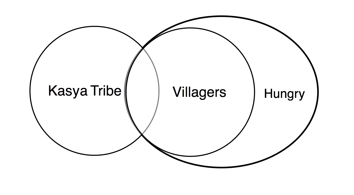
- False – we only know that some of the tribe are villagers.
- False – Everyone who is a villager is hungry but non-villagers could be hungry too.
- True – all villagers are hungry, so this statement is satisfied.
- False – some of the tribe are hungry (the ones that are villagers), but we do not know that all are hungry.
Some treats are ice cream. Some ice creams are desserts. All desserts are sweet.
Explanation
The correct answer is D.
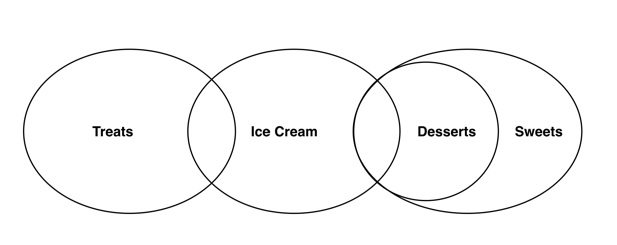
- False – we cannot infer this from the information as we know some ice creams are sweet and some treats are ice cream, but there could be some treats that are not sweet, and therefore wouldn’t be a dessert.
- False – again we cannot infer this from the information.
- False – some ice cream are desserts, not all.
- True – some ice cream is dessert, and all dessert is sweet, so some ice cream is sweet.
All elephants are animals. No elephants are chickens, yet some animals are chickens. All sharks are chickens.
Explanation
The correct answer is C.
We need to build the Venn Diagram step by step:
All elephants are animals…
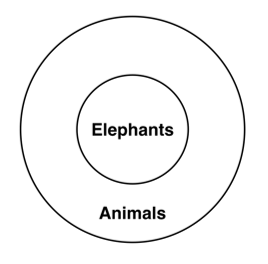
No elephants are chickens, yet some animals are chickens…
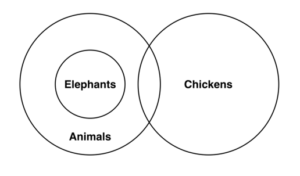
All sharks are chickens…
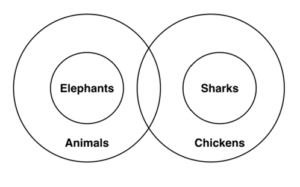
C is therefore our answer.
Four people are taking part in a weight loss scheme – Jack, Samiha, Marco, Julian and Carlo. On the first day, their weights are 62kg, 66kg, 72kg, 74kg, 76kg (not in any order) and by the end of the scheme their weights were 67kg, 56kg, 63kg, 59kg, and 66kg, respectively (meaning that the person with 62kg ended up with 56kg, and so on).
Samiha and Carlo lost the same amount of weight.
One out of Jack and Julian gained weight.
Jack started off with the second highest weight.
Marco ended up with a higher weight than Samiha.
Explanation
The correct answer is C.
The Fill in Method works best for this question.
Step 1: Set up the table
|
Name |
Original Weight |
End Weight |
Weight Change |
|
|
62 |
67 |
+5 |
|
|
66 |
56 |
-10 |
|
|
72 |
63 |
-9 |
|
|
74 |
59 |
-15 |
|
|
76 |
66 |
-10 |
Step 2: Go through each piece of information step by step, updating the table:
Samiha and Carlo lost the same amount of weight…
They must both have lost 10kg as these are the only two equal weight changes.
|
Name |
Original Weight |
End Weight |
Weight Change |
|
|
62 |
67 |
+5 |
|
Samiha / Carlo |
66 |
56 |
-10 |
|
|
72 |
63 |
-9 |
|
|
74 |
59 |
-15 |
|
Samiha / Carlo |
76 |
66 |
-10 |
One out of Jack and Julian gained weight…
Jack or Julian must have gained 5kg, as there is only one person with weight gain.
|
Name |
Original Weight |
End Weight |
Weight Change |
|
Jack / Julian |
62 |
67 |
+5 |
|
Samiha / Carlo |
66 |
56 |
-10 |
|
|
72 |
63 |
-9 |
|
|
74 |
59 |
-15 |
|
Samiha / Carlo |
76 |
66 |
-10 |
Jack started off with the second highest weight…
Jack musth have started off with 74kg, as this is second highest. Therefore we also know that it was Julian who gained 5kg as it cannot have been Jack (and from the previous step we know that it was one of them).
We can also fill in Marco’s position because by default he must occupy the empty spot.
|
Name |
Original Weight |
End Weight |
Weight Change |
|
Julian |
62 |
67 |
+5 |
|
Samiha / Carlo |
66 |
56 |
-10 |
|
Marco |
72 |
63 |
-9 |
|
Jack |
74 |
59 |
-15 |
|
Samiha / Carlo |
76 |
66 |
-10 |
Marco ended up with a higher weight than Samiha…
We know that Samiha either ended up with 56kg or 66kg, with Carlo being the other. Marco ended up with 63kg, so Samiha must have ended up with 56kg and Carlo 63kg.
|
Name |
Original Weight |
End Weight |
Weight Change |
|
Julian |
62 |
67 |
+5 |
|
Samiha |
66 |
56 |
-10 |
|
Marco |
72 |
63 |
-9 |
|
Jack |
74 |
59 |
-15 |
|
Carlo |
76 |
66 |
-10 |
Step 3: Eliminate and select the final answer:
- False – Samiha began with 66kg
- False – Jack began wit
h 74kg - True – both are correct.
- False – Julian gained weight.
- False – the sum of Julian’s (+5) and Carlo’s (-10) change is -5. Jack’s change is -15.
Should the UK leave the Paris agreement on climate change to overcome the issue of budget restriction?
Explanation
The correct answer is C.
- Option A does not address the budget restriction issue, as it doesn’t suggest why benefitting the local economies will help the budget restriction issue.
- Option B does not tell us anything about the Paris agreement or budget restriction.
- Option D addresses the issue of budget restriction, but is based on an assumption that it will lead to more spending in healthcare which may not necessarily occur.
- This leaves Option C, which is the correct answer because it explains two ways in which the Paris agreement actually reduces budget restriction problems in both the private (NGOs) and public sectors.
In order to increase accessibility for those who cannot afford it, should university fees that have to be paid by homegrown students at the beginning of university, such as in the United States, be reduced?
Explanation
The correct answer is D.
- Option A is addressing the issue of future debt for students, rather than the problem of people not being able to access university due to financial problems now.
- Option B ignores the word homegrown.
- Option C does not acknowledge the argument about accessibility of education.
- Option B is correct because it addresses the issue of current financial problems hindering someone’s ability to pay for university.
To help small businesses, should there be a cap on the amount a large corporation can earn?
Explanation
The correct answer is A.
- Options C and D do not address how this will help or affect small businesses. Remember, even if the statement makes sense in a debate, it needs to address all issues of the topic.
- Option B does consider how a cap will affect small businesses, but the logic of the statement does not make sense. It does not explain why having the same turnover will not support small business, but beyond that the logic that all businesses will have the same turnover is flawed as it is a maximum cap that many businesses may not reach.
- Option A is the correct answer because it explains why a cap will help equalise the levels of investment small and big firms have.
A family is passing by a drive-through restaurant. All of the people in the car, except for Sam, want fries. More than one person in the car wants a chicken burger. Everyone orders something.
Explanation
- No. There is no information on whether Sam wants a chicken burger.
- No. They may order something else apart from a burger of fries, such as a milkshake.
- Yes. Everyone in the car wants fries except for Sam.
- No. Again, Sam could want something else than fries or a chicken burger, such as a milkshake.
- Yes. As more than one person wants a chicken burger, and only one person (Sam) doesn’t want fries.
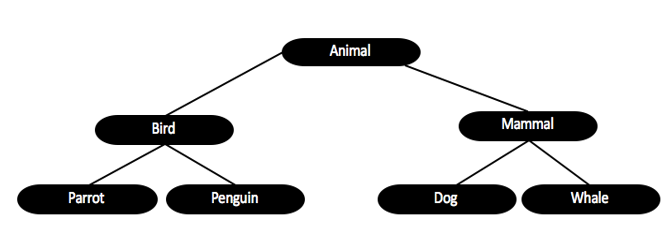
Explanation
The correct answer is C.
For these type of questions you need to consider how many overlapping regions there are as well as how many separate sections there are. We know that there is one main title, and under that title there are two subtitles. Within each of the two subtitles there are two sets as well.
There are likely to be 7 regions in total.
- A is incorrect because it only has 6 regions, ignoring the fact that all the other categories come inside animals.
- B is incorrect because it only has 5 regions, and in general does not represent the information accurately.
- C is correct because it has 7 regions, and fixes the issue we had with A by having an all encompassing circle to represent animals.
Jack is choosing balls and ribbons from a bag. The balls are coloured red, blue and green, and the ribbons are also coloured red, blue and green. Once a ball is picked out of the bag, it is not put back in. Once a ribbon is picked out of the bag, it is replaced. Jack picks a ball and ribbon together in each round.
Explanation
The correct answer is A.
Step 1: Write down the probabilities involved
Let’s first write down the probabilities involved:
3 types of ribbon – 1/3 chance of getting R, B or G
3 types of balls – 1/3 chance of getting R, B or G
Step 2: Work out all possible combinations to get two repeat colours
Then we should look at the combinations that can occur for Jack to have picked the ‘same colour and ribbon twice in a row’. Let b denote bag and r denote ribbon.
RbRr | BbBr
RbRr | GbGr
BbBr | RbRr
BbBr | GbGr
GbGr | RbRr
GbGr | BbBr
This means that there are 6 possible occasions where this could occur.
Step 3: Work out the probability of one of these combinations happening.
Let us work out the probability of one of those occurring – Red Ball and Red Ribbon followed by Blue Ball and Blue Ribbon.
P(Rb) = 1/3
P(Rr) = 1/3
P(RbRr) = 1/3 x 1/3 = 1/9
P(Bb) = 1/2 (there are now two balls remember)
P(Br) = 1/3 (unlike the balls, the ribbons are replaced)
P(BbBr) = 1/2 x 1/3 = 1/6
P(RbRr | BbBr) = 1/9 x 1/6 = 1/54
Step 4: Work out the probability of all six of these combinations happening and hence the final answer.
The probability of all six combinations above is equal. So we can work out the overall probability by multiplying by 6:
1/54 x 6 = 6/54 = 3/27 = 1/9
The answer is therefore 1/9.
John flips a coin every day for 200 days. On any given day, John continues tossing until he lands on tails, when he stops for the day.
Explanation
The correct answer is A.
The probability of getting heads on any coin toss is 0.5.
Lets work out the number of days with:
- 1st toss: On an average of 100 days out of 200, he will get heads in his first toss and toss again.
- 2nd toss: On an average of 50 days out of these 100 he will get heads the second time, and toss again.
- 3rd toss: On an average of 25 days out of these 100 days, he will get tails, ending the game in exactly 3 flips.
If John needs to flip it exactly 3 times a day, it would have to land on heads the first 2 times and land on tails the 3rd time so that he can’t flip it a 4th time, so it can’t be 3 heads it would be only 2 heads and 1 tail).
The answer must be A = 25 days
Lai and Timothy are playing a game called ‘Odds-On’. If they both guess the same number at the same time, they have to complete a dare. They can choose a number between 1 to 100 inclusive.
Explanation
The correct answer is B.
Step 1: Work out how many numbers end in 0 in the range.So, first of all we know that Lai’s number and Timothy’s number are mutually exclusive events. This means that the number Lai chooses does not affect which number Timothy chooses.
The numbers ending in 0 from 1-100 are 10, 20, 30, 40, 50, 60, 70, 80, 90, 100. There are 10 numbers in total ending in 0. We need to work out the probability that they will both guess one of these 10 numbers.
Step 2: Write down the probability of choosing one of these numbers.
The probability of choosing any of these numbers is 1/100 for each player.
Step 3: Write down the combinations that could occur to satisfy the question.
For them to both choose the same number which ends in zero, they need to have one of the following combinations.
The sum of the probabilities
is 10 / 10,000 = 1 / 1,000
Medic Mind Tip: It is not time efficient to draw out this whole table as shown above. We have only presented it in full for clarity, but in the exam you should look to save time wherever possible by avoiding writing down too much in tables.
Medicmind tutor
Medicmind Tutor
Fri, 26 Jul 2024 10:26:53
where is the table?!
Charles and Salina are taking part in a darts tournament. There are 3 rounds and for each round the probability of Charles scoring over 100 points is 0.4.
All three rounds are completely independent. Charles believes he is more likely than not to score over 100 in at least one round.
Explanation
The correct answer is B.
P (scoring over 100 in total at least once) = 1 – P (scoring over 100 zero times)
The probability of Charles scoring below 100 on any given round is 0.6. (1-0.4)
Hence the probability of Charles scoring below 100 three times is 0.6 x 0.6 x 0.6 = 0.216
P (scoring over 100 in total at least once) = 1 – 0.216 = 0.784
The invigilator for A-Level examinations was checking if every pupil in the row was sitting in the right order. Four pupils, named Iresh, Bella, Sheena and Arthur were in the row, and all four were being examined for a different subject – Biology, Chemistry, Art and Philosophy (not in any order).
Bella and Iresh were sitting on the ends of the row, B1 and B4 respectively.
Bella was not being examined for Art.
The pupil examined for Art was sitting next to Sheena.
The pupil sitting on seat B3 was being examined for Chemistry.

Explanation
The correct answer is B.
To tackle this question draw a diagram and work through each statement:
Bella and Iresh were sitting on the ends of the row…
|
Bella |
|
|
Iresh |
Bella was not being examined for Art. The pupil examined for Art was sitting next to Sheena…
|
Bella |
Sheena / Arthur |
Sheena / Arthur |
Iresh |
Sheena can only be at B2 if B3 is studying Art (as Bella doesn’t study Art).
The pupil sitting on seat B3 was being examined for Chemistry…
This confirms that Sheena is sitting at B3, studying Chemistry. If she was at B2, she would be next to Bella (not doing Art) and Arthur (studying Chemistry), which cannot work as she sits next to an Art student.
|
Bella |
Arthur |
Sheena (Chemistry) |
Iresh |
The answer is therefore B.
Wollyworths has a ‘pick and mix’ section where children can choose different types of sweets and combine them into one product. This diagram below illustrates the possibilities with this.
Aaron, a headteacher of a school, picks up 50 different bags for his students.
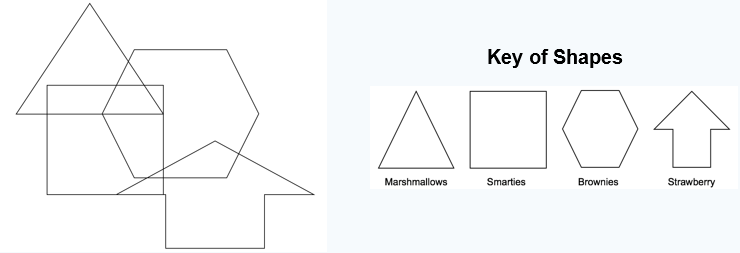
No bags have just Strawberries and Smarties.
No bags have just Brownies and Smarties.
No bags have just Marshmallows and Brownies.
No bags have Strawberries, Brownies and Smarties.
1 bag has just Brownies and Strawberries.
1 bag has just Marshmallows, Smarties and Brownies.
4 bags have just Brownies.
2 bags have just Strawberries.
3 bags have just Smarties.
13 bags have just Marshmallows.
|
|
Marshmallows and Smarties | Smarties and Brownies |
| A | 17 |
4 |
|
B |
18 | 5 |
| C | 18 |
4 |
|
D |
17 | 5 |
| E | 13 |
1 |
Explanation
The correct answer is A.
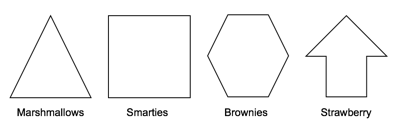
Fill in the Venn Diagram step by step, starting with the information involving the most number of categories.
1 bag has just Brownies and Strawberries.
1 bag has just Marshmallows, Smarties and Brownies.
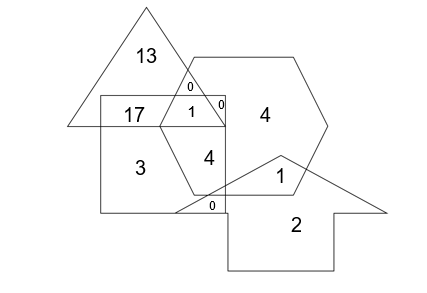
No bags have just Strawberries and Smarties.
No bags have just
Brownies and Smarties.
No bags have just Marshmallows and Brownies.
No bags have Strawberries, Brownies and Smarties.
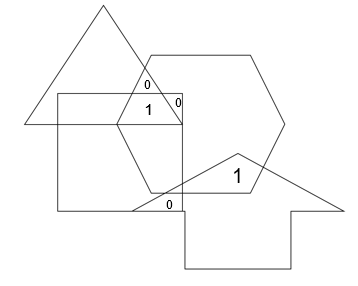
4 bags have just Brownies.
2 bags have just Strawberries.
3 bags have just Smarties.
13 bags have just Marshmallows.
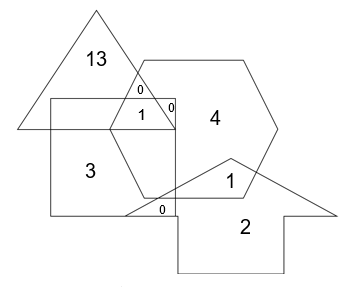
31 bags include Marshmallows.
25 bags include Smarties.
The answer is therefore A.
Medic Mind Tip: This question is quite different to other Venn Diagram questions in the sense that there is less calculating and more manual input of numbers into the correct places in the Venn. However, it takes time to manoeuvre and input the correct numbers, and the various shapes make it all the more challenging. Remember to start with the information involving the most categories.
Medic Mind Tip: This is the type of question which might take 2-3 minutes to do, so if you are running short of time you might want to Flag it and move on.
Charlotte
Medicmind Tutor
Thu, 11 Aug 2022 20:38:50
there are no answer options??
Charlie
Medicmind Tutor
Sun, 25 Jun 2023 13:43:02
The question says no bags have just brownies and smarties so how is it that the answer is 4 bags have just brownies and smarties? Also where did the numbers 31 and 25 come from?
bob
Medicmind Tutor
Mon, 18 Mar 2024 19:25:46
wrong, just wrong
bob
Medicmind Tutor
Mon, 18 Mar 2024 19:26:24
dont waste ur time guys
Chris owns a bakery and records the number of customers he gets on Wednesday, Friday and Sunday. On those three days he had exactly 50 customers. Below are the statistics for the week in general:
13 customers in total came on at least Wednesday
20 customers in total came on at least Sunday
12 repeat customers came on just Wednesday and Friday
13 repeat customers came on just Friday and Sunday
No repeat customers came on just Wednesday and Sunday
No repeat customers came on all three days
Explanation
The correct answer is D. They have presented us with a great deal of information. The best thing to do here would be to covert the information into a form that is understandable – a Venn diagram.
Let’s fill in the information one by one. It is best to start with information that tells us about more than one category so let’s start from the bottom.
No repeat customers came on both Wednesday and Sunday, and no customers came on all three days…
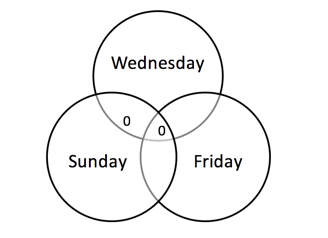
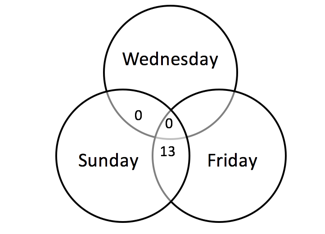
13 repeat customers on just Friday and Sunday…
12 repeat customers on just Wednesday and Friday…
Now we’re left with the rest of the statements that only tell us about each day
individually.
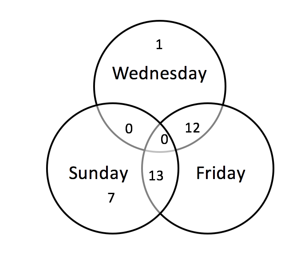 13 customers came on at least Wednesday. 20 customers came on at least Sunday…
We need to put 1 in the ‘Wednesday only’ section because we already have 12 who came on Wednesday and Friday overlap on two days and 13 -12 = 1.
We need to put 7 in the ‘Sunday only’ section as we already have 13 and 20 -13 = 7
If we add up all the numbers that are present in the Venn diagram, we have 33 customers. We know 50 customers came Since we have all the other information in the
Venn diagram apart from customers who came ‘Friday only’, we can minus 50 – 33 = 17.
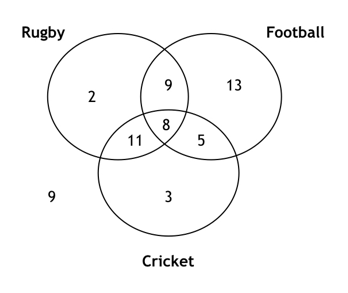
Rickin asked 60 people which sports they liked from rugby, football and cricket.
8 people like all three sports.
17 people like rugby and football.
13 people like football and cricket.
19 people like rugby and cricket.
35 people like football.
27 people like cricket
30 people like rugby.
Explanation
The correct answer is D. As with previous Venn Diagram questions, work through step by step to fill in the Venn. The answer is 9
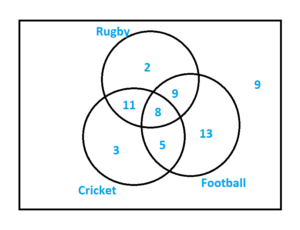
The frozen yoghurt shop Moomoo records its sales over the past week. Customers are allowed to have as many combinations of toppings they want.
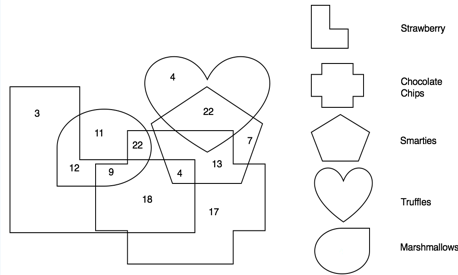
Explanation
The correct answer is C. 4 is the correct number where the three shapes of strawberry, chocolate chips, and smarties overlap.
A group of 27 friends are asking each other what countries they’ve visited in their life. 11 have visited France, 11 have visited Germany and 14 have visited Spain. 6 have visited Spain and Germany and of these 3 have visited France as well.
Explanation
The correct answer is A.
Go through each piece of information to knock out answer options.
A group of 27 friends are asking each other what countries they’ve visited in their life…
Option B does not add up to 27.
11 have visited Franc
e, 11 have visited Germany and 14 have visited Spain…
Option C does not have an extra circle which adds up to 11 nor a circle that adds up to 14.
6 have visited Spain and Germany and of these 3 have visited France as well…
Option D does not have 3 in the centre.
This leaves us with Option A, the correct answer.
This diagram below shows a proposed plan for building a school. Each building has its own unique shape, and they are reserved for the departments of Biology, Chemistry, Maths, Physics and German.
The trapezoid is not allocated to Maths.
The Maths classroom is as far way from Biology as possible, because of the lack of timetable clashes.
Maths is equidistant from Chemistry and Physics.
Physics is closer to Biology than Chemistry.
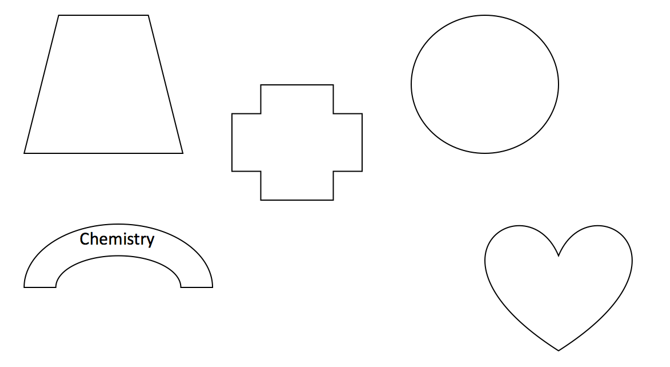
Explanation
The correct answer is D.
The trapezoid is not allocated to Maths. The Maths classroom is as far way from Biology as possible, because of the lack of timetable clashes…
Maths cannot be the trapezoid. To maximise the distance between Maths and Biology we need to pick the plus and heart for these two subjects.
Maths is equidistant from Chemistry and Physics…
Maths must be the plus as it has to be equidistant from Chemistry (arc) and Physics (circle or trapezoid).
Physics is closer to Biology than Chemistry…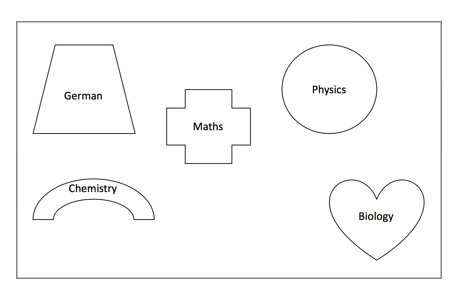
Physics has to be the circle, as the trapezoid is closer to Chemistry than Biology. German by elimination is the trapezoid.
This means that the circle is Physics, D.
Liam, Naomi, Beth and Georgee went to a funfair. There were four stalls and they participated in the four stalls: Go-Karting, Whack-A-Mole, Teacup Ride and a Merry Go Round. They cost £3, £5, £6, £8 (not in any order).
Naomi didn’t go on the Go-Karts but her stall costs less than Georgee’s.
Liam did not spend the most money, but he did spend £2 more than than Beth.
Beth chose to took part on the Merry Go Round.
Liam did not go on the Teacup Ride.
Explanation
The correct answer is D.
We can use the Fill In Method for this question.
Let’s fill in the information one by one. The information which tells us clearly what a person’s stall or cost is, is best to use.
Step 1: Let’s start with stalls.
Beth chose to took part on the Merry Go Round…
Naomi didn’t go on the Go-Karts…
Liam did not go on the Teacup Ride…
|
Name |
Stalls |
Cost |
|
Liam |
N (Teacup) |
|
|
Naomi |
N (Go Kart) |
|
|
Beth |
Merry Go Round |
|
|
Georgee |
|
|
This doesn’t really give an indication of what the most expensive stall is. In Decision Making questions they will present you with a lot of information, and much of it may be unnecessary, but you can rarely know this unless you write the information down in a format which is more understandable like above. In this scenario the stalls were a distractor.
Step 2: Now let’s look at the costs.
Liam did not spend the most money, but he did
spend £2 more than than Beth…
We know that Liam spent more £2 more than Beth. This must mean that their spends must be £8 and £6, or £5 and £3. Liam did not spend the most money, so it must be the latter.
|
Name |
Stalls |
Cost |
|
Liam |
N (Teacup) |
£5 |
|
Naomi |
N (Go Kart) |
|
|
Beth |
Merry Go Round |
£3 |
|
Georgee |
|
|
Naomi didn’t go on the Go-Karts but her stall costs less than Georgee’s…
We’re left with the fact that two items cost £6 and £8. We know Naomi’s stall cost less than Georgee’s, so Georgee’s spend was the most expensive – £8.
|
Name |
Stalls |
Cost |
|
Liam |
N (Teacup) |
£5 |
|
Naomi |
N (Go Kart) |
£6 |
|
Beth |
Merry Go Round |
£3 |
|
Georgee |
|
£8 |
Sam has a sandwich everyday. In this sandwich, his mum lets him have no more than 2 fillings out of Beetroot and Cucumber. One day, his Mum also buys Halloumi filling, which he hasn’t tried before.
Explanation
The correct answer is A.
Cucumber = C Beetroot = B Halloumi = H
Let’s take the three fillings as x and y. At first, these were the possible combination of fillings Sam could have:
C, B, CB = 3 combinations
Now we have H (Hall
oumi). These are the possible combinations with Halloumi:
C, B, CB (ones from before)
H, CH, BH (new combinations)
This means there are now 6 combinations, in addition to the original 3. The correct statement is therefore A.
Jane is preparing a cup of tea for each person in a group of 16 people. Some people prefer only 1 sugar cube per cup of tea while others prefer 2 or 3.
Jane uses a total of 32 sugar cubes to meet these people’s preferences.
Explanation
The correct answer is B.
First, let’s give everyone 1 sugar cube. This leaves us with 32 – 16 = 16 cubes.
These leftover cubes should be distributed to maximise the number of people with 3 cubes.
16/(3-1) = 8
There is a class of 60 students. 32 study French and 28 study German. 5 study neither.
Explanation
The correct answer is B.
Firstly do 60 – 5 = 55. This is the number of people that study only French, only German, or both.
(Students studying French) + (Students studying German) – (Students studying both) = 55
32 + 28 – 55 = 5
Decision Making Review Screen
Instructions
Below is a summary of your answers. You can review your questions in three (3) different ways.
The buttons in the lower right-hand corner correspond to these choices:
1. Review all of your questions and answers.
2. Review questions that are incomplete.
3. Review questions that are flagged for review. (Click the 'flag' icon to change the flag for review status.)
You may also click on a question number to link directly to its location in the exam.
Decision Making Section
Quantitative Reasoning Practice Subtest Instructions
In the section of the exam, you will be presented with questions that may refer to charts or graphs containing data. Additional information may also be found within the question itself. Most questions will be shown as sets of four questions each connected to the same data. There are some questions that standalone and do not share data. Each questions has five answers options. Your task is to choose the best option.
An onscreen calculator is available to assist you with this section – you can access this by clicking on the button at the top left of the screen.
It is in your best interest to answer all questions as there is no penalty for guessing. All unanswered questions will be scored as incorrect.
Click the Next (N) button to proceed.
The bar chart below shows the trends in prices of four luxury watches from four different designers; Watchex, Alpha, Remond and Longek.
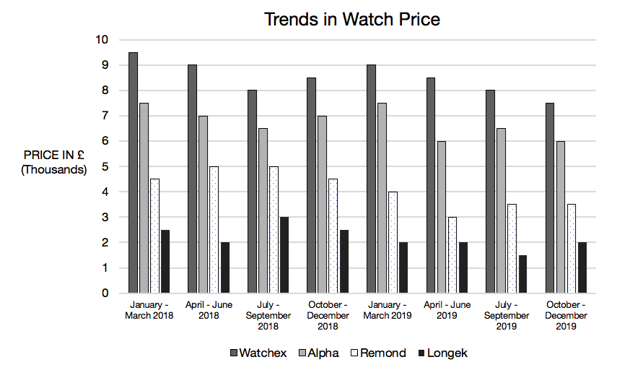
Explanation
The correct answer is C.
- Work out the difference in price:
Price in 2018 = 5000
Price in 2019 = 3000
Difference = £2000
Top tip: don’t forget that the y axis is in thousands, so multiply any price values by £1000 to arrive at the correct answer.
The bar chart below shows the trends in prices of four luxury watches from four different designers; Watchex, Alpha, Remond and Longek.
Explanation
The correct answer is E.
1. Work out the watch value for each time period:
9.5 + 9 + 8 + 8.5 + 9 = 44
2. Divide this by the number of time periods:
44/5 = 8.8
8.8 x 1000 = 8800
Common trap: the question only asks for the mean value from January 2018 to March 2019, so only calculate the average value for these time periods. Calculating the overall value will lead to option C.
Timing tip: in this question, the fact that 1000 watches were available in every time period is irrelevant to the calculation – we just need to know that the number is the same between time periods to calculate the mean accurately. Be selective with the information you use as not all of it is needed, and much of the additional information will only slow you down.
Z
Medicmind Tutor
Mon, 11 Sep 2023 07:25:38
Since it is asking for the mean value of a Watchex watch and not the total mean earned in a month over that period, wouldn't the answer be option B? why is the average watch value of 8.8 multiplied by 1000 at the end?
The bar chart below shows the trends in prices of four luxury watches from four different designers; Watchex, Alpha, Remond and Longek.
Explanation
The correct answer is D.
- Work out the values of a Longek watch in 2018:
The values are 2.5, 2, 3 and 2.5. Since 2.5 is the most recurrent number, this is the mode.
- Multiply this by 1000:
1000 x 2.5 = 2500
Common trap: if you take data from the whole of 2018 and 2019, the mode becomes £2000. Read the question carefully to make sure you interpret the data correctly.
The bar chart below shows the trends in prices of four luxury watches from four different designers; Watchex, Alpha, Remond and Longek.
Explanation
The correct answer is D.
we need to calculate the median and mean price for each of the brands.
- Calculate the values for Watchex:
Median:
The values (in ascending order) are:
7.5 8 8 8.5 8.5 9 9 9.5
So the median is 8.5.
Mean:
(7.5 + 8 + 8 + 8.5 + 8.5 + 9 + 9 + 9.5) = 68
68/8 = 8.5
So there is no difference between the mean and median.
- Calculate the values for Alpha:
Median:
The values (in ascending order) are:
6 6 6.5 6.5 7 7 7.5 7.5
So the median is (6.5 + 7) /2 = 6.75
Mean:
(6 + 6 + 6.5 + 6.5 + 7 + 7 + 7.5 + 7.5) = 54
54/8 = 6.75
So there is no difference between the mean and median.
- Calculate the values for Remond:
Median:
The values (in ascending order) are:
3 3.5 3.5 4 4.5 4.5 5 5
So the median is (4 + 4.5) / 2 = 4.25
Mean:
3 + 3.5 + 3.5 + 4 + 4.5 + 4.5 + 5 + 5 = 33
33/8 = 4.125
So the difference between median and mean is:
4.25 – 4.125 = 0.125 (x 1000 = £125)
- Calculate the values for Longek:
Median:
The values (in ascending order) are:
1.5 2 2 2 2 2.5 2.5 3
So the median is (2+2)/2 = 2
Mean:
1.5 + 2 + 2 + 2 + 2 + 2.5 + 2.5 + 3 = 17.5
17.5/8 = 2.1875
So the difference between median and mean is:
2.1875 – 2 = 0.1875 (x 1000 = £187.50)
Top tip: for Remond and Alpha, when you put the values in order you may be able to tell that they are evenly distributed about the median and therefore the mean and median will be equal. This could save a lot of time on half the calculations, as you only need to consider options C, D and E.
Timing tip: this is a time-consuming question. If it is beginning to take too long, flag it and review it if you have time at the end of the section.
The table below shows the (incomplete) exam results of a group of students studying Mathematics at university. All marks are given in whole percentages.
|
Module |
0-49% |
50-59% |
60-69% |
70-79% |
80-89% |
90-100% |
Total |
|
1 |
|
62 |
75 |
45 |
10 |
|
200 |
|
2 |
1 |
54 |
68 |
54 |
19 |
4 |
200 |
|
3 |
12 |
60 |
79 |
41 |
|
1 |
200 |
The number of students achieving 90-100% in Module 1 was the same as the number of students achieving 0-49%.
A mark below 50% is considered to be a fail.
Explanation
The correct answer is D.
-
54 + 68 + 54 + 19 + 4 = 199
Timing tip: a quicker way to calculate this in your head would be to subtract 1 from 200, giving 199.
The table below shows the (incomplete) exam results of a group of students studying Mathematics at university. All marks are given in whole percentages.
|
Module |
0-49% |
50-59% |
60-69% |
70-79% |
80-89% |
90-100% |
Total |
|
1 |
|
62 |
75 |
45 |
10 |
|
200 |
|
2 |
1 |
54 |
68 |
54 |
19 |
4 |
200 |
|
3 |
12 |
60 |
79 |
41 |
|
1 |
200 |
The number of students achieving 90-100% in Module 1 was the same as the number of students achieving 0-49%.
A mark below 50% is considered to be a fail.
Explanation
The correct answer is C.
- Work out how many students passed Module 1 (apart from 90-100%)
62 + 75 + 45 + 10 = 192
- Subtract this from the total number of students:
200 – 192 = 8
- Divide this by two:
8/2 = 4 students
The table below shows the (incomplete) exam results of a group of students studying Mathematics at university. All marks are given in whole percentages.
|
Module |
0-49% |
50-59% |
60-69% |
70-79% |
80-89% |
90-100% |
Total |
|
1 |
|
62 |
75 |
45 |
10 |
|
200 |
|
2 |
1 |
54 |
68 |
54 |
19 |
4 |
200 |
|
3 |
12 |
60 |
79 |
41 |
|
1 |
200 |
The number of students achieving 90-100% in Module 1 was the same as the number of students achieving 0-49%.
A mark below 50% is considered to be a fail.
Explanation
The correct answer is D.
- Work out the number of students achieving less than 80%:
12 + 60 + 79 + 41 = 192
- Subtract this value from 200:
200 – 192 = 8
- Calculate this value as a percentage of 200:
8/200 x 100 = 4
Timing tip: an easy shortcut for this question would be to just divide 8 by 2 in the final step. We know that any fraction of 200 will be double its percentage (out of 100) so we can just halve the value to find the percentage.
The table below shows the (incomplete) exam results of a group of students studying Mathematics at university. All marks are given in whole percentages.
|
Module |
0-49% |
50-59% |
60-69% |
70-79% |
80-89% |
90-100% |
Total |
|
1 |
|
62 |
75 |
45 |
10 |
|
200 |
|
2 |
1 |
54 |
68 |
54 |
19 |
4 |
200 |
|
3 |
12 |
60 |
79 |
41 |
|
1 |
200 |
The number of students achieving 90-100% in Module 1 was the same as the number of students achieving 0-49%.
A mark below 50% is considered to be a fail.
Explanation
The correct answer is C.
- Calculate the weighted sum of the scores:
(25 x 1) + (55 x 54) + (65 x 68) + (75 x 54) + (85 x 19) + (95 x 4) = 13460
- Divide this by the total number of students:
13460 / 200 = 67.3%.
Common trap: remember that for this question you need to work out the weighted mean, where unlike a simple mean, some values contribute more ‘weight’ than others. Simply
The table below shows the statistics for the first two screenings of a new children’s movie; one at 11:30am and one at 15:30pm.
|
Category |
Age |
Price (£) |
11:30am |
15:30pm |
||
|
Male |
Female |
Male |
Female |
|||
|
Infants |
<3 |
0.00 |
15 |
14 |
12 |
10 |
|
Children |
3-15 |
3.50 |
82 |
74 |
83 |
80 |
|
Young people |
16-24 |
7.80 |
7 |
7 |
5 |
6 |
|
Adults |
25-64 |
8.90 |
15 |
21 |
17 |
24 |
|
Senior citizens |
65+ |
6.70 |
7 |
8 |
7 |
6 |
Explanation
The correct answer is E.
- Work out the number of attendees:
15 + 14 + 82 + 74 + 7 + 7 + 15 + 21 + 7 + 8 = 250
- Calculate the ratio of attendees to staff:
250/5 = 50 so the ratio is 50:1.
Common trap: read the question carefully to ensure that you work the ratio out the right way around- since the ratio is attendees to staff there are 50 attendees for every staff member, so the ratio is 50:1.
asab
Medicmind Tutor
Thu, 08 Sep 2022 12:57:37
I don't think the question is relevant to the stem. Am I wrong?
The table below shows the statistics for the first two screenings of a new children’s movie; one at 11:30am and one at 15:30pm.
|
Category |
Age |
Price (£) |
11:30am |
15:30pm |
||
|
Male |
Female |
Male |
Female |
|||
|
Infants |
<3 |
0.00 |
15 |
14 |
12 |
10 |
|
Children |
3-15 |
3.50 |
82 |
74 |
83 |
80 |
|
Young people |
16-24 |
7.80 |
7 |
7 |
5 |
6 |
|
Adults |
25-64 |
8.90 |
15 |
21 |
17 |
24 |
|
Senior citizens |
65+ |
6.70 |
7 |
8 |
7 |
6 |
Explanation
The correct answer is D.
- Calculate the total number of children:
83 + 80 + 12 + 10 = 185
- Calculate the number of adults at the 3:30pm screening:
17 + 24 = 41
- Divide the number of children by the number of adults:
185/41 = 4.51
Top tip: you could try to estimate the answer for this question; since 180/40 simplifies to 9/2 (=4.5), you can guess that option D is the best estimate of the correct answer.
Isabella
Medicmind Tutor
Sat, 16 Sep 2023 16:28:08
I have seen questions like this and you can never have a part of a person/child
The table below shows the statistics for the first two screenings of a new children’s movie; one at 11:30am and one at 15:30pm.
|
Category |
Age | Price (£) | 11:30am | 15:30pm | ||
| Male | Female | Male |
Female |
|||
|
Infants |
<3 | 0.00 | 15 | 14 | 12 | 10 |
| Children | 3-15 | 3.50 | 82 | 74 | 83 |
80 |
|
Young people |
16-24 | 7.80 | 7 | 7 | 5 | 6 |
| Adults | 25-64 | 8.90 | 15 | 21 | 17 |
24 |
|
Senior citizens |
65+ | 6.70 | 7 | 8 | 7 |
6 |
Explanation
The correct answer is D.
- Number of females at 3:30pm:
10 + 80 + 6 + 24 + 6 = 126
- Number of females at 11:30am:
14 + 74 + 7 + 21 + 8 = 124
- Calculate the difference:
126 – 124 = 2
The table below shows the statistics for the first two screenings of a new children’s movie; one at 11:30am and one at 15:30pm.
|
Category |
Age |
Price (£) |
11:30am |
15:30pm |
||
|
Male |
Female |
Male |
Female |
|||
|
Infants |
<3 |
0.00 |
15 |
14 |
12 |
10 |
|
Children |
3-15 |
3.50 |
82 |
74 |
83 |
80 |
|
Young people |
16-24 |
7.80 |
7 |
7 |
5 |
6 |
|
Adults |
25-64 |
8.90 |
15 |
21 |
17 |
24 |
|
Senior citizens |
65+ |
6.70 |
7 |
8 |
7 |
6 |
Explanation
The correct answer is B.
We are looking at the difference in income generated by young people, adults and senior citizens only.
- Calculate the 16+ income from the 11:30am screening:
(7 + 7) x 7.80 = 109.2
(15 + 21) x 8.90 = 320.4
(7 + 8) x 6.70 = 100.5
Total income = 109.2 + 320.4 + 100.5 = £530.10
- Calculate the 16+ income from the 3:30pm screening:
(5 + 6) x 7.80 = 85.8
(17 + 24) x 8.90 = 364.9
(7 + 6) x 6.70 = 87.1
Total income = 85.8 + 364.9 + 87.1 = £537.80
- Calculate the percentage difference:
537.8/530.1 = 1.0145
So the percentage increase is 1.45%.
Common trap: be careful that you get the numbers the right way around for percentage questions – since the question asks for the increase in income from the 3:30pm screening, put the values for the 3:30pm screening on top.
Zusi is a popular retailer which sells three denim items – denim jackets, shorts and jeans. The table below shows the revenue generated from the first three months of 2019 for each of the three denim items sold.
|
Item |
January 2019 Revenue (million £) |
February 2019 Revenue (million £) |
March 2019 Revenue (million £) |
|
Jackets |
3.0 |
4.2 |
3.8 |
|
Shorts |
1.2 |
1.3 |
1.6 |
|
Jeans |
9.7 |
8.8 |
8.0 |
Explanation
The correct answer is D.
- Calculate the percentage increase:
3.8/3.0 = 1.2667
So percentage increase = 26.7%.
Zusi is a popular retailer which sells three denim items – denim jackets, shorts and jeans. The table below shows the revenue generated from the first three months of 2019 for each of the three denim items sold.
|
Item |
January 2019 Revenue (million £) | February 2019 Revenue (million £) | March 2019 Revenue (million £) |
| Jackets | 3.0 | 4.2 |
3.8 |
|
Shorts |
1.2 | 1.3 | 1.6 |
| Jeans | 9.7 | 8.8 |
8.0 |
Explanation
The correct answer is E.
- Calculate total revenue in February:
4.2 + 1.3 + 8.8 = 14.3 million
- Calculate the percentage of this revenue from jeans:
8.8/14.3 x 100 = 61.5%
Top tip: although the units in the table are in million £, you do not need to multiply by 1 million in the calculations, as every value will be increased or decreased by the same amount and thus the percentage increases/decreases will be the same.
Zusi is a popular retailer which sells three denim items – denim jackets, shorts and jeans. The table below shows the revenue generated from the first three months of 2019 for each of the three denim items sold.
|
Item |
January 2019 Revenue (million £) |
February 2019 Revenue (million £) |
March 2019 Revenue (million £) |
|
Jackets |
3.0 |
4.2 |
3.8 |
|
Shorts |
1.2 |
1.3 |
1.6 |
|
Jeans |
9.7 |
8.8 |
8.0 |
Explanation
The correct answer is D.
- Calculate the January revenue:
3.0 + 1.2 + 9.7 = 13.9
- Calculate the February revenue:
4.2 + 1.3 + 8.8 = 14.3
- Calculate the March revenue:
3.8 + 1.6 + 8.0 = 13.4
- Calculate the mean monthly revenue:
13.4 + 13.9 + 14.3 = 41.6
41.6/3 = 13.9 million
Common trap: with answer options that are close together, remember to check your rounding; since 13.867 rounds to 13.9 the answer is D and not C.
Zusi is a popular retailer which sells three denim items – denim jackets, shorts and jeans. The table below shows the revenue generated from the first three months of 2019 for each of the three denim items sold.
|
Item |
January 2019 Revenue (million £) |
February 2019 Revenue (million £) |
March 2019 Revenue (million £) |
|
Jackets |
3.0 |
4.2 |
3.8 |
|
Shorts |
1.2 |
1.3 |
1.6 |
|
Jeans |
9.7 |
8.8 |
8.0 |
Explanation
The correct answer is B.
- Work out the total revenue:
9.7 + 1.2 + 3.0 = 13.9
- Work out the income before tax:
13.9 – 5.7 = 8.2 million
- Calculate the amount of tax paid:
0.35 x 8.2 = 2.87 million
Common trap: read the question carefully. The question asks for the amount of tax Zusi paid, not the income in January. This would lead you incorrectly to option C.
A factory produces cereal boxes with 5 identical machines.
The machines begin production at 9am and work until 6pm from Monday to Saturday.
One machine can produce 100 cereal boxes per hour.
Each box is closed with the bag of cereal inside.
The dimensions of one cereal box are 12 x 8 x 3 inches.
Explanation
The correct answer is E.
- Calculate the number of working hours:
From 9am to 6pm, there are 9 working hours.
9 x 6 = 54 hours per machine
54 x 4 = 216 working hours for all the machines
- Calculate the number of boxes produced:
216 x 100 = 21600 boxes.
Top tip: always read any text at the start of a new set of questions carefully, as it often contains information you may need to answer the question.
A factory produces cereal boxes with 5 identical machines.
The machines begin production at 9am and work until 6pm from Monday to Saturday.
One machine can produce 100 cereal boxes per hour.
Each box is closed with the bag of cereal inside.
The dimensions of one cereal box are 12 x 8 x 3 inches.
Explanation
The correct answer is C.
- Calculate the number of cereal boxes produced in one day:
9 x 5 = 45 working hours per day
45 x 100 = 4500
- Calculate the cost of making these boxes:
4500 x 0.15 = £675.
Common trap: pay close attention to units. The cost of making one cereal box is in pence, but the answer is given in pounds.
A factory produces cereal boxes with 5 identical machines.
The machines begin production at 9am and work until 6pm from Monday to Saturday.
One machine can produce 100 cereal boxes per hour.
Each box is closed with the bag of cereal inside.
The dimensions of one cereal box are 12 x 8 x 3 inches.
Explanation
The correct answer is C.
- Work out the volume of the large box in inches:
2 feet = 24 inches
3 feet = 36 inches
4 feet = 48 inches
Volume = 24 x 36 x 48 = 41472 square inches.
- Work out the volume of one cereal box:
12 x 8 x 3 = 288 square inches
- Divide the volume of the large box by the volume of the cereal boxes:
41472/288 = 144 boxes
Timing tip: Try not to rely on the calculator too much as this will slow you down. The conversion from feet to inches is an easy one (x12) so you can work out these sums in your head.
A factory produces cereal boxes with 5 identical machines.
The machines begin production at 9am and work until 6pm from Monday to Saturday.
One machine can produce 100 cereal boxes per hour.
Each box is closed with the bag of cereal inside.
The dimensions of one cereal box are 12 x 8 x 3 inches.
Explanation
The correct answer is C.
- Calculate the surface area of one box:
2(12 x 8) + 2(3 x 12) + 2(3 x 8) = 312 square inches
- Calculate the number of boxes produced in two days:
9 x 5 x 100 x 2 = 9000 boxes
- Calculate the total number of square inches:
For all 9000 cereal boxes:
312 x 9000 = 2,808,000 square inches
- Calculate the cost of printing:
2808000 x 0.03 = £84,240
Top tip: get familiar with the UCAT calculator onscreen. It is quite slow to use, so only use it when necessary, but knowing shortcuts and functions such as the ‘answer’ button will help to speed up your calculations.
The table below shows the average quantity of food wasted in kilograms per person per year for two countries; the UK and France.
|
|
Food waste (kg per person per year) |
||||||||
|
|
1986 |
1990 |
1994 |
1998 |
2002 |
2006 |
2010 |
2014 |
2018 |
|
UK |
99 |
102 |
112 |
109 |
128 |
142 |
133 |
156 |
125 |
|
France |
102 |
105 |
111 |
117 |
119 |
134 |
120 |
135 |
140 |
Explanation
The correct answer is B.
- Calculate the percentage change between the two values:
125/99 = 1.263
So percentage change = 26%.
The table below shows the average quantity of food wasted in kilograms per person per year for two countries; the UK and France.
|
|
Food waste (kg per person per year) |
||||||||
|
|
1986 |
1990 |
1994 |
1998 |
2002 |
2006 |
2010 |
2014 |
2018 |
|
UK |
99 |
102 |
112 |
109 |
128 |
142 |
133 |
156 |
125 |
|
France |
102 |
105 |
111 |
117 |
119 |
134 |
120 |
135 |
140 |
Explanation
The correct answer is A.
- Calculate the amount of food wasted in 2014:
66 x 135 = 8910 million
- Calculate the amount of food wasted in 1990:
58 x 105 = 6090 million
- Calculate the difference between the two values:
8910 – 6090 = 2820 million kg
Converting into tonnes:
2820/1000 = 2.82 million tonnes.
Top tip: learn common conversions, such as kg to tonnes, as these frequently come up in the UCAT.
The table below shows the average quantity of food wasted in kilograms per person per year for two countries; the UK and France.
|
|
Food waste (kg per person per year) |
||||||||
|
|
1986 |
1990 |
1994 |
1998 |
2002 |
2006 |
2010 |
2014 |
2018 |
|
UK |
99 |
102 |
112 |
109 |
128 |
142 |
133 |
156 |
125 |
|
France |
102 |
105 |
111 |
117 |
119 |
134 |
120 |
135 |
140 |
Explanation
The correct answer is C.
- Calculate the mass of fruit and vegetables wasted:
0.3 x 128 = 38.4kg
Timing tip: try to use the multiplier method when working out percentages as it is much faster. To find 30% of a value, simply multiply by 0.3.
The table below shows the average quantity of food wasted in kilograms per person per year for two countries; the UK and France.
|
|
Food waste (kg per person per year) |
||||||||
|
|
1986 |
1990 |
1994 |
1998 |
2002 |
2006 |
2010 |
2014 |
2018 |
|
UK |
99 |
102 |
112 |
109 |
128 |
142 |
133 |
156 |
125 |
|
France |
102 |
105 |
111 |
117 |
119 |
134 |
120 |
135 |
140 |
Explanation
The correct answer is C.
- Work out the mean food waste produced in the UK:
128 + 133 + 142 + 156 + 125 = 684
684/5 = 136.8
- Work out the mean food waste produced in France:
119 + 134 + 120 + 135 + 140 = 648
648/5 = 129.6
- Work out the percentage difference:
136.8/129.6 = 1.0556
So percentage difference = 5.6%
Common trap: make sure that the percentage is taken in relation to food waste in France to find the percentage increase.
The table below shows the highest and lowest temperatures in five different towns.
|
City |
Highest recorded temperature (°C) |
Lowest recorded temperature (°C) |
|
Tyngrave |
55 |
10 |
|
Dorbar |
43 |
-11 |
|
Ginli |
38 |
-14 |
|
Resthall |
49 |
-2 |
|
Herwa |
19 |
-33 |
Explanation
The correct answer is B.
- Calculate the range for each town:
Tyngrave: 55-10 = 45
Dorbar: 43 + 11 = 54
Ginli: 38 + 14 = 52
Resthall: 49 + 2 = 51
Herwa: 19 + 33 = 52
So the town with the biggest range is Dorbar.
The table below shows the highest and lowest temperatures in five different towns.
|
City |
Highest recorded temperature (°C) |
Lowest recorded temperature (°C) |
|
Tyngrave |
55 |
10 |
|
Dorbar |
43 |
-11 |
|
Ginli |
38 |
-14 |
|
Resthall |
49 |
-2 |
|
Herwa |
19 |
-33 |
Explanation
The correct answer is D.
- Calculate the percentage increase:
55/43 = 1.279
So the temperature is 27.9% higher.
Timing tip: this is a relatively simple sum as it only takes one step to complete. Try to complete these as quickly as possible in order to have more time for the longer multi-step calculations later on.
The table below shows the highest and lowest temperatures in five different towns.
|
City |
Highest recorded temperature (°C) |
Lowest recorded temperature (°C) |
|
Tyngrave |
55 |
10 |
|
Dorbar |
43 |
-11 |
|
Ginli |
38 |
-14 |
|
Resthall |
49 |
-2 |
|
Herwa |
19 |
-33 |
Explanation
The correct answer is C.
- Convert the values to Farenheit:
Tyngrave: (55 x 1.8) + 32 = 131
Dorbar: (43 x 1.8) + 32 = 109.4
- Calculate the percentage difference:
131/109.4 = 1.1974
So the Tyngrave value is 19.7% higher.
Common trap: this question appears very similar to the previous question; however, it is important to remember that the conversion between Celsius and Farenheit involves addition and therefore the relative proportions will not be the same. It is necessary to work out a new percentage increase.
The table below shows the highest and lowest temperatures in five different towns.
|
City |
Highest recorded temperature (°C) |
Lowest recorded temperature (°C) |
|
Tyngrave |
55 |
10 |
|
Dorbar |
43 |
-11 |
|
Ginli |
38 |
-14 |
|
Resthall |
49 |
-2 |
|
Herwa |
19 |
-33 |
Explanation
The correct answer is C.
- Calculate the sum of the lowest recorded values:
10 – 11 – 19 – 2 – 33 = -55
- Calculate the new mean:
-55/5 = -11°C.
Top tip: always treat each question in the QR section as independent and don’t look back at previous answers, as the situation may change in each question. For example, here there is a new low temperature of -19°C but this does not affect the answer to question 1.
a
Medicmind Tutor
Sat, 03 Sep 2022 11:32:57
says -19 but my table has -14
Claire is setting up her new business and has just purchased a shop with floor dimensions of 15 metres by 28 metres. She is deciding which option to choose in terms of flooring. Her options are shown in the table below. The replacement column refers to how often the flooring will have to be replaced – for example, if it reads as 8, the flooring will have to be replaced once every eight years.
|
Type |
Flooring cost (£/m2) | Installation cost (£/m2) | Replacement (years) |
| Wood | 62 | 5.40 |
15 |
|
Nylon carpet |
24 | 9.80 | 6 |
| Acrylic carpet | 36 | 9.80 |
8 |
|
Wool carpet |
46 | 9.80 |
7 |
Explanation
The correct answer is A.
- Calculate the cost per metre squared for all:
62 + 5.40 = £67.40
24 + 9.80 = £33.80
36 + 9.80 = £45.80
46 + 9.80 = £55.80
So the wood type is the most expensive.
Timing tip: it is not necessary to multiply the numbers by the floor dimensions; if the material is more expensive per square metre it will be more expensive for the whole shop floor.
Timing tip: this is a relatively easy question and you may be able to do it by inspection, or with very little working. The installation costs for all the types of carpet are the same, so you just need to consider wood or wool carpet as the most expensive.
Claire is setting up her new business and has just purchased a shop with floor dimensions of 15 metres by 28 metres. She is deciding which option to choose in terms of flooring. Her options are shown in the table below. The replacement column refers to how often the flooring will have to be replaced – for example, if it reads as 8, the flooring will have to be replaced once every eight years.
|
Type |
Flooring cost (£/m2) |
Installation cost (£/m2) |
Replacement (years) |
|
Wood |
62 |
5.40 |
15 |
|
Nylon carpet |
24 |
9.80 |
6 |
|
Acrylic carpet |
36 |
9.80 |
8 |
|
Wool carpet |
46 |
9.80 |
7 |
Explanation
The correct answer is D.
- Calculate the cost per metre squared:
36 + 9.80 = 45.80
- Calculate the area of the shop floor:
15 x 28 = 420
- Work out the overall cost:
45.80 x 420 = £19236
Claire is setting up her new business and has just purchased a shop with floor dimensions of 15 metres by 28 metres. She is deciding which option to choose in terms of flooring. Her options are shown in the table below. The replacement column refers to how often the flooring will have to be replaced – for example, if it reads as 8, the flooring will have to be replaced once every eight years.
|
Type |
Flooring cost (£/m2) |
Installation cost (£/m2) |
Replacement (years) |
|
Wood |
62 |
5.40 |
15 |
|
Nylon carpet |
24 |
9.80 |
6 |
|
Acrylic carpet |
36 |
9.80 |
8 |
|
Wool carpet |
46 |
9.80 |
7 |
Explanation
The correct answer is C.
- Work out the cost of a nylon carpet in the original size:
Cost per metre squared = 24 + 9.8 = 33.80
15 x 28 = 420
33.80 x 420 = 14196
- Work out the cost of a nylon carpet in the larger size:
16 x 29 = 464
33.80 x 464 = 15683.20
- Work out the difference between the two values:
16054.40 – 14532 = £1522.40
15683.20 – 14196 = £1487.20 – which rounds up to £1500
Timing tip: there is a much faster shortcut for this question. Since the cost does not differ between different carpet sizes, simply find the difference between the areas and calculate this by the cost per metre squared.
Claire is setting up her new business and has just purchased a shop with floor dimensions of 15 metres by 28 metres. She is deciding which option to choose in terms of flooring. Her options are shown in the table below. The replacement column refers to how often the flooring will have to be replaced – for example, if it reads as 8, the flooring will have to be replaced once every eight years.
|
Type |
Flooring cost (£/m2) |
Installation cost (£/m2) |
Replacement (years) |
|
Wood |
62 |
5.40 |
15 |
|
Nylon carpet |
24 |
9.80 |
6 |
|
Acrylic carpet |
36 |
9.80 |
8 |
|
Wool carpet |
46 |
9.80 |
7 |
Explanation
The correct answer is A.
Work out the costs for all four types of flooring over 14 years.
- Calculate the cost of wood flooring:
62 + 5.40 = 67.40
Wood lasts for over 14 years so cost = £67.40 per square metre for 14 years
- Calculate the cost of nylon carpet:
24 + 9.80 = 33.80
Nylon carpet would have to be replaced twice over 14 years:
33.80 x 3 = 101.40 per square metre for 14 years
- Calculate the cost of acrylic carpet:
36 + 9.80 = 45.80
Acrylic carpet would have to be replaced once:
45.80 x 2 = £91.60 per square metre for 14 years
- Calculate the cost of wool carpet:
46 + 9.80 = 55.80
Wool carpet would have to be replaced once over 14 years:
55.80 x 2 = £111.60 per square metre for 14 years
So wood is the best value for money.
Timing tip: try to rule out possibilities where you can. For example, we know that wool carpet is more expensive per square metre than acrylic carpet but needs to be replaced the same number of times, so this can be ruled out as the best value for money.
The table below shows the tax paid by the residents of Cleoport.
|
Annual taxable income (£) |
Tax rate (%) |
Tax paid at the top of this bracket (£) |
Percentage of residents (%) |
|
0-20,000 |
5 |
1000 |
15 |
|
20,000-35,000 |
10 |
2500 |
44 |
|
35,000-50,000 |
15 |
4750 |
24 |
|
50,000-65,000 |
20 |
7750 |
9 |
|
65,000-80,000 |
25 |
11500 |
6 |
|
80,000 and over |
30 |
– |
2 |
Explanation
The correct answer is D.
- Work out Mandy’s annual income:
2200 x 12 = 26,400
- Work out her annual income tax:
26,400 – 20,000 = 6400
6400 x 0.1 = 640
1000 + 640 = 1640
- Calculate the average tax paid per month:
1640/12 = £137
Top tip: some tax questions in the UCAT will have a column telling you the amount of tax paid at the top of the bracket. Use this column as it will save you time and potential errors working them out yourself.
The table below shows the tax paid by the residents of Cleoport.
|
Annual taxable income (£) |
Tax rate (%) |
Tax paid at the top of this bracket (£) |
Percentage of residents (%) |
|
0-20,000 |
5 |
1000 |
15 |
|
20,000-35,000 |
10 |
2500 |
44 |
|
35,000-50,000 |
15 |
4750 |
24 |
|
50,000-65,000 |
20 |
7750 |
9 |
|
65,000-80,000 |
25 |
11500 |
6 |
|
80,000 and over |
30 |
– |
2 |
Explanation
The correct answer is C.
- Calculate the proportion of residents in the final two tax bands:
6 + 2 = 8 so 8% of this sample will pay over £7750 annually.
0.08 x 500 = 40 people
Top tip: don’t be put off if a question sounds confusing. In actuality, this question is simple and only requires a basic percentage calculation.
The table below shows the tax paid by the residents of Cleoport.
|
Annual taxable income (£) |
Tax rate (%) |
Tax paid at the top of this bracket (£) |
Percentage of residents (%) |
|
0-20,000 |
5 |
1000 |
15 |
|
20,000-35,000 |
10 |
2500 |
44 |
|
35,000-50,000 |
15 |
4750 |
24 |
|
50,000-65,000 |
20 |
7750 |
9 |
|
65,000-80,000 |
25 |
11500 |
6 |
|
80,000 and over |
30 |
– |
2 |
Explanation
The correct answer is E.
- Work out the tax Alex and Bernice pay:
31,000 – 20,000 = 11,000
- x 11,000 = 1100
1100 + 1000 = 2100
Combined = 2100 x 2 = £4200
- Work out the tax Cassandra pays:
44,000 – 35,000 = 9000
0.15 x 9000 = 1350
1350 + 2500 = £3850
- Work out the difference in price:
3850 – 4200 = -350
So Cassandra pays £350 less than Alex and Bernice.
Top tip: with all percentage questions, remember that the quickest way to calculate them is through the multiplier method. In this question, to find 15% of 9000, for example, simply multiply by 0.15.
A
Medicmind Tutor
Fri, 27 Aug 2021 16:10:11
For Cassandra shouldn't 1000 be added in her tax calculation for the tax paid at the top of the first bracket?
Please fix
Medicmind Tutor
Sat, 18 Sep 2021 20:49:29
The calculation for the couple is wrong. 1100 for 1 x 2 2200. The answer literally quadrupled it. Plus Cassandra will have to pay the 1000 which was excluded from the answer.
The table below shows the tax paid by the residents of Cleoport.
|
Annual taxable income (£) |
Tax rate (%) | Tax paid at the top of this bracket (£) | Percentage of residents (%) |
| 0-20,000 | 5 | 1000 |
15 |
|
20,000-35,000 |
10 | 2500 | 44 |
| 35,000-50,000 | 15 | 4750 |
24 |
|
50,000-65,000 |
20 | 7750 | 9 |
| 65,000-80,000 | 25 | 11500 |
6 |
|
80,000 and over |
30 | – |
2 |
Explanation
The correct answer is D.
- Work out the midpoints of each of the bands:
(20,000 – 0)/2 + 0 = 10,000
(35,000 + 20,000)/2 = 27,500
(50,000 + 35,000)/2 = 42,500
(65,000 + 50,000)/2 = 57,500
(80,000 + 65,000)/2 = 72,500
- Calculate the weighted mean for the average salary:
(15 x 10,000) + (44 x 27,500) + (24 x 42,500) + (9 x 57,500) + (6 x 72,500) = 3332500
3332500/98 = £34,005
Top tip: for sums like this which require the use of large numbers, try to make use of the online notepad provided to quickly jot down intermediate numbers. This will make your working faster and more accurate.
Quantative Reasoning Review Screen
Instructions
Below is a summary of your answers. You can review your questions in three (3) different ways.
The buttons in the lower right-hand corner correspond to these choices:
1. Review all of your questions and answers.
2. Review questions that are incomplete.
3. Review questions that are flagged for review. (Click the 'flag' icon to change the flag for review status.)
You may also click on a question number to link directly to its location in the exam.
Quantative Reasoning Section
Abstract Reasoning Practice Subtest Instructions
There are 4 different question types in this section of the exam.
For type 1, you will be presented with two sets of shapes labelled “Set A” and “Set B”. You will be given a test shape and asked to decide whether the test shape belongs to Set A, Set B, or Neither.
For type 2, you will be presented with a series of shapes. You will be asked to select the next shape in series.
For type 3, you will be presented with a statement, involving a group of shapes. You will be asked to determine which shape completes the statement.
For type 4, you will be presented with two sets of shapes labelled “Set A” and “Set B”. You will be asked to select which of the four response options belongs to Set A or Set B.
It is in your best interest to answer all questions as there is no penalty for guessing. All unanswered questions will be scored as incorrect.
Click the Next (N) button to proceed.
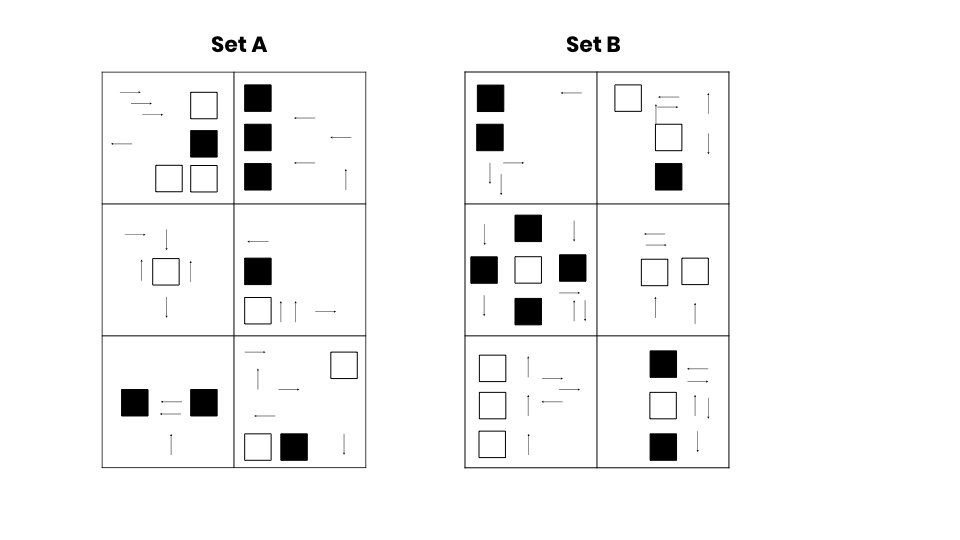
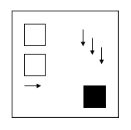
Explanation
Pattern
SET A: There is one arrow pointing right for each white square and one arrow pointing left for each black square. Arrows pointing up and down have no significance.
SET B: There is one arrow pointing up for each white square and one arrow pointing down for each black square. Arrows pointing left and right have no significance.
Answer
The correct answer is C. There is only one arrow pointing right and there are two white squares, so this cannot belong to set A. There are three arrows pointing down and only one black square so this cannot belong to set B. Therefore, this belongs to neither set.
ella
Medicmind Tutor
Sat, 24 Sep 2022 16:27:46
the second square on set b doesn't work with this rule as there is an extra arrow
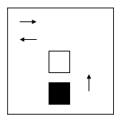
Explanation
Pattern
SET A: There is one arrow pointing right for each white square and one arrow pointing left for each black square. Arrows pointing up and down have no significance.
SET B: There is one arrow pointing up for each white square and one arrow pointing down for each black square. Arrows pointing left and right have no significance.
Answer
The correct answer is A. There is one arrow pointing right and one arrow pointing left, and one white and one black shape. Therefore, this belongs to set A.
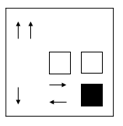
Explanation
Pattern
SET A: There is one arrow pointing right for each white square and one arrow pointing left for each black square. Arrows pointing up and down have no significance.
SET B: There is one arrow pointing up for each white square and one arrow pointing down for each black square. Arrows pointing left and right have no significance.
Answer
The correct answer is B. There are two arrows pointing up, and two white squares. There is one arrow pointing down and one black square. Therefore, this belongs to set B.
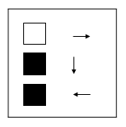
Explanation
Pattern
SET A: There is one arrow pointing right for each white square and one arrow pointing left for each black square. Arrows pointing up and down have no significance.
SET B: There is one arrow pointing up for each white square and one arrow pointing down for each black square. Arrows pointing left and right have no significance.
Answer
The correct answer is C. There is one arrow pointing right and one pointing left, however, there are two black squares, so this cannot belong to set A. There is one arrow pointing down but three squares so this cannot belong to set B. Therefore, this belongs to neither set.
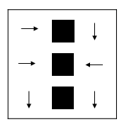
Explanation
Pattern
SET A: There is one arrow pointing right for each white square and one arrow pointing left for each black square. Arrows pointing up and down have no significance.
SET B: There is one arrow pointing up for each white square and one arrow pointing down for each black square. Arrows pointing left and right have no significance.
Answer
The correct answer is B. There are three arrows pointing down and three black squares. Therefore, this belongs to set B.
Top tip: Where there are arrows in a set, look carefully at the direction of the arrows as this is often significant to the underlying pattern.
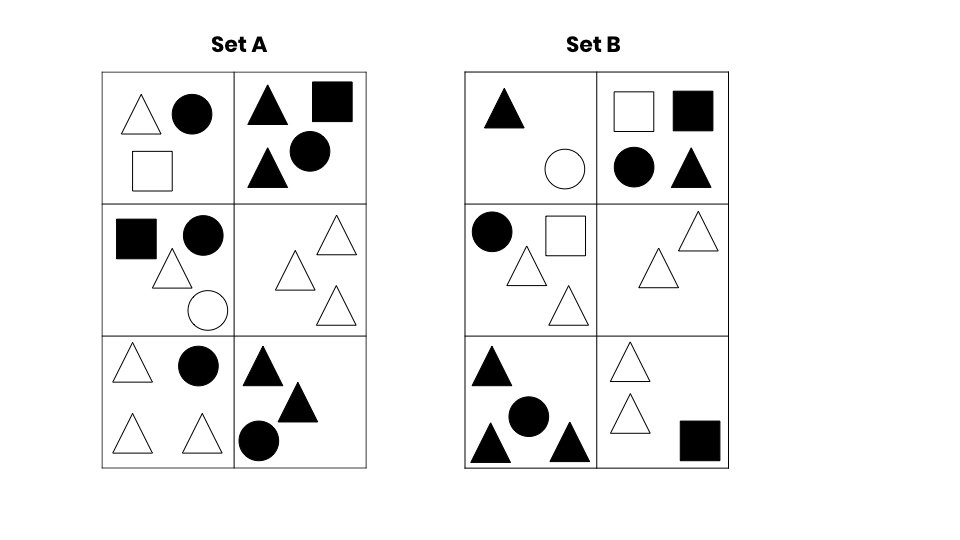
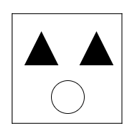
Explanation
Pattern
SET A: If the number of triangles is even, they are shaded. If there is an odd number of triangles, they are not shaded.
SET B: If the number of triangles is odd, they are shaded. If the number is even, they are not shaded.
Answer
The correct answer is A. There are two triangles, so they are both shaded.
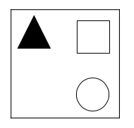
Explanation
Pattern
SET A: If the number of triangles is even, they are shaded. If there is an odd number of triangles, they are not shaded.
SET B: If the number of triangles is odd, they are shaded. If the number is even, they are not shaded.
Answer
The correct answer is B. There is only one triangle, and it is shaded, so it must belong to set B.
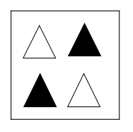
Explanation
Pattern
SET A: If the number of triangles is even, they are shaded. If there is an odd number of triangles, they are not shaded.
SET B: If the number of triangles is odd, they are shaded. If the number is even, they are not shaded.
Answer
The correct answer is C. There are four triangles, however, half are shaded, and half are not. Therefore, this cannot belong to set A or set B.

Explanation
Pattern
SET A: If the number of triangles is even, they are shaded. If there is an odd number of triangles, they are not shaded.
SET B: If the number of triangles is odd, they are shaded. If the number is even, they are not shaded.
Answer
The correct answer is B. There is one triangle and it is shaded, so this belongs to set B.
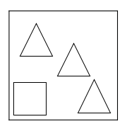
Explanation
Pattern
SET A: If the number of triangles is even, they are shaded. If there is an odd number of triangles, they are not shaded.
SET B: If the number of triangles is odd, they are shaded. If the number is even, they are not shaded.
Answer
The correct answer is A. There are three triangles and they are all unshaded. Therefore, this belongs to set A.
Common trap: Don’t worry if the pattern seems too simple to be the case – the AR patterns will often vary in difficulty and if a simple pattern works for all the sets in the question stem, it is likely to be correct.
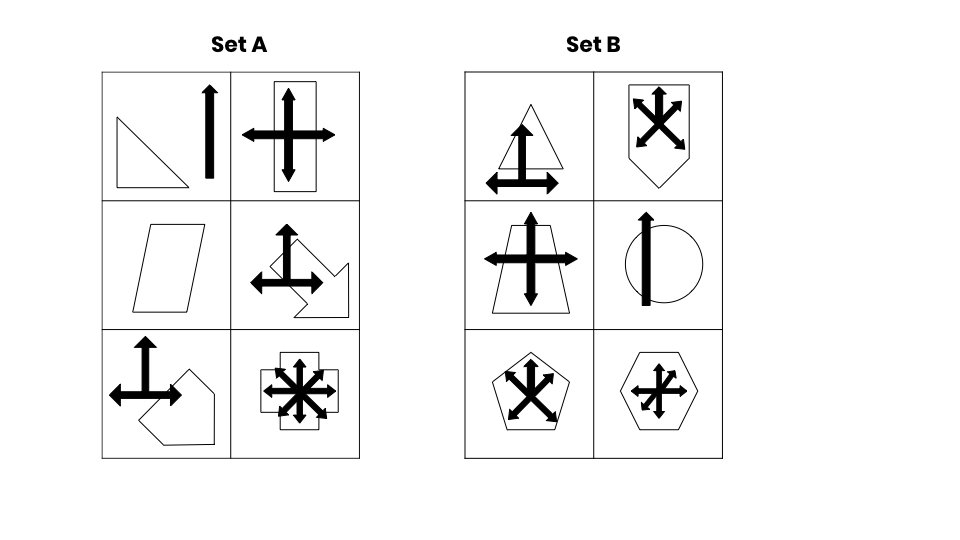
Explanation
Pattern
SET A: There is one large white shape. The number of arrowheads is equal to the number of right angles within this shape.
SET B: There is one large white shape. The number of arrowheads is equal to the number of sides on this shape.
Answer
The correct answer is B. There are four arrowheads and four sides, but no right angles. Therefore, this must belong to set B.
Explanation
Pattern
SET A: There is one large white shape. The number of arrowheads is equal to the number of right angles within this shape.
SET B: There is one large white shape. The number of arrowheads is equal to the number of sides on this shape.
Answer
The correct answer is C. There is one right angle, but two arrows so this cannot belong to set A. There are three sides, so this cannot belong to set B either. Therefore, this belongs to neither set.
Explanation
Pattern
SET A: There is one large white shape. The number of arrowheads is equal to the number of right angles within this shape.
SET B: There is one large white shape. The number of arrowheads is equal to the number of sides on this shape.
Answer
The correct answer is C. There are three arrowheads and no right angles, and only two sides on the shape. Therefore, this cannot belong to either set.
Explanation
Pattern
SET A: There is one large white shape. The number of arrowheads is equal to the number of right angles within this shape.
SET B: There is one large white shape. The number of arrowheads is equal to the number of sides on this shape.
Answer
The correct answer is A. There are two right angles and two arrowheads, so this belongs to set A.
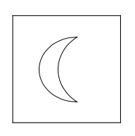
Explanation
Pattern
SET A: There is one large white shape. The number of arrowheads is equal to the number of right angles within this shape.
SET B: There is one large white shape. The number of arrowheads is equal to the number of sides on this shape.
Answer
The correct answer is A. There are no right angles and no arrowheads, so this belongs to set A.
Timing tip: If you are finding it difficult to stick to the time allocated, flag the question and move on, then review it at the end if you can. The AR section in particular is time pressured, and if you can’t work out a pattern, don’t waste too much valuable time on it.
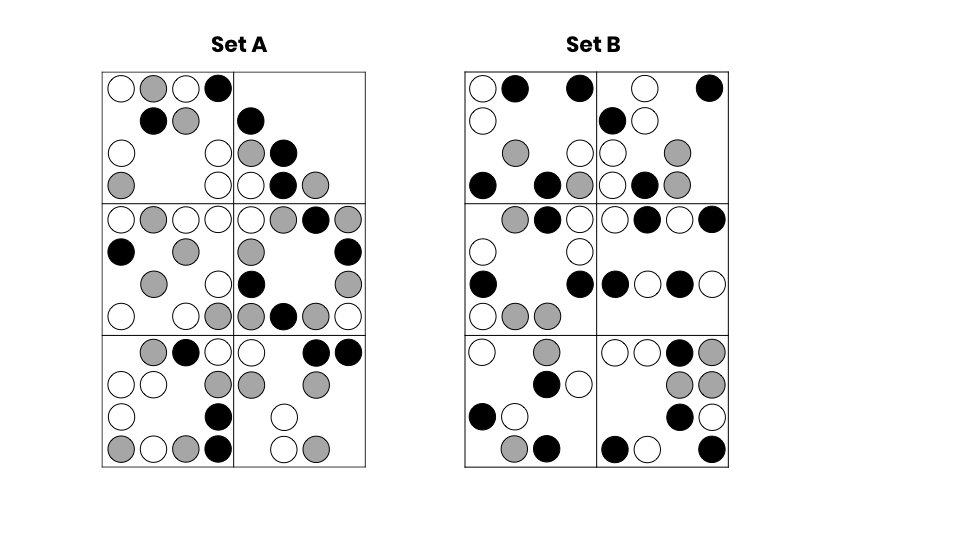
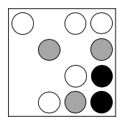
Explanation
Pattern
SET A: No grey circle is vertically or horizontally adjacent to another grey circle.
SET B: No black circle is vertically or horizontally adjacent to another black circle.
Answer
The correct answer is A. There are no grey circles vertically or horizontally adjacent to each other. There are adjacent black circles, so this cannot belong to set B. Therefore, this belongs to set A.
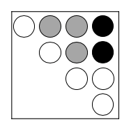
Explanation
Pattern
SET A: No grey circle is vertically or horizontally adjacent to another grey circle.
SET B: No black circle is vertically or horizontally adjacent to another black circle.
Answer
The correct answer is C. There are grey circles adjacent to each other, so this cannot belong to set A. There are adjacent black circles, so this cannot belong to set B. Therefore, this belongs to neither set.
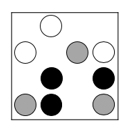
Explanation
Pattern
SET A: No grey circle is vertically or horizontally adjacent to another grey circle.
SET B: No black circle is vertically or horizontally adjacent to another black circle.
Answer
The correct answer is A. There are no adjacent grey circles, but there are adjacent black circles, so this must belong to set A.
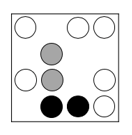
Explanation
Pattern
SET A: No grey circle is vertically or horizontally adjacent to another grey circle.
SET B: No black circle is vertically or horizontally adjacent to another black circle.
Answer
The correct answer is C. There are adjacent grey circles and adjacent black circles, so this belongs to neither set.
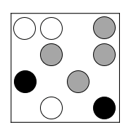
Explanation
Pattern
SET A: No grey circle is vertically or horizontally adjacent to another grey circle.
SET B: No black circle is vertically or horizontally adjacent to another black circle.
Answer
The correct answer is B. There are adjacent grey circles, so this cannot belong to set A, but the black circles are not adjacent. Therefore, this belongs to set B.
Top tip: If you are struggling to work out the patterns, try to approach them systematically. For example, you may like to use the SPONCS acronym, where you look at the size of the shapes, then position, etc. This will cover all the major pattern types in AR.
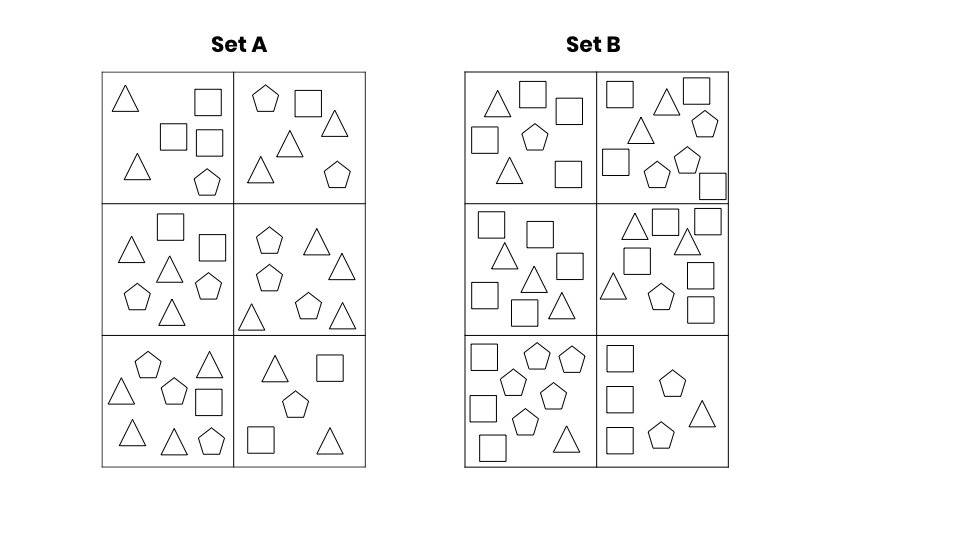
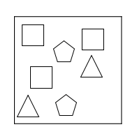
Explanation
Pattern
SET A: There is always one more triangle than pentagons. The number of squares is irrelevant.
SET B: There are always two more squares than triangles. The number of pentagons is irrelevant.
Answer
The correct answer is C. There are two triangles and two pentagons, so this cannot belong to set A. There are three squares and two triangles so this cannot belong to set B. Therefore, this belongs to neither set.
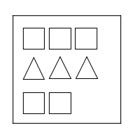
Explanation
Pattern
SET A: There is always one more triangle than pentagons. The number of squares is irrelevant.
SET B: There are always two more squares than triangles. The number of pentagons is irrelevant.
Answer
The correct answer is B. There are five squares and only three triangles, so this must belong to set B.
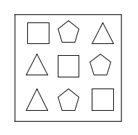
Explanation
Pattern
SET A: There is always one more triangle than pentagons. The number of squares is irrelevant.
SET B: There are always two more squares than triangles. The number of pentagons is irrelevant.
Answer
The correct answer is C. There are three triangles, three pentagons and three squares, so this cannot belong to set A nor set B.
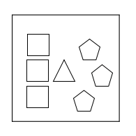
Explanation
Pattern
SET A: There is always one more triangle than pentagons. The number of squares is irrelevant.
SET B: There are always two more squares than triangles. The number of pentagons is irrelevant.
Answer
The correct answer is B. This belongs to set B because there are three squares and only one triangle.
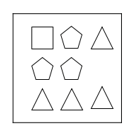
Explanation
Pattern
SET A: There is always one more triangle than pentagons. The number of squares is irrelevant.
SET B: There are always two more squares than triangles. The number of pentagons is irrelevant.
Answer
The correct answer is A. There are three pentagons and four triangles, so this must belong to set A.
Timing tip: Try to work out how much time you should be spending on each set of questions in the AR section, as it is very time pressured. There are only 14 minutes to complete 55 questions, so if you spend more than about 15 seconds on one question, consider flagging it and moving on.
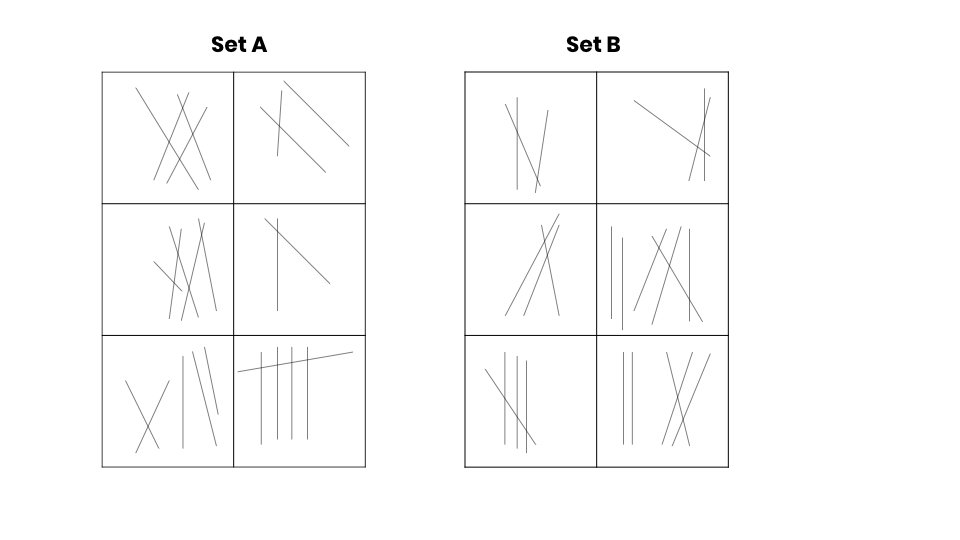
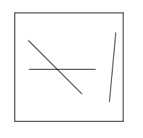
Explanation
Pattern
SET A: There are several lines with either one or four crossovers. The number of lines is irrelevant.
SET B: There are several lines with either two or three crossovers. The number of lines is irrelevant.
Answer
The correct answer is A. There is one crossover between the lines. Therefore, this belongs to set A.
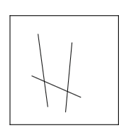
Explanation
Pattern
SET A: There are several lines with either one or four crossovers. The number of lines is irrelevant.
SET B: There are several lines with either two or three crossovers. The number of lines is irrelevant.
Answer
The correct answer is B. There are two crossovers between the lines, therefore, this belongs to set B.
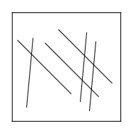
Explanation
Pattern
SET A: There are several lines with either one or four crossovers. The number of lines is irrelevant.
SET B: There are several lines with either two or three crossovers. The number of lines is irrelevant.
Answer
The correct answer is C. There are five crossovers between the lines, so this belongs to neither set A nor set B.
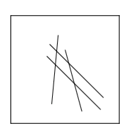
Explanation
Pattern
SET A: There are several lines with either one or four crossovers. The number of lines is irrelevant.
SET B: There are several lines with either two or three crossovers. The number of lines is irrelevant.
Answer
The correct answer is A. There are four crossovers between the lines, therefore, this belongs to set A.
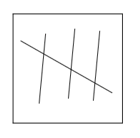
Explanation
Pattern
SET A: There are several lines with either one or four crossovers. The number of lines is irrelevant.
SET B: There are several lines with either two or three crossovers. The number of lines is irrelevant.
Answer
The correct answer is B. There are three crossovers between the lines, so this belongs to set B.
Common trap: Try not to waste too much time counting the lines themselves. Often, a number pattern will be relatively clear if there are not many shapes, and number patterns are not as common as crossovers, for example, with lines. If you can’t find a clear pattern for one feature, try to move on to the next feature.
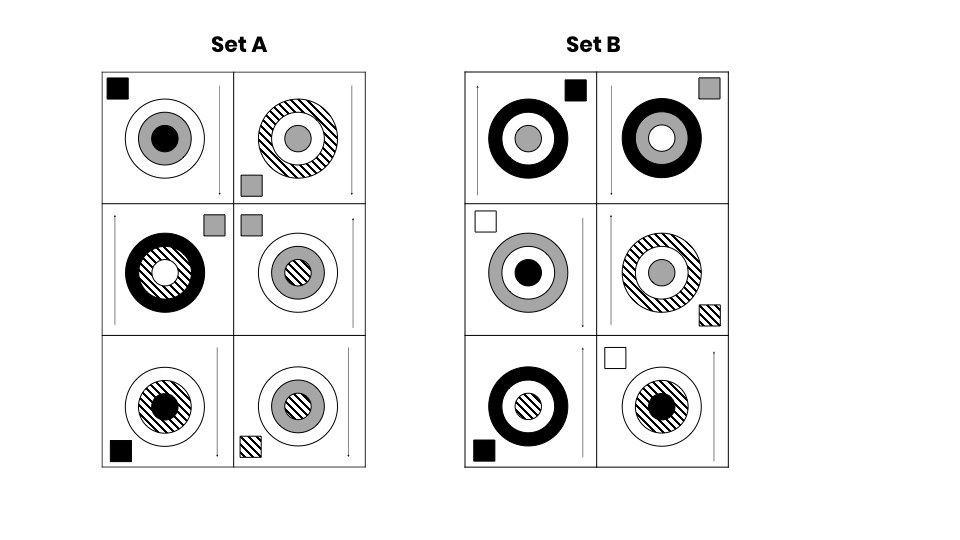

Explanation
Pattern
SET A: There are three concentric circles and a square in one of the corners. When the square is shaded the same as the innermost circle, the arrow points down. Otherwise, the arrow points up.
SET B: There are three concentric circles and a square in one of the corners. When the square is shaded the same as the outermost ring, the arrow points up. Otherwise, the arrow points down.
Answer
The correct answer is B. The square in the corner is the same colour as the outermost ring. The arrow points up. Therefore, this belongs to set B.
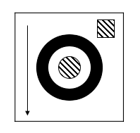
Explanation
Pattern
SET A: There are three concentric circles and a square in one of the corners. When the square is shaded the same as the innermost circle, the arrow points down. Otherwise, the arrow points up.
SET B: There are three concentric circles and a square in one of the corners. When the square is shaded the same as the outermost ring, the arrow points up. Otherwise, the arrow points down.
Answer
The correct answer is A. The square in the corner has the same shading as the innermost circle. The arrow is pointing down. Therefore, this belongs to set A.
F
Medicmind Tutor
Mon, 22 May 2023 13:02:48
no picture
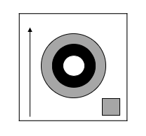
Explanation
Pattern
SET A: There are three concentric circles and a square in one of the corners. When the square is shaded the same as the innermost circle, the arrow points down. Otherwise, the arrow points up.
SET B: There are three concentric circles and a square in one of the corners. When the square is shaded the same as the outermost ring, the arrow points up. Otherwise, the arrow points down.
Answer
The correct answer is B. The square in the corner has the same shading as the outermost ring. The arrow points up. Therefore, this belongs to set B.
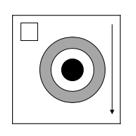
Explanation
Pattern
SET A: There are three concentric circles and a square in one of the corners. When the square is shaded the same as the innermost circle, the arrow points down. Otherwise, the arrow points up.
SET B: There are three concentric circles and a square in one of the corners. When the square is shaded the same as the outermost ring, the arrow points up. Otherwise, the arrow points down.
Answer
The correct answer is B. This cannot belong to set A, because the arrow is pointing down, but the square does not have the same shading as the innermost circle. This belongs to set B because the square is shaded differently to the outermost ring and the arrow points down.

Explanation
Pattern
SET A: There are three concentric circles and a square in one of the corners. When the square is shaded the same as the innermost circle, the arrow points down. Otherwise, the arrow points up.
SET B: There are three concentric circles and a square in one of the corners. When the square is shaded the same as the outermost ring, the arrow points up. Otherwise, the arrow points down.
Answer
The correct answer is C. This cannot belong to set A, because the square is shaded the same as the innermost ring, but the arrow is pointing up. It cannot belong to set B because the square is shaded differently to the outermost ring, but the arrow is pointing up. Therefore, this belongs to neither set.
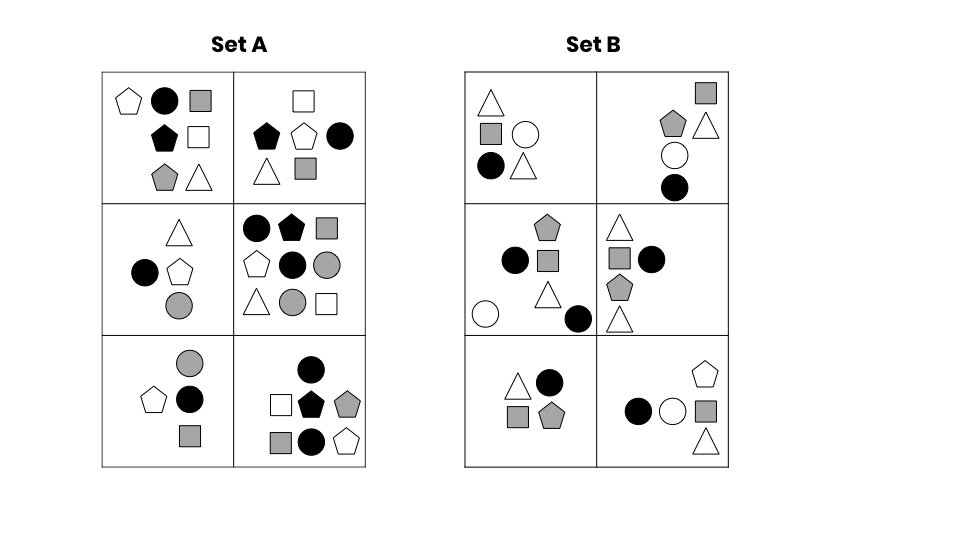
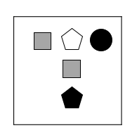
Explanation
Pattern
SET A: There is a black circle horizontally adjacent to a white pentagon.
SET B: There is a white triangle vertically adjacent to a grey square.
Answer
The correct answer is A. The black circle is horizontally adjacent to the white pentagon.
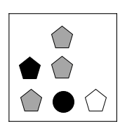
Explanation
Pattern
SET A: There is a black circle horizontally adjacent to a white pentagon.
SET B: There is a white triangle vertically adjacent to a grey square.
Answer
The correct answer is A. There is a black circle horizontally adjacent to a white pentagon, so this belongs to set A.
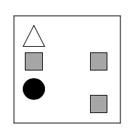
Explanation
Pattern
SET A: There is a black circle horizontally adjacent to a white pentagon.
SET B: There is a white triangle vertically adjacent to a grey square.
Answer
The correct answer is B. There is a white triangle above a grey square, so this belongs to set B.
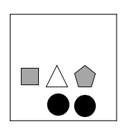
Explanation
Pattern
SET A: There is a black circle horizontally adjacent to a white pentagon.
SET B: There is a white triangle vertically adjacent to a grey square.
Answer
The correct answer is C. This does not belong to set A because there is no white pentagon. It does not belong to set B because the white triangle is not vertically adjacent to the grey square. Therefore, this belongs to neither set.
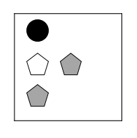
Explanation
Pattern
SET A: There is a black circle horizontally adjacent to a white pentagon.
SET B: There is a white triangle vertically adjacent to a grey square.
Answer
The correct answer is C. The white pentagon and black circle are vertically adjacent, so this cannot belong to set A. There are no triangles or squares, so this cannot belong to set B. Therefore, this belongs to neither set.
Common trap: Although at first glance this may look like a number pattern, since there tend to be more shapes in A than B, you can see that some boxes in set A have just four shapes. As soon as you find an exception to the rule, move on to a different pattern as you will waste time otherwise.
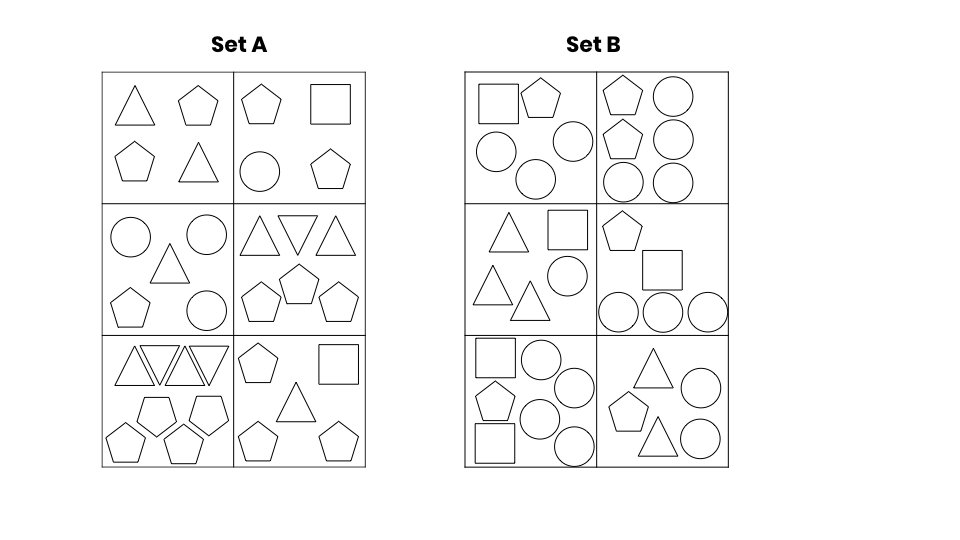
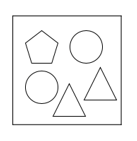
Explanation
Pattern
SET A: There are an equal number of triangles and pentagons. However, a square counts for two triangles.
SET B: There are an equal number of squares and circles. However, a pentagon counts for two squares.
Answer
The correct answer is B. This belongs to set B because there is one pentagon, which is equal to two squares, and two circles.
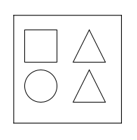
Explanation
Pattern
SET A: There are an equal number of triangles and pentagons. However, a square counts for two triangles.
SET B: There are an equal number of squares and circles. However, a pentagon counts for two squares.
Answer
The correct answer is B. This belongs to set B because there is one square and one circle. The number of triangles is irrelevant.
Explanation
Pattern
SET A: There are an equal number of triangles and pentagons. However, a square counts for two triangles.
SET B: There are an equal number of squares and circles. However, a pentagon counts for two squares.
Answer
The correct answer is C. This cannot belong to set A or set B, as there are no pentagons or squares.
Explanation
Pattern
SET A: There are an equal number of triangles and pentagons. However, a square counts for two triangles.
SET B: There are an equal number of squares and circles. However, a pentagon counts for two squares.
Answer
The correct answer is C. This cannot belong to set A, as there are no triangles or pentagons. This cannot belong to set B because the number of squares is not equal to the number of circles. Therefore, this belongs to neither set.
Explanation
Pattern
SET A: There are an equal number of triangles and pentagons. However, a square counts for two triangles.
SET B: There are an equal number of squares and circles. However, a pentagon counts for two squares.
Answer
The correct answer is A. There is one triangle and one pentagon, so this belongs to set A.
Common trap: Watch out for distractors. These are shapes which are not included in the pattern and serve no purpose other than to mislead you. Remember that not all the shapes in a figure are part of the pattern – the triangles in set B, for example, are irrelevant here.
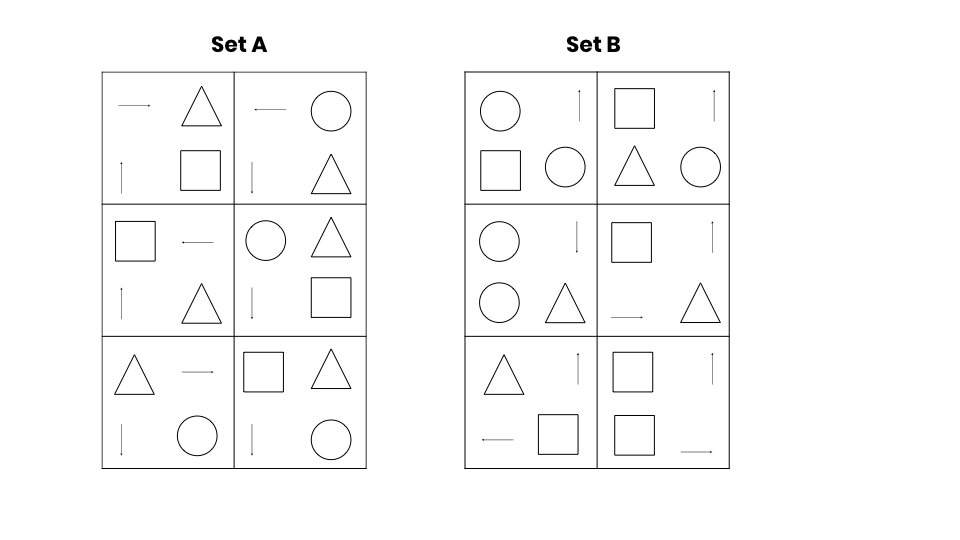
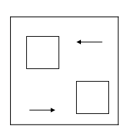
Explanation
Pattern
SET A: There is an arrow in the bottom left corner. If there is a circle, this arrow will point down. If there is not a circle, this arrow will point up.
SET B: There is an arrow in the top right corner. If there is a square, this arrow will point up. If there is not a square, this arrow will point down.
Answer
The correct answer is C. This does not belong to set A as there is no arrow pointing up or down. This does not belong to set B as the arrow in the top right corner does not point up. Therefore, this belongs to neither set.
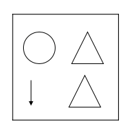
Explanation
Pattern
SET A: There is an arrow in the bottom left corner. If there is a circle, this arrow will point down. If there is not a circle, this arrow will point up.
SET B: There is an arrow in the top right corner. If there is a square, this arrow will point up. If there is not a square, this arrow will point down.
Answer
The correct answer is A. There is an arrow in the bottom left corner which points down, because there is a circle. Therefore, this belongs to set A.
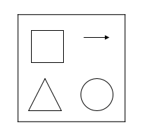
Explanation
Pattern
SET A: There is an arrow in the bottom left corner. If there is a circle, this arrow will point down. If there is not a circle, this arrow will point up.
SET B: There is an arrow in the top right corner. If there is a square, this arrow will point up. If there is not a square, this arrow will point down.
Answer
The correct answer is C. This does not belong to set A as there is no arrow in the bottom left corner. This does not belong to set B because the arrow in the top right corner does not point up. Therefore, this belongs to neither set.
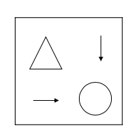
Explanation
Pattern
SET A: There is an arrow in the bottom left corner. If there is a circle, this arrow will point down. If there is not a circle, this arrow will point up.
SET B: There is an arrow in the top right corner. If there is a square, this arrow will point up. If there is not a square, this arrow will point down.
Answer
The correct answer is B. This belongs to set B because the arrow in the top right corner points down, and there is no square.
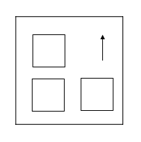
Explanation
Pattern
SET A: There is an arrow in the bottom left corner. If there is a circle, this arrow will point down. If there is not a circle, this arrow will point up.
SET B: There is an arrow in the top right corner. If there is a square, this arrow will point up. If there is not a square, this arrow will point down.
Answer
The correct answer is B. This belongs to set B because the arrow in the top right corner points up, and there is at least one square.
Top tip: Memorise the key triggers for each shape. For example, in this question the presence of arrows should trigger you to think about the direction in which they are facing. In a question with crescent moons, you should be thinking about curved and straight lines, for example. This will help you find the patterns much faster.
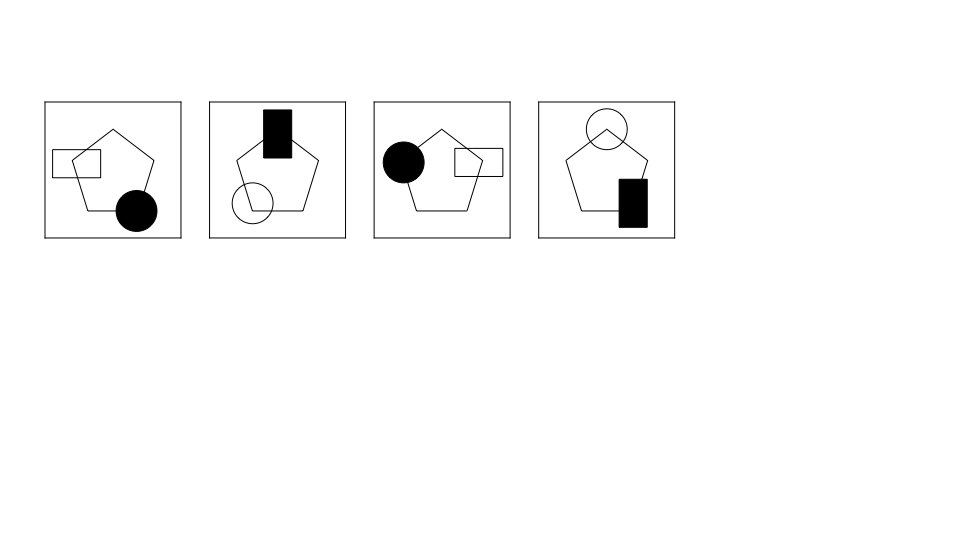
Explanation
The correct answer is C. The circle and rectangle both move in an anticlockwise direction along the vertices of the pentagon. They both alternate in shading. The rectangle rotates by 90 degrees with each figure.
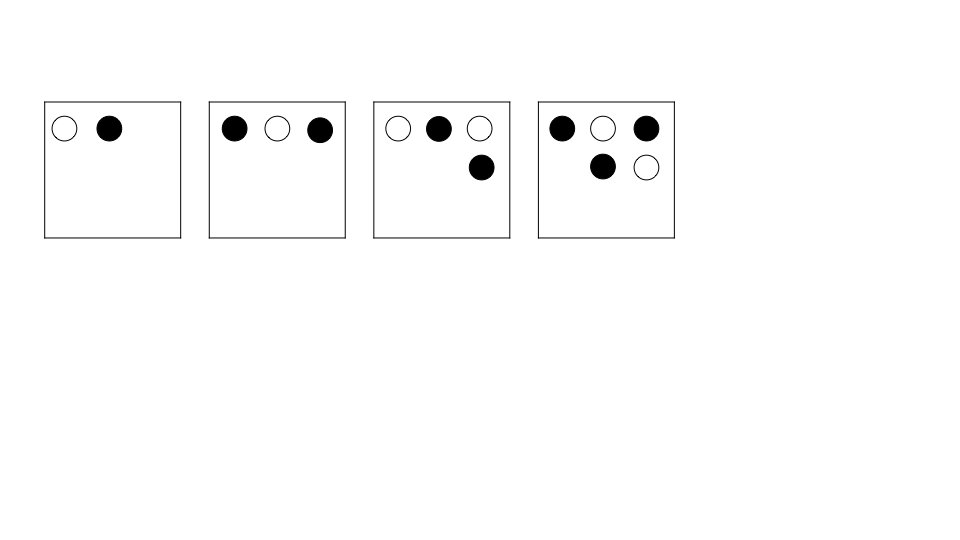
Explanation
The correct answer is A. The number of circles increases by 1 and is added in a pattern going right initially and then left. Each circle alternates in shading between white and black.
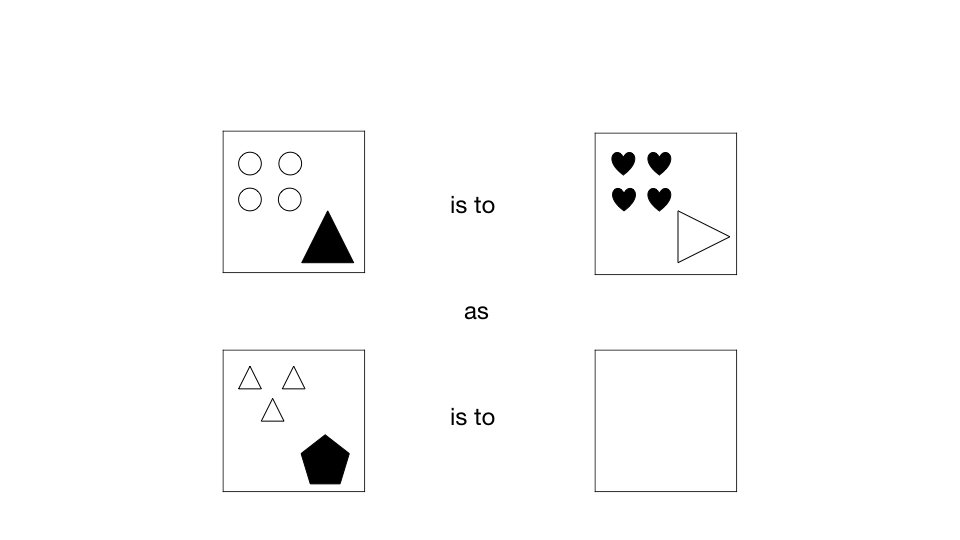
Explanation
The correct answer is A. The shapes in the top left corner become black. The large black shape is rotated 90 degrees clockwise and becomes white.
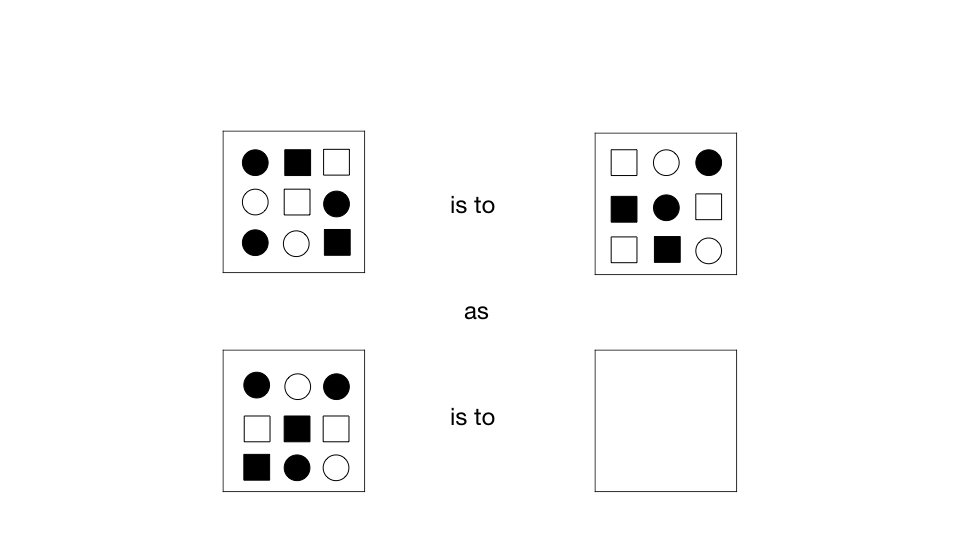
Explanation
The correct answer is C. Each white circle becomes a black square. Each black circle becomes a white square. Each white square becomes a black circle and each black square becomes a white circle.
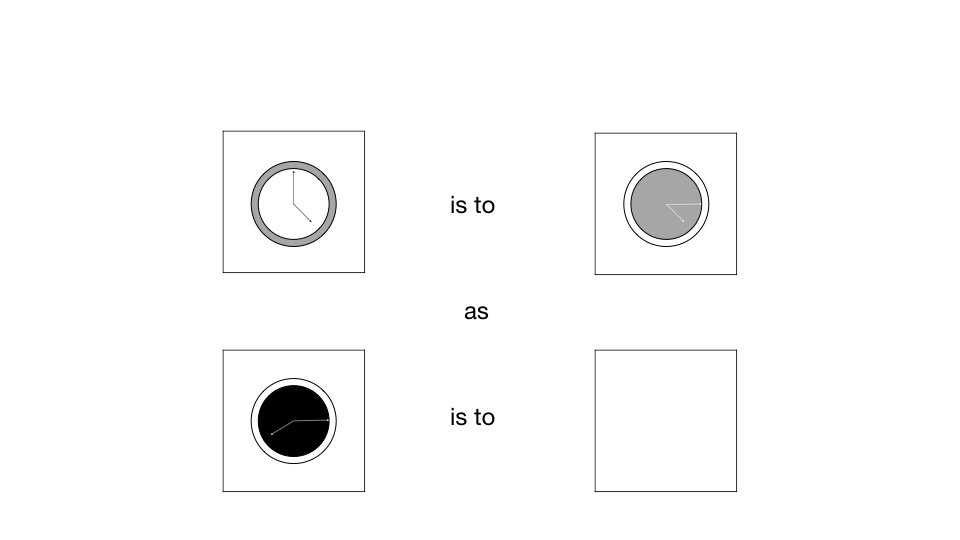
Explanation
The correct answer is C. The outer colour becomes the main colour of the clock face. The hour hand stays the same, but the second hand rotates by 90 degrees clockwise.
Abstract Reasoning Review Screen
Instructions
Below is a summary of your answers. You can review your questions in three (3) different ways.
The buttons in the lower right-hand corner correspond to these choices:
1. Review all of your questions and answers.
2. Review questions that are incomplete.
3. Review questions that are flagged for review. (Click the 'flag' icon to change the flag for review status.)
You may also click on a question number to link directly to its location in the exam.
Abstract Reasoning Section
Situational Judgement Question Bank 1 Instructions
Use this question bank to practice Situational Judgement questions.
You will be presented by a set of hypothetical scenarios based in a clinical or educational setting and may involve a student or clinician at their center. You will be asked to make judgments as to the appropriateness or the importance of a series of statements in response to the scenario.
It is in your best interest to answer all questions as there is no penalty for guessing. All unanswered questions will be scored as incorrect.
Click the Next (N) button to proceed.
Maya and Jonathan are third year medical students on placement. The first task of the morning is to complete an interview with a patient and then practise their clinical skills by drawing the patient’s blood. As they are walking towards the ward, Jonathan confesses to Maya that he was out last night until 5am, and that he only stopped drinking three hours ago, so he is still fairly drunk. However, he reassures Maya that ‘he’s got it under control’.
How important are the following considerations for Maya when deciding how to respond to the situation?
Explanation
The correct answer is D.
In this situation, the patient’s safety and best interests should be prioritised above Maya and Jonathan’s learning. Continuing the patient interview is inappropriate, considering Jonathan is still intoxicated. This could put the patient at risk and danger the integrity of the medical profession.
Maya and Jonathan are third year medical students on placement. The first task of the morning is to complete an interview with a patient and then practise their clinical skills by drawing the patient’s blood. As they are walking towards the ward, Jonathan confesses to Maya that he was out last night until 5am, and that he only stopped drinking three hours ago, so he is still fairly drunk. However, he reassures Maya that ‘he’s got it under control’.
How important are the following considerations for Maya when deciding how to respond to the situation?
Explanation
The correct answer is B.
Turning up to placement still drunk is highly unprofessional for Jonathan, and it is therefore important to consider whether he needs to seek professional help. However, Maya’s first priority when considering how to respond would be how to deal with the immediate situation with the patient, and therefore this is not essential to consider.
Maya and Jonathan are third year medical students on placement. The first task of the morning is to complete an interview with a patient and then practise their clinical skills by drawing the patient’s blood. As they are walking towards the ward, Jonathan confesses to Maya that he was out last night until 5am, and that he only stopped drinking three hours ago, so he is still fairly drunk. However, he reassures Maya that ‘he’s got it under control’.
How important are the following considerations for Maya when deciding how to respond to the situation?
Explanation
The correct answer is A.
Since Jonathan is expected to draw blood, this is a serious threat to patient safety and so Maya should consider informing the doctor in charge. Remember identifiable risks to patient safety validate going to a senior.
Maya and Jonathan are third year medical students on placement. The first task of the morning is to complete an interview with a patient and then practise their clinical skills by drawing the patient’s blood. As they are walking towards the ward, Jonathan confesses to Maya that he was out last night until 5am, and that he only stopped drinking three hours ago, so he is still fairly drunk. However, he reassures Maya that ‘he’s got it under control’.
How important are the following considerations for Maya when deciding how to respond to the situation?
Explanation
The correct answer is A.
This essential to consider, as drawing blood could pose a serious risk to the patient, and the patient’s best interests should be prioritised.
Janet and Priya are final year medical students who are running a final-year clinic in the GP surgery. The receptionist at the GP surgery approaches Priya and informs her that while she had been speaking to Janet about a recent essay Janet had submitted, Janet confessed that most of the information was copied from one particular website, because she did not have much time to complete the essay. The receptionist is known for spreading false rumours about her colleagues at the surgery, while Janet is usually trustworthy.
How important are the following considerations for Priya when deciding how to respond to the situation?
Explanation
The correct answer is D.
Janet’s feelings are not important in this situation – if she had plagiarised, then this is a serious offence of academic misconduct.
Janet and Priya are final year medical students who are running a final-year clinic in the GP surgery. The receptionist at the GP surgery approaches Priya and informs her that while she had been speaking to Janet about a recent essay Janet had submitted, Janet confessed that most of the information was copied from one particular website, because she did not have much time to complete the essay. The receptionist is known for spreading false rumours about her colleagues at the surgery, while Janet is usually trustworthy.
How important are the following considerations for Priya when deciding how to respond to the situation?
Explanation
The correct answer is A.
This issue should not be inappropriately escalated: it is important to ensure that there is enough information to justify making this accusation against Janet.
Janet and Priya are final year medical students who are running a final-year clinic in the GP surgery. The receptionist at the GP surgery approaches Priya and informs her that while she had been speaking to Janet about a recent essay Janet had submitted, Janet confessed that most of the information was copied from one particular website, because she did not have much time to complete the essay. The receptionist is known for spreading false rumours about her colleagues at the surgery, while Janet is usually trustworthy.
How important are the following considerations for Priya when deciding how to respond to the situation?
Explanation
The correct answer is B.
It is unfair on Janet to escalate this without evidence, especially when the receptionist has a history of telling lies about colleagues. However, the receptionist’s reputation alone would not prevent us from reporting this, and therefore this is not essential to consider. Thus, it is an important consideration for Priya.
Janet and Priya are final year medical students who are running a final-year clinic in the GP surgery. The receptionist at the GP surgery approaches Priya and informs her that while she had been speaking to Janet about a recent essay Janet had submitted, Janet confessed that most of the information was copied from one particular website, because she did not have much time to complete the essay. The receptionist is known for spreading false rumours about her colleagues at the surgery, while Janet is usually trustworthy.
How important are the following considerations for Priya when deciding how to respond to the situation?
Explanation
The correct answer is D.
It is irrelevant that the essay has already been submitted, as plagiarism is a serious offence and should have the same consequence regardless of when the dishonesty was uncovered.
Sally is on the same hospital placement as Matthew, another medical student. Matthew has been having difficulties at home recently and is often unknowingly impolite and curt with patients. One of the patients confesses to Sally that they are not comfortable with Matthew’s behaviour.
How important are the following considerations for Sally to take into account, when responding to the situation?
Explanation
The correct answer is A.
It is vitally important to maintain high public perception of the medical profession. We should never ignore any potential risks to the integrity of the profession, as this may affect patient’s willingness to seek help farther down the line.
Sally is on the same hospital placement as Matthew, another medical student. Matthew has been having difficulties at home recently and is often unknowingly impolite and curt with patients. One of the patients confesses to Sally that they are not comfortable with Matthew’s behaviour.
How important are the following considerations for Sally to take into account, when responding to the situation?
Explanation
The correct answer is A.
Although Matthew’s behaviour may have a cause, if his actions impact on the care provided to the patient through withholding information, this is a serious concern.
Sally is on the same hospital placement as Matthew, another medical student. Matthew has been having difficulties at home recently and is often unknowingly impolite and curt with patients. One of the patients confesses to Sally that they are not comfortable with Matthew’s behaviour.
How important are the following considerations for Sally to take into account, when responding to the situation?
Explanation
The correct answer is C.
It is important to understand why Matthew is feeling like this so that he is able to treat patients appropriately. However, the primary concern should lie in the quality of care provided to the patient.
Mandy is on her first ever shift as a junior doctor and is quite nervous. While on a ward round with her consultant and a few other junior doctors, the consultant asks for the results of an urgent X-ray. Mandy remembers that she had forgotten to order the X-ray as her senior had requested a few hours earlier.
How important are the following considerations for Mandy to take into account, when responding to the situation?
Explanation
The correct answer is A.
Honesty and transparency are essential to good medical practice and integral for working in a team, especially in a hospital environment. Mandy should own up to her mistake.
Mandy is on her first ever shift as a junior doctor and is quite nervous. While on a ward round with her consultant and a few other junior doctors, the consultant asks for the results of an urgent X-ray. Mandy remembers that she had forgotten to order the X-ray as her senior had requested a few hours earlier.
How important are the following considerations for Mandy to take into account, when responding to the situation?
Explanation
The correct answer is D.
The most important consideration is that the patient receives the X-ray. Withholding her mistake somehow would also be regarded as highly unprofessional and may affect patient safety.
Mandy is on her first ever shift as a junior doctor and is quite nervous. While on a ward round with her consultant and a few other junior doctors, the consultant asks for the results of an urgent X-ray. Mandy remembers that she had forgotten to order the X-ray as her senior had requested a few hours earlier.
How important are the following considerations for Mandy to take into account, when responding to the situation?
Explanation
The correct answer is B.
It is unfair on the other junior doctors to take the blame for Mandy’s mistake, but it has the potential to occur since the consultant is likely to view the new junior doctors as one team. However, if this was not considered, it should not change whether she owns up or not, and therefore it is not essential to consider.
Mandy is on her first ever shift as a junior doctor and is quite nervous. While on a ward round with her consultant and a few other junior doctors, the consultant asks for the results of an urgent X-ray. Mandy remembers that she had forgotten to order the X-ray as her senior had requested a few hours earlier.
How important are the following considerations for Mandy to take into account, when responding to the situation?
Explanation
The correct answer is A.
Reflecting on her mistakes is a very professional approach to her mistake, and although it does not fix the current situation with this patient, it will prove useful in the future.
Alex is a medical student on hospital placement with Charlotte. They are both part of a large instant messaging group, where around 50 medical students share their thoughts and help each other with revision. Alex comes across an ECG report which has unique features and which he thinks could be useful for other medical students’ revision. He posts a picture of the ECG on the group chat, failing to realise that the patient’s name and date of birth are clearly visible in the top left corner.
How important are the following considerations for Charlotte to take into account, when responding to the situation?
Explanation
The correct answer is D.
The fact that Charlotte has noticed the patient’s name and details means that she has some obligation to act in the situation – whether or not anybody else notices the mistake is irrelevant. She should also not assume that someone else will take action.
Alex is a medical student on hospital placement with Charlotte. They are both part of a large instant messaging group, where around 50 medical students share their thoughts and help each other with revision. Alex comes across an ECG report which has unique features and which he thinks could be useful for other medical students’ revision. He posts a picture of the ECG on the group chat, failing to realise that the patient’s name and date of birth are clearly visible in the top left corner.
How important are the following considerations for Charlotte to take into account, when responding to the situation?
Explanation
The correct answer is D.
The intentions of a breach of confidentiality do not matter when deciding whether to report it or not. This is something we should actively not consider, and is therefore not important at all.
Alex is a medical student on hospital placement with Charlotte. They are both part of a large instant messaging group, where around 50 medical students share their thoughts and help each other with revision. Alex comes across an ECG report which has unique features and which he thinks could be useful for other medical students’ revision. He posts a picture of the ECG on the group chat, failing to realise that the patient’s name and date of birth are clearly visible in the top left corner.
How important are the following considerations for Charlotte to take into account, when responding to the situation?
Explanation
The correct answer is A.
Alongside going ahead with raising concerns to the right authorities, Charlotte should try and encourage Alex to take down the photo to minimise the extent of the breach.
Alice, a medical student, ended up in a situation where she joined a house of four other medical students. The other housemates do not know Alice well, however, they have noticed that she has recently become more withdrawn and will often stay locked in her room. She has also been calling in sick and missing hospital placement, which has led to her being unable to complete an important assessment.
How important are the following considerations for Alice’s housemates to take into account, when responding to the situation?
Explanation
The correct answer is A.
It seems that Alice has been upset and she may feel lonely, having joined a new house of strangers. It will be important for her housemates to talk to her and see what is causing this behaviour.
Alice, a medical student, ended up in a situation where she joined a house of four other medical students. The other housemates do not know Alice well, however, they have noticed that she has recently become more withdrawn and will often stay locked in her room. She has also been calling in sick and missing hospital placement, which has led to her being unable to complete an important assessment.
How important are the following considerations for Alice’s housemates to take into account, when responding to the situation?
Explanation
The correct answer is D.
The housemates should not consider this, as in doing so, they would be less likely to intervene. When a friend is struggling, the right thing to do is take action. Therefore the fact waiting could improve the situation is an irrelevant consideration.
Alice, a medical student, ended up in a situation where she joined a house of four other medical students. The other housemates do not know Alice well, however, they have noticed that she has recently become more withdrawn and will often stay locked in her room. She has also been calling in sick and missing hospital placement, which has led to her being unable to complete an important assessment.
How important are the following considerations for Alice’s housemates to take into account, when responding to the situation?
Explanation
The correct answer is B.
Although it is important that Alice has this conversation, if she does not wish to talk to her housemates about it then she cannot be forced to. Instead her housemates should acknowledge that it might be difficult to talk about as her behaviour could be due to personal circumstances, and they could advise her to speak to someone who she may feel more comfortable with. However, this should not change whether or not they try to speak to her, and therefore is not essential to consider.
Alice, a medical student, ended up in a situation where she joined a house of four other medical students. The other housemates do not know Alice well, however, they have noticed that she has recently become more withdrawn and will often stay locked in her room. She has also been calling in sick and missing hospital placement, which has led to her being unable to complete an important assessment.
How important are the following considerations for Alice’s housemates to take into account, when responding to the situation?
Explanation
The correct answer is C.
This is not hugely important as Alice is putting her patients at risk by missing placement, and her housemates should be concerned even if they are not close friends. Considering it may impact the situation, as it reminds them not to make assumptions about her personal circumstances.
Kevin is a fourth-year dental student. He has an appointment scheduled at 12pm with his personal tutor, however, at 11:30am one of the practice dentists approaches Kevin with an exciting learning opportunity. He is not sure whether to attend the session or his meeting as planned.
How important are the following factors for Kevin to take into consideration?
Explanation
The correct answer is A.
If the opportunity is not that unique, rearranging the meeting may be futile. Kevin needs to consider the benefit of keeping the meeting time against the benefit of the learning opportunity.
Kevin is a fourth-year dental student. He has an appointment scheduled at 12pm with his personal tutor, however, at 11:30am one of the practice dentists approaches Kevin with an exciting learning opportunity. He is not sure whether to attend the session or his meeting as planned.
How important are the following factors for Kevin to take into consideration?
Explanation
The correct answer is B.
Ultimately the decision about whether to take the opportunity is up to Kevin, however, the opinion of the tutor is still important to his professional development and decision making.
Kevin is a fourth-year dental student. He has an appointment scheduled at 12pm with his personal tutor, however, at 11:30am one of the practice dentists approaches Kevin with an exciting learning opportunity. He is not sure whether to attend the session or his meeting as planned.
How important are the following factors for Kevin to take into consideration?
Explanation
The correct answer is A.
Kevin needs to consider whether this meeting will be able to be rearranged in the first place – if it is an urgent meeting surrounding a serious incident, for example, common sense should prevail, and Kevin should go to the meeting instead.
Kayla is a medical student who is shadowing her consultant on ward rounds. The consultant and registrar briefly walk away from a patient’s bed, audibly discussing their personal details in the middle of the ward. When the doctors walk away from the bed briefly, the patient confesses to Kayla that she is concerned about her clinical details being heard by other people.
How appropriate are each of the following responses by Kayla, when responding to the patient?
Explanation
The correct answer is A.
This is a good approach to the situation. Since Kayla is not responsible for the comments, the best way to raise concerns would be to let a higher authority know, so the concern can be escalated as needed.
Kayla is a medical student who is shadowing her consultant on ward rounds. The consultant and registrar briefly walk away from a patient’s bed, audibly discussing their personal details in the middle of the ward. When the doctors walk away from the bed briefly, the patient confesses to Kayla that she is concerned about her clinical details being heard by other people.
How appropriate are each of the following responses by Kayla, when responding to the patient?
Explanation
The correct answer is B.
While this is true, it does not ease the patient at all as they will now have to have a challenging conversation with the consultant. Overall, the patient’s concern may end up being unaddressed.
Kayla is a medical student who is shadowing her consultant on ward rounds. The consultant and registrar briefly walk away from a patient’s bed, audibly discussing their personal details in the middle of the ward. When the doctors walk away from the bed briefly, the patient confesses to Kayla that she is concerned about her clinical details being heard by other people.
How appropriate are each of the following responses by Kayla, when responding to the patient?
Explanation
The correct answer is D.
This is an inappropriate response because it does not address the patient’s feelings at all. The patient is correct that this is a breach of confidentiality and should be treated as such.
Sam is a final year medical student. His consultant has asked him to draw blood from a patient as the ward is understaffed today due to an emergency elsewhere. The patient is not comfortable with Sam taking the bloods, saying that he is not competent to do so as a medical student.
How appropriate are each of the following responses by Sam, when responding to the patient?
Explanation
The correct answer is C.
This does not address the patient’s concerns and could make her feel belittled, so is not an appropriate approach. However, it is not a completely inappropriate thing to say, therefore it is inappropriate but not awful.
Sam is a final year medical student. His consultant has asked him to draw blood from a patient as the ward is understaffed today due to an emergency elsewhere. The patient is not comfortable with Sam taking the bloods, saying that he is not competent to do so as a medical student.
How appropriate are each of the following responses by Sam, when responding to the patient?
Explanation
The correct answer is C.
This is inappropriate because we know that the ward is understaffed so it will take a long time to find someone in the first place, and there may not be anyone else available to take a sample, which would give the patient false hope. It would be better to explore the patient’s comment and alleviate their fears.
Sam is a final year medical student. His consultant has asked him to draw blood from a patient as the ward is understaffed today due to an emergency elsewhere. The patient is not comfortable with Sam taking the bloods, saying that he is not competent to do so as a medical student.
How appropriate are each of the following responses by Sam, when responding to the patient?
Explanation
The correct answer is A.
Sam should talk to the patient about their fears so that he can hopefully address some of these concerns.
Sam is a final year medical student. His consultant has asked him to draw blood from a patient as the ward is understaffed today due to an emergency elsewhere. The patient is not comfortable with Sam taking the bloods, saying that he is not competent to do so as a medical student.
How appropriate are each of the following responses by Sam, when responding to the patient?
Explanation
The correct answer is D.
This does not put the patient at ease and may actually worsen the doctor-patient relationship by essentially forcing her to go against her wishes. It does not address the patient’s fears. It could come across as coercion, which would mean the patient’s autonomy is not respected.
A mother comes to the GP surgery with her 8-year-old son, who is not feeling well. The GP needs to examine the boy’s abdomen, so asks him to take his top off. The boy will not comply and starts to scream and shout, refusing to let the GP go near him.
How appropriate are the following responses from the GP in this situation, when responding to the situation?
Explanation
The correct answer is B.
It is a good idea to involve the child’s parents, however, the child may still not wish to be examined afterwards. The appointment may need to be rescheduled as a result.
A mother comes to the GP surgery with her 8-year-old son, who is not feeling well. The GP needs to examine the boy’s abdomen, so asks him to take his top off. The boy will not comply and starts to scream and shout, refusing to let the GP go near him.
How appropriate are the following responses from the GP in this situation, when responding to the situation?
Explanation
The correct answer is A.
This is a very good response, which will help to build up trust in the doctor-patient relationship. By addressing the child’s concerns, they are more likely to be compliant since their fears have been alleviated.
A mother comes to the GP surgery with her 8-year-old son, who is not feeling well. The GP needs to examine the boy’s abdomen, so asks him to take his top off. The boy will not comply and starts to scream and shout, refusing to let the GP go near him.
How appropriate are the following responses from the GP in this situation, when responding to the situation?
Explanation
The correct answer is D.
This is very inappropriate because the boy is likely to lose trust in his doctor and this might end up upsetting the mother too. A doctor should never examine a patient without direct, or implied consent, even if it is a child.
A mother comes to the GP surgery with her 8-year-old son, who is not feeling well. The GP needs to examine the boy’s abdomen, so asks him to take his top off. The boy will not comply and starts to scream and shout, refusing to let the GP go near him.
How appropriate are the following responses from the GP in this situation, when responding to the situation?
Explanation
The correct answer is C.
Although rearranging the appointment may be necessary, telling the mother to do it does not address the child’s concerns and puts the responsibility on the mother. It is likely that the boy will return with the same problems for the next appointment and ultimately, this approach is unlikely to solve anything.
Jack has been asked to come to Ward 17 by his consultant at 12 noon for a teaching session. At 11:55am, Jack realises that he will be late for the meeting and rushes to Ward 17, which is on the other side of the hospital. On the way, he sees an elderly patient in a hospital gown wandering through the corridors, and who appears to be lost.
How appropriate are each of the following responses by Jack, when responding to the situation?
Explanation
The correct answer is B.
The ward sister may be busy, and Jack has now passed on the responsibility to her without first checking whether the patient is indeed lost. It would be more appropriate to not pass the responsibility off to someone else.
Jack has been asked to come to Ward 17 by his consultant at 12 noon for a teaching session. At 11:55am, Jack realises that he will be late for the meeting and rushes to Ward 17, which is on the other side of the hospital. On the way, he sees an elderly patient in a hospital gown wandering through the corridors, and who appears to be lost.
How appropriate are each of the following responses by Jack, when responding to the situation?
Explanation
The correct answer is A.
Asking the patient directly would be the most appropriate as Jack is not absolutely sure the patient is lost. A porter is an appropriate member of staff to direct the patient.
Jack has been asked to come to Ward 17 by his consultant at 12 noon for a teaching session. At 11:55am, Jack realises that he will be late for the meeting and rushes to Ward 17, which is on the other side of the hospital. On the way, he sees an elderly patient in a hospital gown wandering through the corridors, and who appears to be lost.
How appropriate are each of the following responses by Jack, when responding to the situation?
Explanation
The correct answer is C.
It is important that Jack asks whether the patient is lost in the first place. Furthermore, the information desk may be quite far away from the ward and the patient could get more confused.
Jack has been asked to come to Ward 17 by his consultant at 12 noon for a teaching session. At 11:55am, Jack realises that he will be late for the meeting and rushes to Ward 17, which is on the other side of the hospital. On the way, he sees an elderly patient in a hospital gown wandering through the corridors, and who appears to be lost.
How appropriate are each of the following responses by Jack, when responding to the situation?
Explanation
The correct answer is C.
Jack should ask whether the patient is lost in the first place. If he does turn out to be lost, this would not be inappropriate, however, it is not the best approach to the situation as Jack could have helped the patient and arrived on time by asking a member of staff like a porter.
Ellie is having a difficult time at home as her grandmother has just passed away. She is on ward rounds at hospital placement with Mark, a fellow medical student, and sneaks out of the ward to text her mother. The consultant finds out and scolds Ellie for being on her phone instead of carrying out her duties, however, Mark suspects that this is because of the situation at home. The consultant threatens to inform Ellie’s University tutor and asks her to leave.
How appropriate are each of the following responses by Mark, when responding to the situation?
Explanation
The correct answer is B.
While this is true, it may be a good idea to have a small word with the consultant after the ward rounds are over about Ellie’s circumstances. It would be more ideal to encourage Ellie to talk to the tutor herself.
Ellie is having a difficult time at home as her grandmother has just passed away. She is on ward rounds at hospital placement with Mark, a fellow medical student, and sneaks out of the ward to text her mother. The consultant finds out and scolds Ellie for being on her phone instead of carrying out her duties, however, Mark suspects that this is because of the situation at home. The consultant threatens to inform Ellie’s University tutor and asks her to leave.
How appropriate are each of the following responses by Mark, when responding to the situation?
Explanation
The correct answer is A.
This is the best approach as Ellie herself should ideally talk to the consultant when it is appropriate to do so.
Ellie is having a difficult time at home as her grandmother has just passed away. She is on ward rounds at hospital placement with Mark, a fellow medical student, and sneaks out of the ward to text her mother. The consultant finds out and scolds Ellie for being on her phone instead of carrying out her duties, however, Mark suspects that this is because of the situation at home. The consultant threatens to inform Ellie’s University tutor and asks her to leave.
How appropriate are each of the following responses by Mark, when responding to the situation?
Explanation
The correct answer is D.
This information should not be coming from Mark, as Ellie may not even want the consultant knowing. It is also inappropriate to assume what she is doing on her phone when she sneaks out of the ward.
Ellie is having a difficult time at home as her grandmother has just passed away. She is on ward rounds at hospital placement with Mark, a fellow medical student, and sneaks out of the ward to text her mother. The consultant finds out and scolds Ellie for being on her phone instead of carrying out her duties, however, Mark suspects that this is because of the situation at home. The consultant threatens to inform Ellie’s University tutor and asks her to leave.
How appropriate are each of the following responses by Mark, when responding to the situation?
Explanation
The correct answer is D.
It is unprofessional to discuss personal circumstances in front of patients during the ward rounds. It is also not Mark’s responsibility to demand that Ellie apologise for her actions, especially given that she is in a vulnerable and emotional state.
Cameron and Jose are second-year medical students. They are in their third hour of the day in the dissection room and are starting to get tired. They have done dissection sessions plenty of times before in first year. Whenever the demonstrator walks away from the cadaver, Cameron makes jokes about the dead bodies which Jose finds disrespectful.
How appropriate are each of the following responses by Jose, when responding to the situation?
Explanation
The correct answer is A.
Cameron should be asked to stop as the jokes are offensive. Asking him politely and quietly avoids any possible confrontation.
Cameron and Jose are second-year medical students. They are in their third hour of the day in the dissection room and are starting to get tired. They have done dissection sessions plenty of times before in first year. Whenever the demonstrator walks away from the cadaver, Cameron makes jokes about the dead bodies which Jose finds disrespectful.
How appropriate are each of the following responses by Jose, when responding to the situation?
Explanation
The correct answer is D.
All patients, including cadavers, should be treated with the upmost respect. If Cameron’s jokes are appearing offensive to Jose, then he must act on this to ensure that all patients are treated fairly. It is very inappropriate to ignore these comments.
Cameron and Jose are second-year medical students. They are in their third hour of the day in the dissection room and are starting to get tired. They have done dissection sessions plenty of times before in first year. Whenever the demonstrator walks away from the cadaver, Cameron makes jokes about the dead bodies which Jose finds disrespectful.
How appropriate are each of the following responses by Jose, when responding to the situation?
Explanation
The correct answer is B.
While it is important to tell him to stop making these jokes, doing so in front of the group may cause Cameron to feel undermined or confronted. It is an appropriate response, with just the wrong time and place.
Cameron and Jose are second-year medical students. They are in their third hour of the day in the dissection room and are starting to get tired. They have done dissection sessions plenty of times before in first year. Whenever the demonstrator walks away from the cadaver, Cameron makes jokes about the dead bodies which Jose finds disrespectful.
How appropriate are each of the following responses by Jose, when responding to the situation?
Explanation
The correct answer is D.
This is inappropriate as you should speak to Cameron first. Escalating the situation unnecessarily may cause Cameron to be hurt and could cause conflict.
Amelia is a medical student on the way home from hospital placement. She takes a train and enters a relatively quiet carriage, where she sits opposite two junior doctors who work on her ward and near several members of the public. The doctors are discussing details of one patient’s medical history, including the patient’s name and other identifiable information.
How appropriate are each of the following responses by Amelia, when responding to the situation?
Explanation
The correct answer is A.
The doctors should be informed that the discussion is inappropriate. Telling them publicly may also help increase the public trust and perception of the medical profession.
Amelia is a medical student on the way home from hospital placement. She takes a train and enters a relatively quiet carriage, where she sits opposite two junior doctors who work on her ward and near several members of the public. The doctors are discussing details of one patient’s medical history, including the patient’s name and other identifiable information.
How appropriate are each of the following responses by Amelia, when responding to the situation?
Explanation
The correct answer is A.
This is appropriate because this maintains public confidence while informing them of their mistake.
Amelia is a medical student on the way home from hospital placement. She takes a train and enters a relatively quiet carriage, where she sits opposite two junior doctors who work on her ward and near several members of the public. The doctors are discussing details of one patient’s medical history, including the patient’s name and other identifiable information.
How appropriate are each of the following responses by Amelia, when responding to the situation?
Explanation
The correct answer is C.
This is an inappropriate approach as the situation on hand should be dealt with as soon as possible as they may be overheard by other people. It is not really necessary to see whether a pattern for this behaviour exists. It will not have any great negative consequences, and therefore is not very inappropriate.
Amelia is a medical student on the way home from hospital placement. She takes a train and enters a relatively quiet carriage, where she sits opposite two junior doctors who work on her ward and near several members of the public. The doctors are discussing details of one patient’s medical history, including the patient’s name and other identifiable information.
How appropriate are each of the following responses by Amelia, when responding to the situation?
Explanation
The correct answer is D.
This is inappropriate as the doctors are still using patient identifiers and therefore, the whole conversation is a breach of confidentiality. It should be ended as soon as possible and if there are any questions, these should be asked in a private and confidential environment.
Dr Jones is a consultant on the geriatric ward. He feels that one of the nurses on this ward does not seem to be carrying out the job properly recently; she is arriving late, and patients report that the nurse seems distanced and indifferent to their care. Dr Jones arranges a meeting with the nurse to discuss these reports.
How appropriate are each of the following responses by Dr Jones, when responding to the situation?
Explanation
The correct answer is A.
It is important to discuss the situation with the nurse first and get to the bottom of why they are exhibiting a change in behaviour in the first place.
Dr Jones is a consultant on the geriatric ward. He feels that one of the nurses on this ward does not seem to be carrying out the job properly recently; she is arriving late, and patients report that the nurse seems distanced and indifferent to their care. Dr Jones arranges a meeting with the nurse to discuss these reports.
How appropriate are each of the following responses by Dr Jones, when responding to the situation?
Explanation
The correct answer is C.
This could make the nurse feel more victimised and further damage the relationship between the two colleagues. It is better to ask the nurse why she has been behaving differently so the underlying problem can be solved.
Dr Jones is a consultant on the geriatric ward. He feels that one of the nurses on this ward does not seem to be carrying out the job properly recently; she is arriving late, and patients report that the nurse seems distanced and indifferent to their care. Dr Jones arranges a meeting with the nurse to discuss these reports.
How appropriate are each of the following responses by Dr Jones, when responding to the situation?
Explanation
The correct answer is A.
This shows the nurse that the doctor is aware of the issue and has the potential to resolve the issue in a compassionate manner.
Dr Jones is a consultant on the geriatric ward. He feels that one of the nurses on this ward does not seem to be carrying out the job properly recently; she is arriving late, and patients report that the nurse seems distanced and indifferent to their care. Dr Jones arranges a meeting with the nurse to discuss these reports.
How appropriate are each of the following responses by Dr Jones, when responding to the situation?
Explanation
The correct answer is D.
This does not solve any of the issues as if there is an underlying problem, the same pattern of behaviour will likely continue in other wards, which can affect the delivery of high-quality patient care. Furthermore, this is an extreme step to take based on a pattern of abnormal behaviour – the doctor should first speak to the nurse to find out whether something is wrong.
Thomas and Emma are medical students on GP placement and have been told to listen to a patient’s chest. The patient comes into the practice regularly to help with teaching. Thomas completes the examination and believes that the findings are all normal. Emma carries out the same examination and identifies an abnormality.
How appropriate are each of the following responses by Emma in this situation, when responding to the situation?
Explanation
The correct answer is D.
The patient is aware that sometimes medical students may carry out the procedure incorrectly, especially given that the patient regularly helps with teaching, and it is not Emma’s place to say this to the patient. Furthermore, there is no evidence that Thomas carried out the examination incorrectly and Emma might be mistaken in her findings.
Thomas and Emma are medical students on GP placement and have been told to listen to a patient’s chest. The patient comes into the practice regularly to help with teaching. Thomas completes the examination and believes that the findings are all normal. Emma carries out the same examination and identifies an abnormality.
How appropriate are each of the following responses by Emma in this situation, when responding to the situation?
Explanation
The correct answer is A.
This will both help the patient by confirming there are no abnormalities and help educate Thomas and Emma of the correct examination method.
Vincent has his clinical skills exam next week, where he may be asked to take blood from a patient. He is currently on hospital placement in the cardiology ward and wants to practice this skill as he is nervous for the exam.
How appropriate are the following responses by Vincent, when responding to the situation?
Explanation
The correct answer is A.
It is good for Vincent to perform this under supervision in case something goes wrong. Taking blood for the blood test is a helpful use of Vincent’s practice as well.
Vincent has his clinical skills exam next week, where he may be asked to take blood from a patient. He is currently on hospital placement in the cardiology ward and wants to practice this skill as he is nervous for the exam.
How appropriate are the following responses by Vincent, when responding to the situation?
Explanation
The correct answer is D.
This is very inappropriate as Vincent does not have permission to take the equipment, and he is still unqualified and underconfident for this procedure. In doing this it would be unsafe for him and would also waste limited resources.
Daisy is a medical student on placement at a teaching hospital. She is talking to one of the patients, who tells her that she is worried about being treated in this hospital because it recently had a major MRSA outbreak. As a result, the hospital has received a great deal of bad press in the news recently.
How appropriate are each of the responses by Daisy, when responding to the situation?
Explanation
The correct answer is C.
It is true that this approach could reassure the patient, however, it is more likely to sound dismissive of their concern.
Jessica is a medical student on a placement in the emergency ward. A close friend of hers, Jane, is also a medical student and currently undertaking placement in a different hospital. Jane asks Jessica if she could view details of a patient that is currently in the emergency department at the hospital Jessica is at. Jane explains that the patient is a relative of hers and would like to know how he is doing.
Explanation
“The patient is in a critical state.”: Not Important – Confidentiality should only be breached in cases where it is in the patient’s best interest or the patient has potential to harm others.
“The patient is Jane’s mother.”: Not Important – Confidentiality should only be breached in cases where it is in the patient’s best interest or the patient has potential to harm others.
“Jane can simply visit the patient.”: Important – Jane can simply visit the patient and check herself how she is doing.
Charlie
Medicmind Tutor
Sun, 25 Jun 2023 14:22:15
My answers were correct but were marked incorrect
Dominic is a final year medical student preparing for his finals. A close coursemate of his, Donovan, is also a medical student and asks if he could help him cheat in his exams.
Explanation
The options are all not important – Dominic, as a medical student, should act with integrity. Condoning cheating makes it very unfair for other students that have spent time studying hard. Additionally, he puts himself at risk of being caught helping cheating and may face consequences.
Charlie
Medicmind Tutor
Sun, 25 Jun 2023 14:23:11
Same problem as last question- my answers were correct but marked incorrect
Lucy and Alex are in many of the same classes in High School. Alex tells Lucy that his boyfriend took advantage of him the previous night, without his consent. Alex and his boyfriend are both 18 years old. Lucy is aware they have had a difficult relationship so far, as Alex has not came out as gay to his parents, and suffers from severe depression as a result.
Explanation
Most appropriate = Tell Alex he can open up to her about the details, if it would help him.
Least Appropriate = Tell Alex’s parents what happened, as she is concerned that Alex may be a risk to himself.
‘Tell Alex’s parents what happened, as she is concerned that Alex may be a risk to himself.’ would likely make the situation worse for Alex. We know that Alex has not came out to his parents, and they are unlikely to know he has a boyfriend. By breaking this trust, Lucy may be damaging their future relationship, and make Alex feel more isolated. It is not necessary to do this, as Alex is 18, and therefore no longer a minor.
‘Tell Alex that he has been raped, and offer to help report his boyfriend to the authorities ‘ has good intentions and is still putting most power back into the hands of Alex. However, using the word ‘raped’ whilst this is not what Alex described it as may come as a shock. When responding to this sort of situation, Lucy should help Alex explore his own feelings, and not tell him what has happened, or what he should do as a result.
‘Tell Alex he can open up to her about the details, if it would help him’ is providing a safe, open space for Alex to explore what is likely to be very difficult, and personal thoughts. Alex is likely reaching out to Lucy because he wants somebody to talk to, and therefore responding to a plea for help, with the offer of a listening ear is very appropriate.
Mx. Hansen is a newly graduated dentist, who is wanting to sell some textbooks that they no longer have any need for. They post these on Facebook, and a second year student, who they are not familiar with reaches out and asks to buy them. Mx. Hansen takes the books to the student, and requests they pay by bank transfer. After a week, the student has not paid, and has deleted their Facebook account.
Explanation
Most appropriate = Reach out to a mutual friend of the student and ask if they’ve been in contact
Least Appropriate = Report the student to the Dental School
‘Report the student to the Dental School ‘ is drastic, considering that it is not entirely evident that the student has been malicious. There are lots of other possible explanations to as why this could’ve happened, and Mx. Hansen shouldn’t jump to assume the worst. It is better to try and resolve this locally.
‘Reach out to a mutual friend of the student and ask if they’ve been in contact’ is trying to regain contact with the student, and doing so via an appropriate channel – a mutual friend. This is a very appropriate thing to do.
‘Reach out to the student’s parents and ask if they’ve been in contact’ is trying to reach out, however is not doing so appropriately. There would be no reason to contact the parents at this stage, and doing so may make the situation worse, as the parents would likely want some explanation to as why they’ve been contacted. However, it will not cause as much harm as option A.
Poppy is a medical student who is revising in the local library. She finds a list of patient details on a table, which is printed on NHS paper. It is unclear whether this came from the medical school or a local hospital. Poppy knows she must dispose of the list, as it contains confidential information.
Explanation
Most appropriate = Take it to her home shredder and destroy it
Least Appropriate = Give the page to a librarian and ask them to destroy it
‘Give the page to a librarian and ask them to destroy it ‘ would be actively sharing the information with another person. Even if Poppy asks for the librarian to destroy the information, she cannot be sure that the librarian won’t look at the list. This is therefore a very inappropriate thing to do.
‘Take it to her home shredder and destroy it’ would be making sure that she takes responsibility for the information, and ensures it is properly destroyed. Whilst it may seem like she shouldn’t be taking it home to destroy it, this does ensure that she has full control of what can happen to it. Therefore this is an appropriate thing to do.
‘Throw it in the closest bin she can find immediately’ is not ensuring it is properly destroyed, but also not actively sharing it with someone else. It should be destroyed in a confidential paper bin, or shredder, but at least putting it in a normal bin, there is unlikely to be anybody else seeing the information.
Situational Judgement Review Screen
Instructions
Below is a summary of your answers. You can review your questions in three (3) different ways.
The buttons in the lower right-hand corner correspond to these choices:
1. Review all of your questions and answers.
2. Review questions that are incomplete.
3. Review questions that are flagged for review. (Click the 'flag' icon to change the flag for review status.)
You may also click on a question number to link directly to its location in the exam.
Situational Judgement Section
Final Answer Review Screen
Instructions
This review section allows you to view the answers you made and see whether they were correct or not. Each question accessed from this screen has an 'Explain Answer' button in the top left hand side. By clicking on this you will obtain an explanation as to the correct answer.
At the bottom of this screen you can choose to 'Review All' answers, 'Review Incorrect' answers or 'Review Flagged' answers. Alternatively you can go to specific questions by opening up any of the sub-tests below.
Verbal Reasoning Section
Decision Making Section
Quantative Reasoning Section
Abstract Reasoning Section
Situational Judgement Section
TI-108