





Free Medicine Work Experience: Online & In-Person options for 2026/27
Finding free medical work experience can be daunting. This guide will give you all of the information that you need to start your search. It covers both virtual and in-person opportunities as well as giving guidance on how to make the best use of them in your application to medical school.
Interactive work experience finder
Use this tool to find Online and In-person options for medical work experience in 2026/27
Does medicine work experience need to be clinical?
Medical work experience can be categorised into clinical and non-clinical. In clinical work experience you will observe medical procedures taking place. In non-clinical work experience, you will conduct or observe other tasks within a medical setting. When students imagine medical work experience, they often imagine the clinical form. However, good medical work experience does not necessarily need to be clinical. A strong application to study medicine just needs to demonstrate that you have a realistic understanding of the day-to-day realities of working in a caring profession. Admissions tutors want to know that you have a basic grasp of the physical, organisational and emotional demands of a career in medicine. The simplest way to do this is a clinical placement but it is not the only way, especially since such placements are notoriously difficult to obtain. Non-traditional work experience setting such as virtual, or in a care home can also demonstrate this. For more help in deciding whether an opportunity is helpful to you (and which will most strengthen your personal statement) you might like to read this article on finding and assessing suitable local work experience. The search for suitable in-person experience can be difficult and therefore it is a good idea to also consider online options. The next section will explain where to start your search for free online medical work-experience.
The best free online medicine work-experience programmes
If you look for online work experience, then it can be hard to know where to begin since there are so many options to choose from. To help you out, we have compiled a list of the best free ones below.
Remember, it is the quality rather than quantity that matters here. It would be feasible to sign up and complete everything listed here, but this is not a good strategy. Admissions tutors want to see that you have taken the time to reflect on what you have learnt and that you have chosen your work experience carefully. A long list of work experience programmes alone does not demonstrate this. You will be much better off choosing one or two and thinking in depth about what you have learnt from each.
Royal College of General Practitioners: Observe GP
The Royal College of General Practitioners (RCGP) is the professional body for GPs in the UK, representing over 53,000 medical professionals. They are a highly respected and trusted organisation, meaning that their programme Observe GP is a safe bet to have in your personal statement for any medical school application. Observe GP is the RCGP’s virtual work experience programme and has been endorsed by the Medical Schools Council (the body coordinating UK medical schools) as a good path for students to prepare a medical school application. You will be eligible for Observe GP if you live in the UK and are aged 16 or over.
Signing up will get access to their free and interactive video platform where eight different members of a typical general practice surgery team will walk you through what each of their roles entails. You’ll get a tour of the surgery with the practice manager, an opportunity to gain an understanding of patients’ needs, to sit in on a staff meeting and to observe a range of different consultations between GPs and patients. Each video you will give you an introduction to what you are about to see as well as a debrief to help you reflect on what you have learnt. Quizzes are incorporated into each of the videos alongside pointers to help you understand difficult terminology. It will take between 90 minutes and two hours to complete the content in full.
You should note that this work experience only covers what takes place in a typical GP surgery. Therefore, it is best to use this as just one element of the experience that you put in your personal statement.
You can register your interest and find further information here.
Brighton and Sussex Medical School virtual work experience
Brighton and Sussex Medical School (BSMS) has provided virtual medical work experience to over 25,000 aspiring medical students since it was launched in 2020. The programme has been a finalist at the UK Social Mobility Awards and Barclays Bank have endorsed it by incorporating it into their LifeSkills programme. It is therefore a programme that you can trust.
The BSMS virtual work experience programme is primarily aimed at 16 to 18-year-olds. However, anyone of any age can access their programmes.
The programme will provide you with an opportunity to learn about six different medical specialties. You will find out about the key skills necessary to be successful in each. This programme provides a series of presentations, quizzes, videos and interactive exercises aimed towards helping you decide whether a career in medicine is right for you. If you complete the course by submitting a reflective piece of work (which can be anything from a written piece to a drawing!) you will be given a certificate of completion. The programme should take between seven and nine hours to complete in total.
University outreach and NHS trust virtual programmes
Some medical schools offer free virtual work experience programmes as part of their outreach programmes. These will be well-regarded on any application to study medicine since they are directly affiliated with a university.
For example, Imperial College London Department of Surgery and Cancer offers a virtual work experience week during the summer as part of their widening participation programme. This runs on set dates, so you will need to be organised to take advantage of it. It is aimed at students aged 16 to 18 from non-selective state schools and traditionally underrepresented backgrounds in medicine.
Individual NHS trusts also sometimes offer their own virtual work experience programmes. The Brighton and Sussex Medical School programme mentioned above is the most famous example of this. Others include Barts Health NHS Trust runs a free online platform called Healthcare Horizons. This is available to anyone aged 14 and over. Here you will get access to interactive content such as quizzes and games, videos on a wide range of medical topics and a reflective journal.
Free in-person options
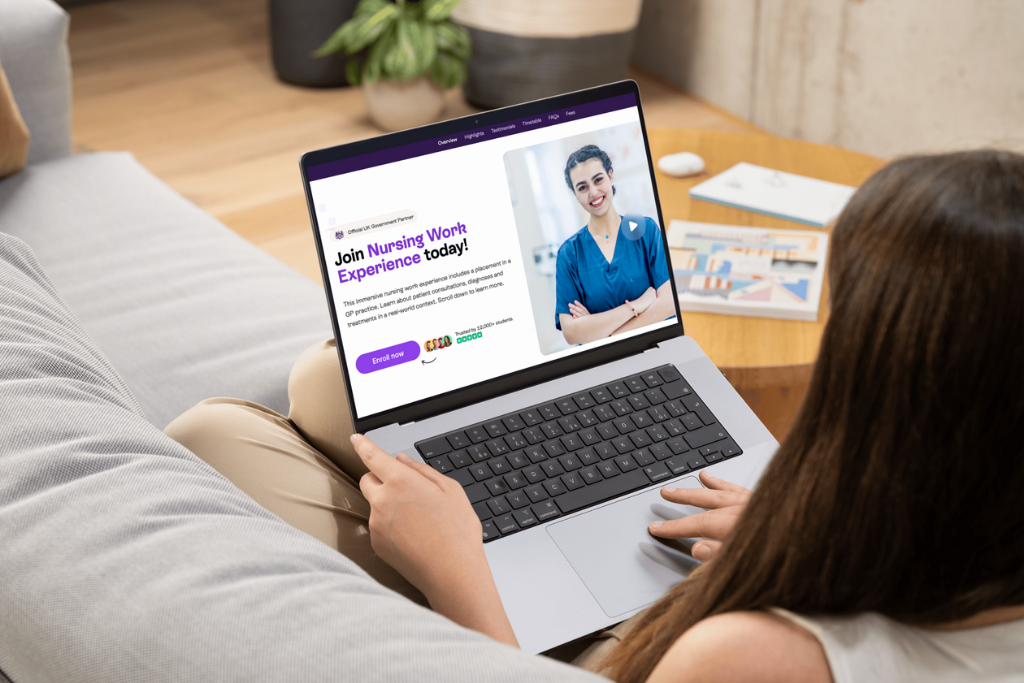
Whilst online work-experience can play an important role in your application, in-person opportunities can give you a hands-on understanding unavailable elsewhere. In-person work experience with the NHS is completely free. There are loads of opportunities to access: usually in a hospital or GP surgery. Use this tool to help you with your search.
Whilst in-person work experience appears plentiful, there are three main reasons why it can be difficult to access:
- Often there are eligibility criteria for each programme (mostly based on where you live or go to school).
- Places on in-person work experience programmes can also be highly competitive (so you should take care to get your application right).
- In-person work experience is often only available at certain times of year (e.g. Easter or Summer Holidays) so you will have to be organised to arrange it (and meet any relevant application deadlines).
These three factors combine to mean that although there are lots of free in-person programmes out there, finding one that fits for you can be difficult. However, if you start early and are organised it is certainly possible.
Care homes, charities, pharmacies and community organisations
Work experience in the care sector offers great opportunities for a boost to your personal statement. This could include charity work, work in a care home or experience in a pharmacy. Medical schools like to see this kind of work experience on a CV because it often involves harder and less glamorous work so shows real commitment. They also allow greater opportunities for students to take on more responsibility than in a hospital or GP surgery since they are non-clinical settings.
The best way to secure this kind of work experience is to contact the organisation directly. Most towns will have at least one care home for elderly people. Contact them, setting out why you would like to conduct work experience and why you would be well suited to it. Arranging this kind of work experience takes a bit more initiative (since you are not applying through a structured scheme) and therefore will make your medical school application stand out. This kind of work experience would be good to combine with an online clinical programme to ensure that you have also shown commitment and knowledge of a clinical setting.
The best options broken down by age
One major advantage of many of the online programmes discussed above is that they are accessible to younger students. Whilst some are restricted to over-16s, most can be accessed by 13- or 14-year-olds. If you fall into this age range, it is unlikely that you will be thinking about applying for medical school yet, but you may still find it helpful to work through them if you are trying to decide which GCSE or A-Level subjects are right for you.
Almost all in-person medical work experience programmes are restricted to over-16s. Additionally, some departments will be further restricted to those over 18 only. These include maternity wards, operating theatres and emergency departments.
Here are your options for each age bracket:
- Ages 13-15: Focus on general research of the medical areas which interest you. Undertake some online work experience to help you decide whether you might want to pursue a career in medicine later, especially if this impacts which subjects you elect to take at GCSE and A-Level.
- Ages 16-17: This is the key window for obtaining medical work experience for many students. You will become eligible for most in-person opportunities, and you will be putting together the strongest possible application for medical school.
- Ages 18+: Perhaps you decided to take a gap year after finishing school or you are applying to study medicine after you have already completed another undergraduate degree. In this case, almost all medical work experience opportunities will be available to you. You will also have a much wider range of volunteering opportunities within the NHS. These are generally longer term and involve more responsibility than an observational work experience placement and can therefore be valuable in demonstrating commitment on an application to medical school. Some structured programmes will be restricted to younger students only.
Free medical work experience versus paid opportunities
There are some paid work experience opportunities available, many of which can be worthwhile depending on your circumstances. For example, the Medic Mind Medicine Summer Career Camps that run every year in central London. These can be particularly useful if you feel like extra teaching alongside your work experience will help you get more out of it. Enrolling on a paid programme can also be helpful if you find yourself ineligible for any of the free opportunities, or if you missed the deadline to apply. If you are applying to a UK medical school from abroad and wish to undertake UK medical work experience, then a paid programme may also be your best opportunity. If your financial situation prohibits you from accessing this, bursaries are available. Get in touch to find out more.
When might a structured paid programme be a better option for you?
Paid programmes often come with teaching attached. You might spend one day learning in depth about a medical procedure or about medical ethics, and then spend the next observing that same clinical procedure in a hospital. Paid programmes are also often crafted to give you a much wider breadth of experience than a free one (which typically takes place in a single hospital and often with one clinician). You should think of them as a curated tasting menu of medical experiences. If you are unsure which area of medicine most interests you, this can be valuable.
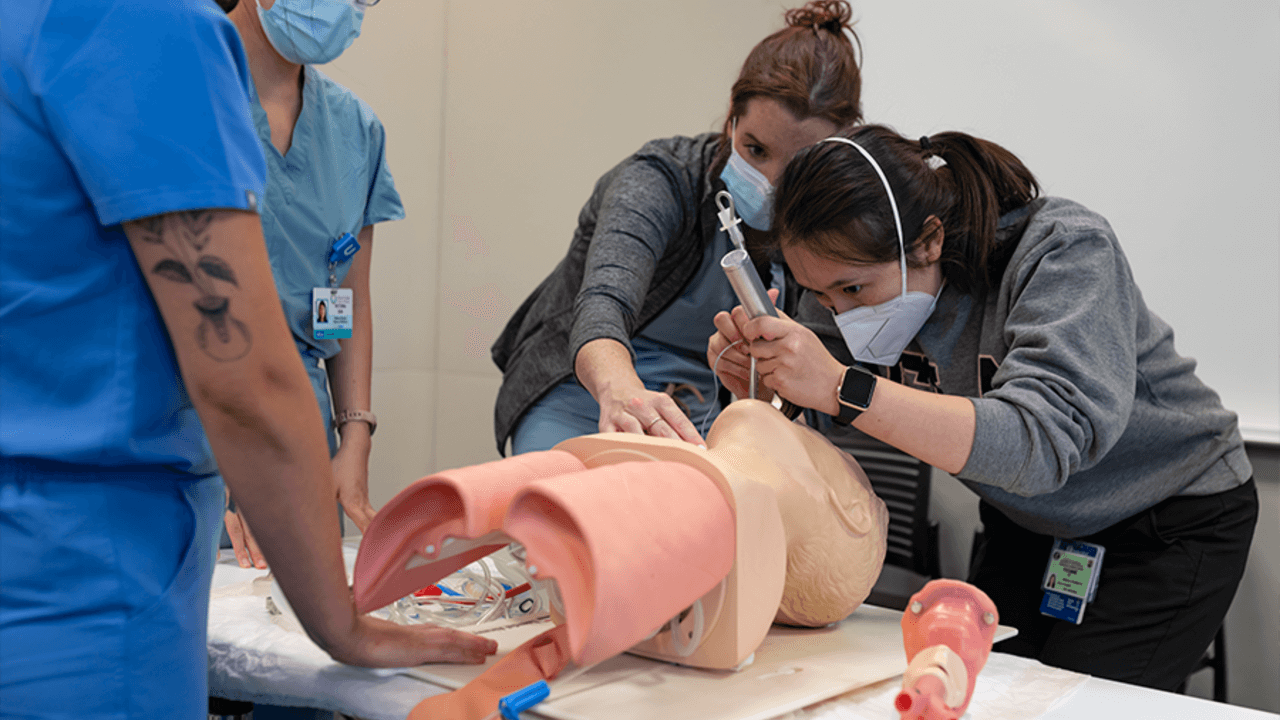
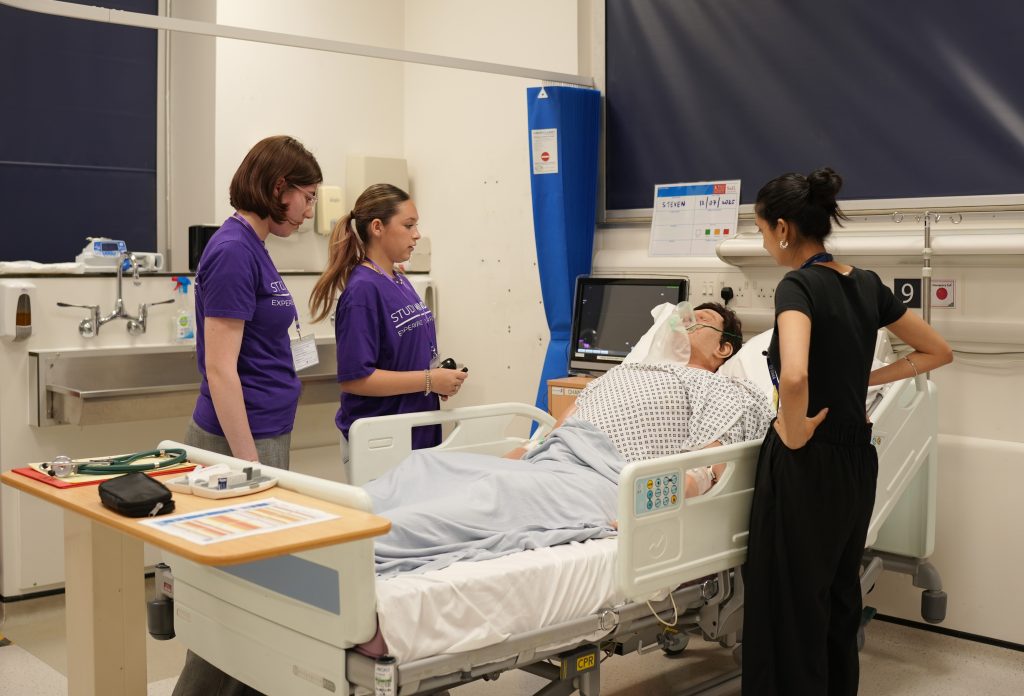
A typical week at our Medical Career Camp might involve classroom sessions on Medical Ethics and Clinical Skills paired alongside visits to a local hospice and to a a hands on Emergency Room Simulation at King’s College Londons Medical school. Additionally, you will attend lectures from industry experts and practice your medical school interviews with university admission experts.
Arranging a free and in-person medical work experience opportunity takes a lot of organisation and persistence. If you have missed the application deadlines for your local hospital and your local GP surgeries are unable to accommodate a request, your options for securing medical work experience boil down to either an online programme, or a paid opportunity. If you feel like you would get more out of an in-person experience, then it might make sense for you to enrol on a paid programme.
How do medical schools evaluate free and virtual experience?
Medical schools will not judge your work experience solely (or even primarily) on the title of the programme. They want to see that you have shown commitment and have gained a realistic understanding of what it means to work in a medical environment. The criteria that you should use when evaluating your options for medical work experience should stem from this rather than wether the programme is online, in-person, free, or paid. Whatever the type of work experience programme you choose, you must keep a reflection diary. This will help you build a more developed set of thoughts and work out what the experience meant to you – things that are essential when including work experience effectively within an application to medical school.
However, some programmes demonstrate some skills better than others. A long-term volunteering role at a local care home demonstrates a level of commitment that no online programme can replicate. On the other hand, you might gain better clinical knowledge through a focused online work experience course. You could find it helpful to write out all of the experiences that you currently have (they don’t have to be formal medical work experience programmes) and identify gaps. Then, write out which experiences would be the most valuable to you to address these gaps and boost your application.
You should also think about what soft skills you have gained from your work experience. Soft skills are personal habits, social traits, and communication styles that shape how you interact with others and navigate your work such as communication, organisation and self-belief. They include things like communication, organisation and self-belief. Take time to reflect on how your experiences have developed these.
Turning an online programme into strong evidence on a personal statement for a medicine application
As mentioned above, reflection is key to turning an online medical work experience programme into strong application evidence. Admissions tutors will largely be judging your application by the way that you responded to your experiences rather than the mere fact that you were able to obtain them. Anyone can physically sit through several hours of video content about what goes on in a GP surgery, but only the best candidates can turn this experience into an opportunity for personal and academic growth.
Therefore, where the online programme includes its own opportunities for reflection (e.g. an inbuilt reflection guide) you should ensure that you complete them in full. This should feel like hard work – nothing good ever came without at least some effort.
You should also pay attention to the coverage of a particular online programme. If, for example, it focuses entirely on GP practices then this alone will be insufficient at demonstrating that you have taken the time to understand the full breadth of what a medical career might offer. You might have to undertake several different virtual work experience opportunities to gain a fuller coverage.
This article has explained how to access free medical work experience. You should now feel confident navigating the difference between clinical and non-clinical experience and have a good grasp of the range of free online and in-person opportunities available. We have also covered the difference between paid and unpaid work experience programmes, including the ways in which medical schools asses these on your application. Finally, you have learnt how to reflect on your time conducting work experience so that you can make the most of an opportunities you are able to access.
FAQs
Q: What are my chances of getting accepted onto a medical work experience programme?
A: Your chances of acceptance onto a work experience opportunity depend a lot on which programme you are applying for. Most online programmes will accept applications from all students who meet the eligibility criteria. However, in-person work experience in hospitals and GP surgeries are often highly competitive. You should apply to several and take your time to tailor your application to each, in order to maximise your chances of acceptance.
Q: Will I get a certificate of completion? Do I need one?
Most online work experience programmes do give out certificates to students who fully complete the course. If you attend an in-person placement then you will be able to obtain a certificate or signed letter of completion upon request.
However, it is unlikely that you will need to show your certificate at any point in your application. Admissions tutors care significantly more about what you got out of an opportunity, and the ways that you can talk about it in your personal statement, than the mere fact that you ticked off its completion.
Q: How many programmes should I complete?
Aim for two as a maximum; there is no need to complete any more than this. If you manage to secure in-person work experience then you might like to augment it with an online programme. A long list of programmes is far less impressive than a couple that have been selected because of a genuine interest and desire to learn and which have been well reflected upon.
Q: Can I get free UK medical work experience if I am applying from abroad?
A: Yes, in principle this is possible. However, you might find it difficult to do so. Most programmes organised in large city hospitals have eligibility criteria (such as attending a local school). You will probably have the best luck contacting a medical provider directly and asking them if you can shadow them.
UK medical work experience is not compulsory for applicants applying from outside the UK however. Medical schools are happy to count experience gained in your own country as meeting the requirement. Since you will be training within a system dominated by the NHS however, an application that includes a sustained attempt to understand something about it will be looked upon favourably. An online work experience programme provided by a UK institution alongside in-person work experience in your home country is sufficient (if you take the time to reflect upon them).
Q: Is free experience enough?
A: Yes. As long as you can secure enough free work experience to demonstrate a sustained interest in pursuing a medical career, then paid work experience will not necessarily add anything to the strength of your personal statement. Paid programmes can be useful in specific circumstances, such as for students who are looking for some extra teaching alongside their programme, or for students who have been unable to secure work experience elsewhere.
Comments
0No comments yet. Be the first to ask a question!